
Slab Hold Policy: How to Reserve Stone Without Losing Sales
How to write a slab hold and reservation policy for a stone yard: hold length, deposits, extensions, who can release holds and how to prevent double-selling.
The short answer
A good slab hold policy defines how long a hold lasts, who can place, extend and release it, whether a deposit is required, and how the hold is recorded against the specific slab. Apply it to every customer, communicate it at the moment of the hold, and send reminders before expiry. Recorded holds prevent double-selling and protect both your margin and your reputation.
Key takeaways
- Set a standard hold length and stick to it.
- Record every hold against a specific slab, not a material name.
- Define who can extend or release holds.
- Remind clients before a hold expires.
Why holds cause so much trouble
A hold sits between interest and a sale. Without rules, holds pile up, premium slabs sit reserved for clients who have moved on, and two salespeople promise the same slab to different buyers. Each of those outcomes costs money and trust.
Decide the basic rules
- Hold length: a standard period, commonly around a week, with optional extension.
- Who can place holds: sales staff, and possibly approved fabricator accounts.
- Deposits: whether long holds or premium slabs require a deposit.
- Extensions: how many, how long and who approves them.
- Release: what happens at expiry and who is notified.
Record the hold on the slab
A hold must be tied to a specific slab or bundle, with the customer, the fabricator, the salesperson and the expiry date. A note that says "two Calacatta on hold for the Smith job" is not enough when there are twelve Calacatta slabs on the rack.
Communicate at the moment of the hold
When you place the hold, tell the client and fabricator in writing how long it lasts and what happens next. A short message works:
Send reminders before expiry
- A reminder two days before expiry.
- A final notice on the last day.
- Automatic release after expiry, with a note to the salesperson.
Reminders turn many holds into sales because they create a natural decision point.
Handle conflicts fairly
When two buyers want the same slab, the recorded hold wins. If a second buyer is ready to purchase immediately, some yards contact the first holder and offer them the chance to confirm. Whatever you decide, write it down and apply it consistently.
Review holds weekly
| Check | Why |
|---|---|
| Holds past expiry | Release stock back to sale |
| Holds extended more than once | Confirm the client is still active |
| Premium slabs on hold | Protect high-value material |
| Holds by salesperson | Spot habits that need coaching |
Holds in iBlocky
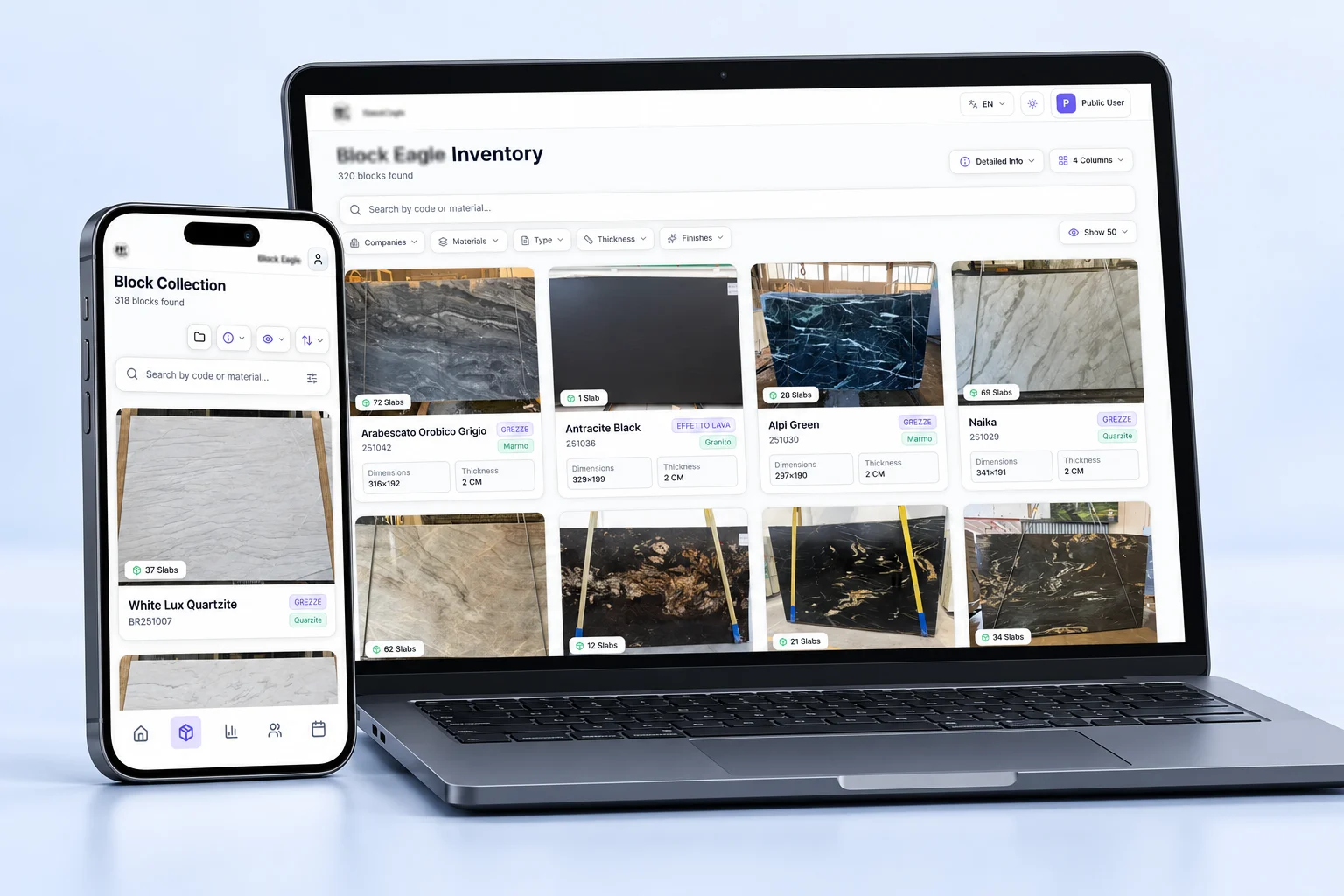
iBlocky tracks reservations and sales directly on the block, slab or bundle, so everyone sees the same status. Elite synchronizes in real time across users; Pro synchronizes daily. Shared links show updated availability, which keeps buyers from requesting slabs that are already reserved. For warehouse-side detail, see managing slab reservations.
Frequently asked questions
How long should a stone yard hold a slab?
Many yards use about one week with optional extensions. The right length depends on your turnover and material value, but consistency matters more than the exact number.
Should I take deposits for slab holds?
Deposits are reasonable for long holds, premium slabs or special orders. For routine short holds, a recorded hold with reminders is often enough.
How do I prevent two salespeople from selling the same slab?
Record every hold on the specific slab in a shared system that updates for everyone, and make that system the only source of availability.