
Slab Layout and Templating: Getting the Veins Right
How fabricators template countertops and lay out pieces on stone slabs, why layout matters for veining and seams, and how buyers can review it before cutting.
The short answer
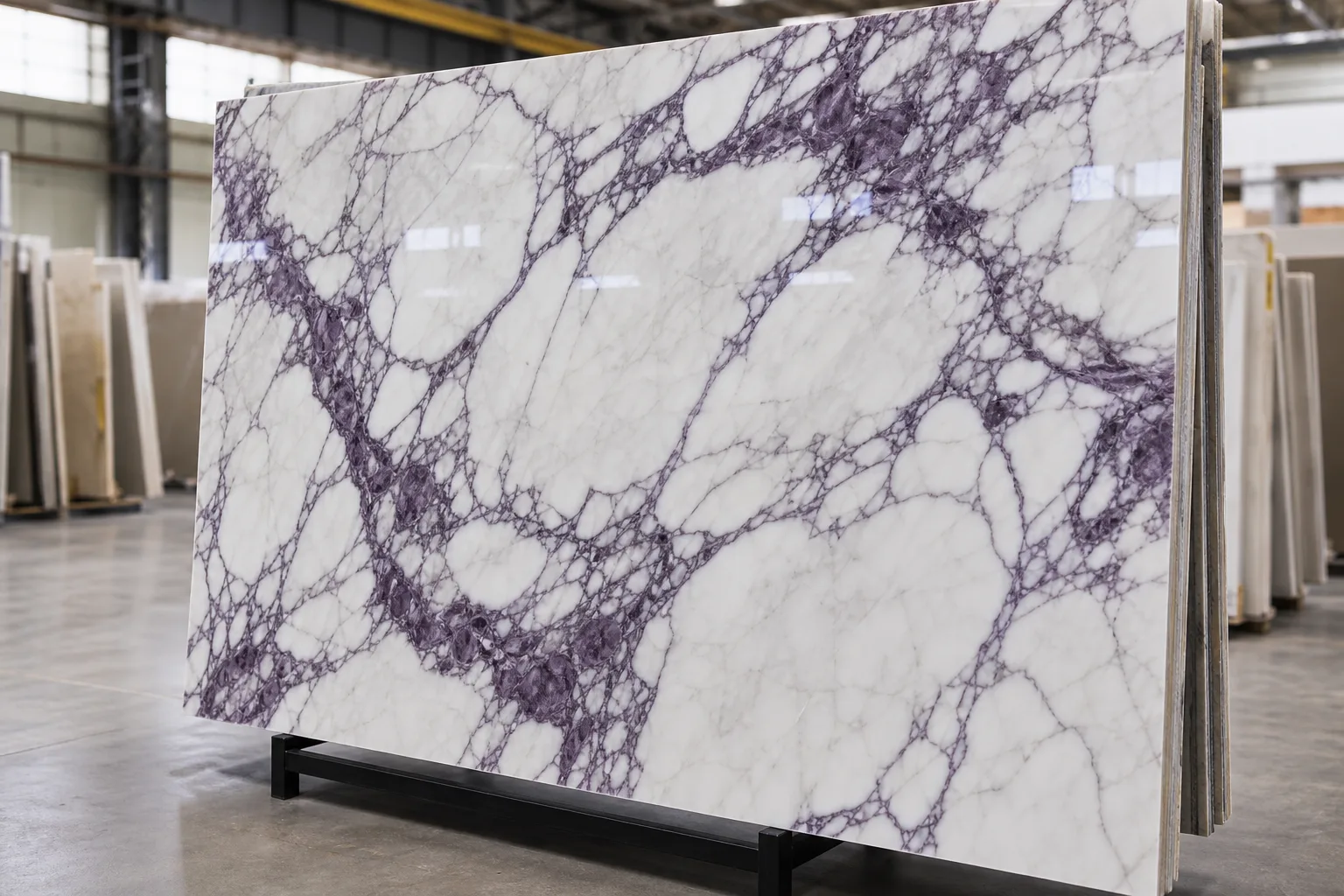
Templating captures the exact shape of your cabinets and walls, and layout places those shapes on the actual slabs. A good layout controls where seams fall, how veins flow between pieces and which parts of the slab end up on visible surfaces. Ask your fabricator to show you the layout on slab photos or in person before any cutting begins.
Key takeaways
- Templating measures; layout decides how the stone is used.
- Seam placement and vein flow are set during layout.
- Ask to review the layout before cutting.
- Digital templating and slab photos make review easier.
What templating is
After cabinets are installed, the fabricator measures the exact shape of each countertop, including walls that are not perfectly straight, sink and cooktop positions and overhangs. Templating can be done with physical templates or digital measuring tools.

What layout is
Layout places the templated shapes on the actual slabs. The fabricator decides which part of each slab becomes the island, perimeter, backsplash and so on.
Why layout matters with natural stone
- Seams should fall where they are least visible.
- Veins should flow naturally across seams.
- Dramatic areas should land on prominent surfaces.
- Defects should fall in cutouts or less visible areas.
Reviewing the layout
Ask your fabricator:
- Where will the seams be?
- How will veins continue across seams and around corners?
- Which part of the slab will be on the island?
- Are any defects in visible areas?
Many fabricators can show a digital layout on slab photos. For premium stones, some invite clients to review templates placed on the slabs.
Waterfalls and miters
Waterfall edges and mitered thick edges need careful planning so the pattern wraps naturally. They also require more stone.
Common layout mistakes
| Mistake | Result |
|---|---|
| Seam through a dramatic vein | Visible break in pattern |
| Veins running in different directions | Disjointed look |
| Defect on island top | Visible flaw in focal point |
| Not enough stone for match | Mismatched waterfall |
For sellers
High-quality slab photos with accurate dimensions help fabricators plan layouts before the client commits, reducing surprises.
Questions to ask before cutting
- Can I see the layout on photos of my actual slabs?
- Which part of the slab goes on the island?
- Where will seams fall and why?
- How will veins continue around corners and waterfalls?
- Are any fissures or repairs in visible areas?
Template accuracy
Accurate templates prevent gaps against walls, misaligned sinks and remakes. Digital templating tools capture measurements precisely, and many fabricators use them to overlay templates directly on slab images.
After installation
Inspect seams, edges and overall fit at installation. Small adjustments are easier while the installer is still on site.
Why layout affects cost
A layout that respects veining may require more slabs or more waste. Discuss priorities with your fabricator: perfect vein flow, minimal seams or lowest cost.
Frequently asked questions
When does templating happen?
After cabinets are installed and level, so the fabricator measures the final shape.
Can I choose where the seams go?
You can discuss it with your fabricator. Structural and slab size limits apply, but many fabricators accommodate preferences.
What is digital templating?
Measuring with laser or photo-based tools and producing a digital template that can be overlaid on slab photos.