
Getting Found in AI Search: Stone Marketing for 2027
How stone distributors can appear in ChatGPT, Gemini, Perplexity and Google AI answers in 2027: helpful content, structured data and live inventory pages.
The short answer
To be found in AI search in 2027, stone businesses need clear, factual pages that answer buyer questions directly, structured data that explains who they are and what they sell, live inventory pages, consistent local business listings, genuine reviews and content that AI assistants can quote, such as definitions, comparisons and how-to steps. Being cited by AI starts with being genuinely useful.
Key takeaways
- AI assistants favor clear, factual, well-structured answers.
- Structured data helps machines understand your business.
- Live inventory pages give assistants specific facts to cite.
- Local signals and reviews still matter.
Why AI search matters for stone
Buyers increasingly ask assistants such as ChatGPT, Gemini, Perplexity, Claude and Google's AI features questions like "Is Taj Mahal quartzite real quartzite?" or "Where can I see Calacatta Viola slabs in Houston?" These tools summarize information from the web and often cite sources. If your site is the clearest source, you can be the cited supplier.

Principles that help
Answer first
Start pages with a direct, factual answer in two or three sentences, then expand. Assistants and featured snippets both reward this structure.
Be specific and accurate
Use correct material names, origins, dimensions and care facts. Avoid exaggerated claims; assistants and readers notice inconsistency.
Use clear structure
Headings that match questions, short paragraphs, comparison tables and numbered steps are easy for machines to parse and quote.
Add structured data
Schema markup for your organization, local business, articles, FAQs and breadcrumbs helps search engines and assistants understand your pages.
Publish real inventory
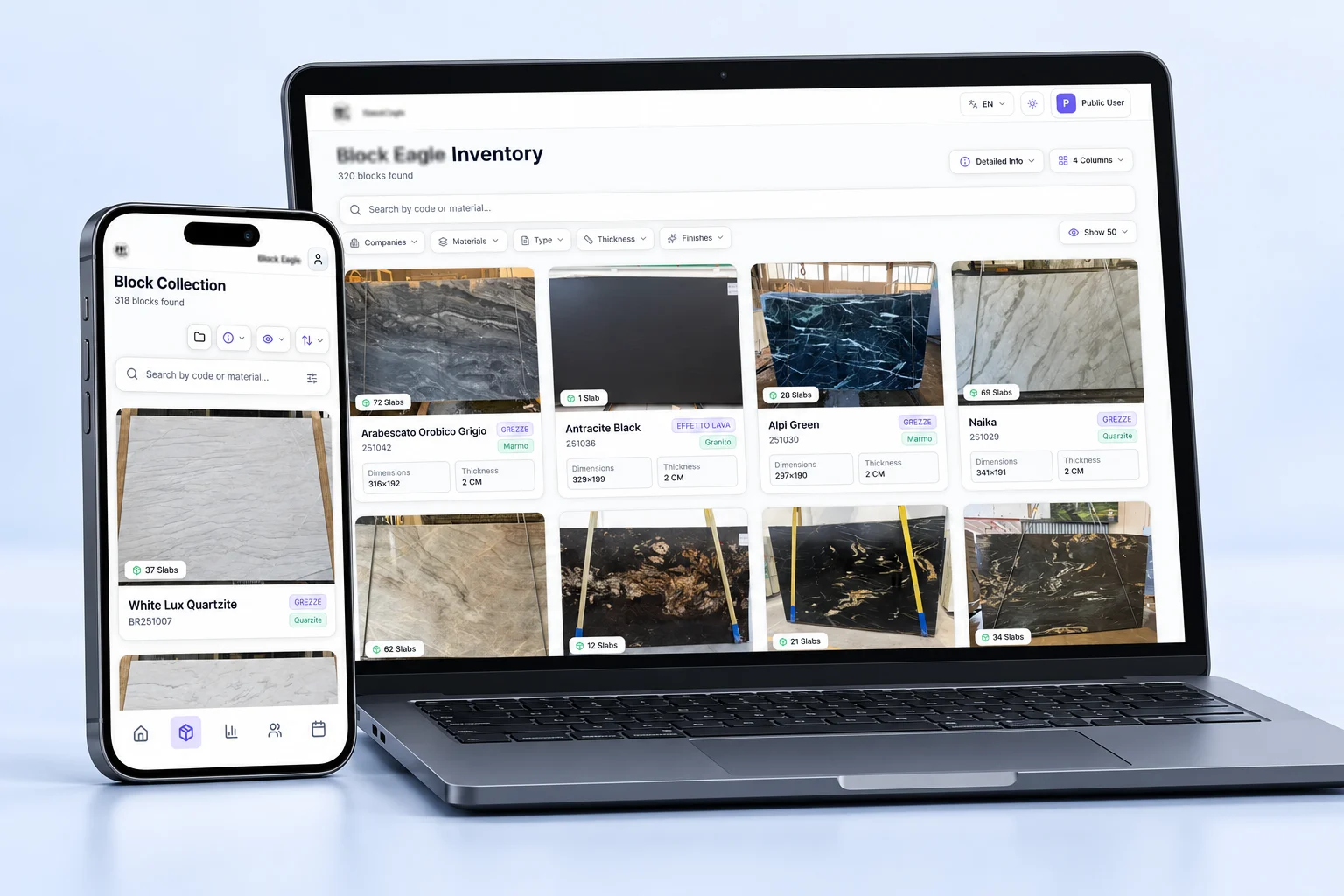
Pages that show current slabs with photos and specifications give assistants concrete facts no generic site can offer. See digital slab catalog best practices.
Local signals still count
AI answers for "near me" queries draw on maps and business listings. Keep your Google Business Profile, Apple Maps and Bing listings complete and consistent, and earn genuine reviews. See local SEO for stone yards.
Content that earns citations
| Content type | Example |
|---|---|
| Definitions | What is dolomite? |
| Comparisons | Marble vs quartzite |
| How-to | How to inspect a slab |
| Local guides | Slab yards and materials in your city |
| Data pages | Live inventory with specs |
Let crawlers in
Check that your robots.txt does not block search and AI crawlers you want to be visible to, and that your hosting or CDN is not blocking them by default. Consider publishing an llms.txt file that summarizes your key pages.
Measure what you can
AI referrals are hard to track precisely. Watch referral traffic from AI tools, branded searches and inquiries that mention "I found you through ChatGPT" or similar.
Avoid shortcuts
Mass-produced, thin or misleading pages can hurt trust with both search engines and assistants. Focus on depth, accuracy and usefulness.
Live inventory with iBlocky
iBlocky's branded public catalog on Elite gives you live, structured inventory pages you can link from your website, giving search engines and assistants current facts about the slabs you actually stock.
Frequently asked questions
Can a stone yard appear in ChatGPT answers?
Yes, when its website provides clear, accurate, well-structured information that the assistant can find and cite.
What is generative engine optimization?
Optimizing content so AI assistants can understand, trust and cite it, building on SEO fundamentals like clarity, structure and accuracy.
Does structured data help with AI search?
It helps search engines understand your pages, which supports both traditional and AI-generated results.