
How to Price Natural Stone Slabs Without Leaving Money Behind
A pricing framework for stone distributors and importers: landed cost, grade, size, rarity, customer tiers and aging inventory, with practical rules.

The short answer
Price natural stone slabs by starting from true landed cost, then adjusting for material rarity, slab size and quality, demand and how long the material has been in stock. Add customer tiers for fabricators, designers and volume accounts, and review prices when new containers arrive. Consistent rules protect margin better than case-by-case discounts.
Key takeaways
- Know your true landed cost per slab or per square foot before setting price.
- Adjust for rarity, size, quality and visual appeal, not only material name.
- Use clear customer tiers instead of improvised discounts.
- Revisit prices for aging stock before it becomes dead inventory.
Start from true landed cost
Your floor is the full cost of getting the slab onto your rack. That includes the purchase price at origin, ocean freight, insurance, duties and customs fees, drayage, unloading, handling and a share of breakage. Our guide to landed cost for stone imports walks through each line.
Many distributors price per square foot. Whichever unit you use, calculate cost the same way for every container so comparisons are meaningful.
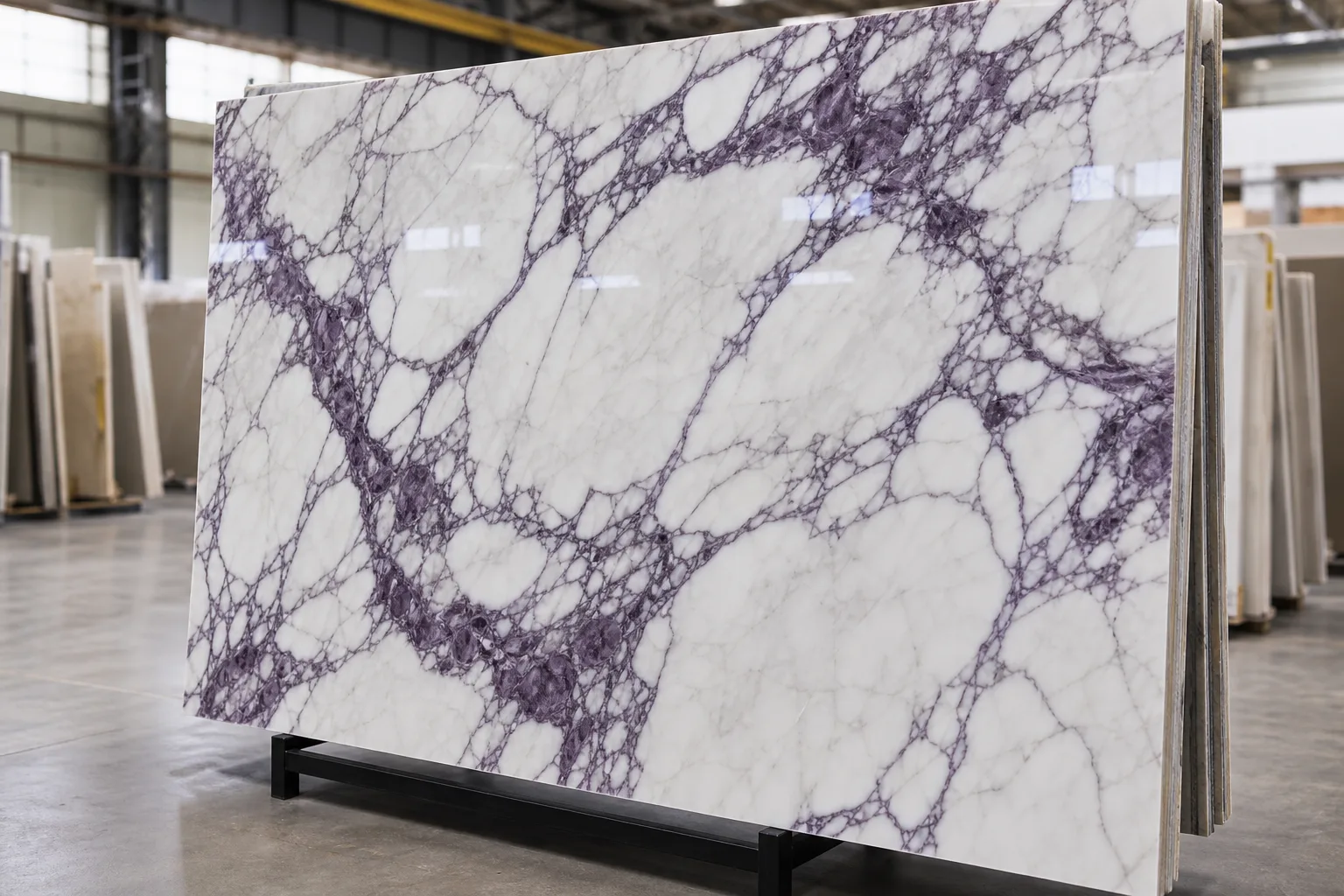
Adjust for what makes each slab worth more or less
Two slabs with the same trade name can deserve different prices.
- Rarity and supply: limited quarries or exceptional blocks command a premium.
- Size: jumbo slabs allow seamless islands and long runs; usable area matters more than nominal size.
- Quality: fissures, resin repairs, pits and color consistency affect value.
- Visual appeal: dramatic, balanced veining and bookmatch potential sell faster.
- Thickness and finish: 3cm, leathered or special finishes may carry different cost and demand.
Set customer tiers in writing
| Tier | Typical buyer | Pricing approach |
|---|---|---|
| Retail list | Walk-in or referred homeowners | Published or quoted list price |
| Trade | Fabricators with an account | Standard trade price |
| Volume | High-volume fabricators, builders | Negotiated program pricing |
| Project | Commercial and multifamily jobs | Quoted per project |
Written tiers stop salespeople from inventing discounts and help you explain prices consistently. If you sell to designers, see designer trade programs.
Use time in stock as a pricing input
Slabs that sit for many months tie up cash and rack space. Set review points, such as six and twelve months in stock, where the material is re-photographed, promoted or repriced. Our article on selling slow-moving stone inventory has tactics that protect margin before you discount.
Avoid common pricing mistakes
- Pricing by trade name only, ignoring slab-to-slab differences.
- Forgetting to update prices when freight or duty costs change.
- Allowing verbal discounts that are never recorded.
- Discounting premium slabs while slow movers stay at full price.
Show prices on your terms
You decide whether buyers see prices, ranges or nothing at all in a shared catalog. Some distributors show trade prices only to logged-in accounts, others share prices by link for a specific quote. See should stone distributors publish prices for the trade-offs.
How iBlocky helps
In iBlocky, each slab or bundle carries its own record, so price, grade notes, photos and status live together. Your team controls what each shared link shows, and reservations and sales are tracked on the material, which makes aging and turnover easy to review.
Frequently asked questions
Should natural stone be priced per slab or per square foot?
Both are common. Per square foot makes comparisons easier across slab sizes, while per slab is simpler for fabricators. Choose one primary method and apply it consistently.
How often should a distributor review slab prices?
At least when a new container lands and whenever freight, duty or exchange rates change significantly, plus scheduled reviews for aging inventory.
Is it better to discount or to promote slow-moving slabs?
Promote first: better photos, renders and targeted outreach often move material without cutting price. Discount when the carrying cost outweighs the margin you are protecting.