
How to Buy Marble Slabs: The Complete Buyer's Guide
A step-by-step guide to buying marble slabs in the U.S.: choosing the stone, sizes and thickness, inspecting slabs, holds, quotes, fabrication and pickup.
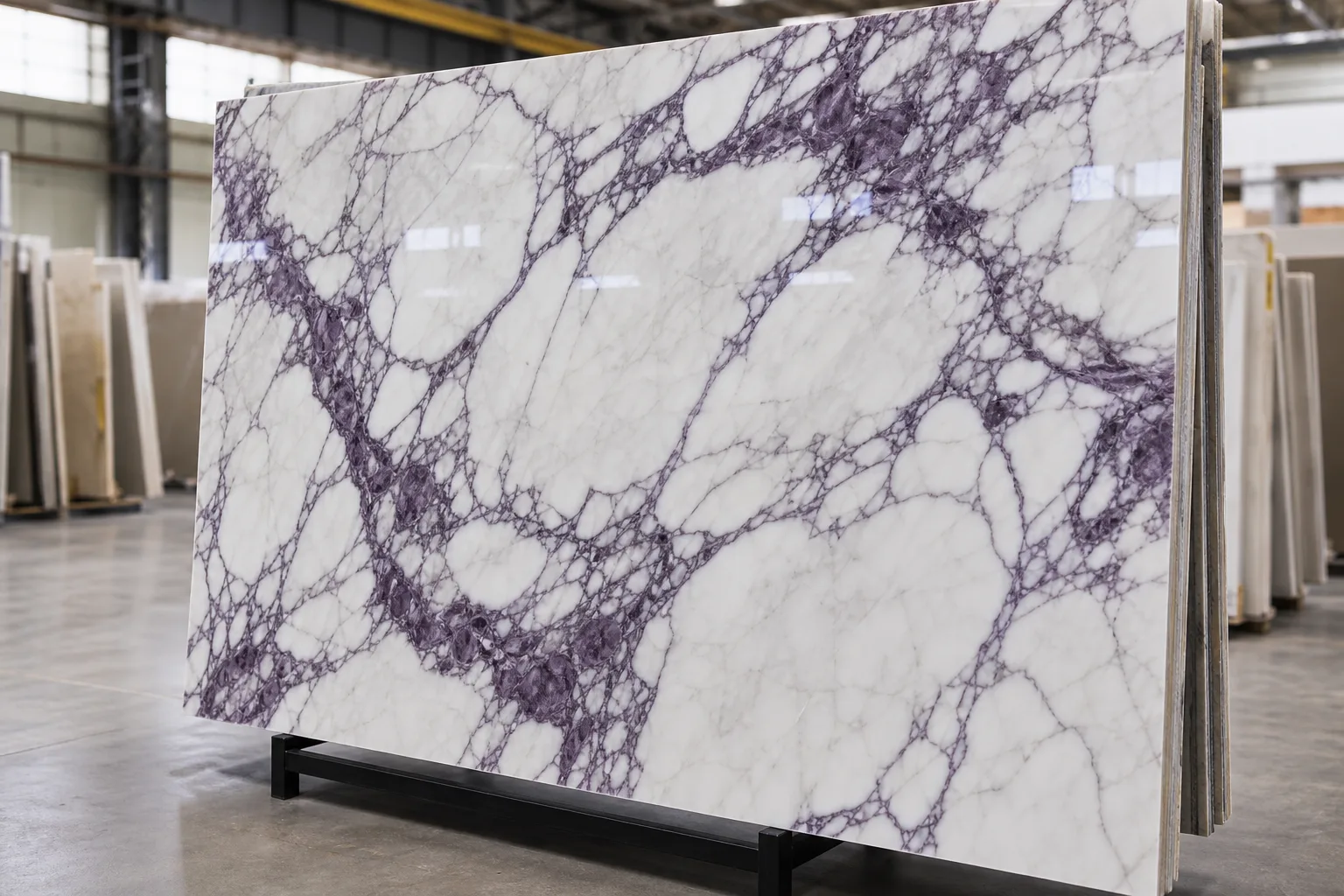
The short answer
To buy marble slabs, define the project and how the surface will be used, choose the marble type and finish, check slab size and thickness against your layout, inspect the actual slabs for color, veining and defects, place a recorded hold, have your fabricator confirm the layout and get a written quote listing the exact slab IDs before paying.
Key takeaways
- Decide how the surface will be used before falling for a look.
- Always inspect and approve the actual slabs, not just samples.
- Check slab size and thickness against the fabricator's layout.
- Get a quote that lists exact slab IDs, terms and hold expiry.
Step 1: Define the project and how you will use it
Marble is beautiful and timeless, but it behaves differently from granite or quartzite. Before you visit a slab yard, answer a few questions:
- Which surfaces: kitchen perimeter, island, backsplash, vanity, shower walls, fireplace, floor?
- How heavily will the surface be used? Daily cooking with citrus, wine and tomato will mark polished marble.
- Do you love the look of patina, or do you want a surface that stays pristine?
- Is this an indoor or outdoor application?
If you want low maintenance above all, read marble vs quartzite and natural stone vs quartz first.
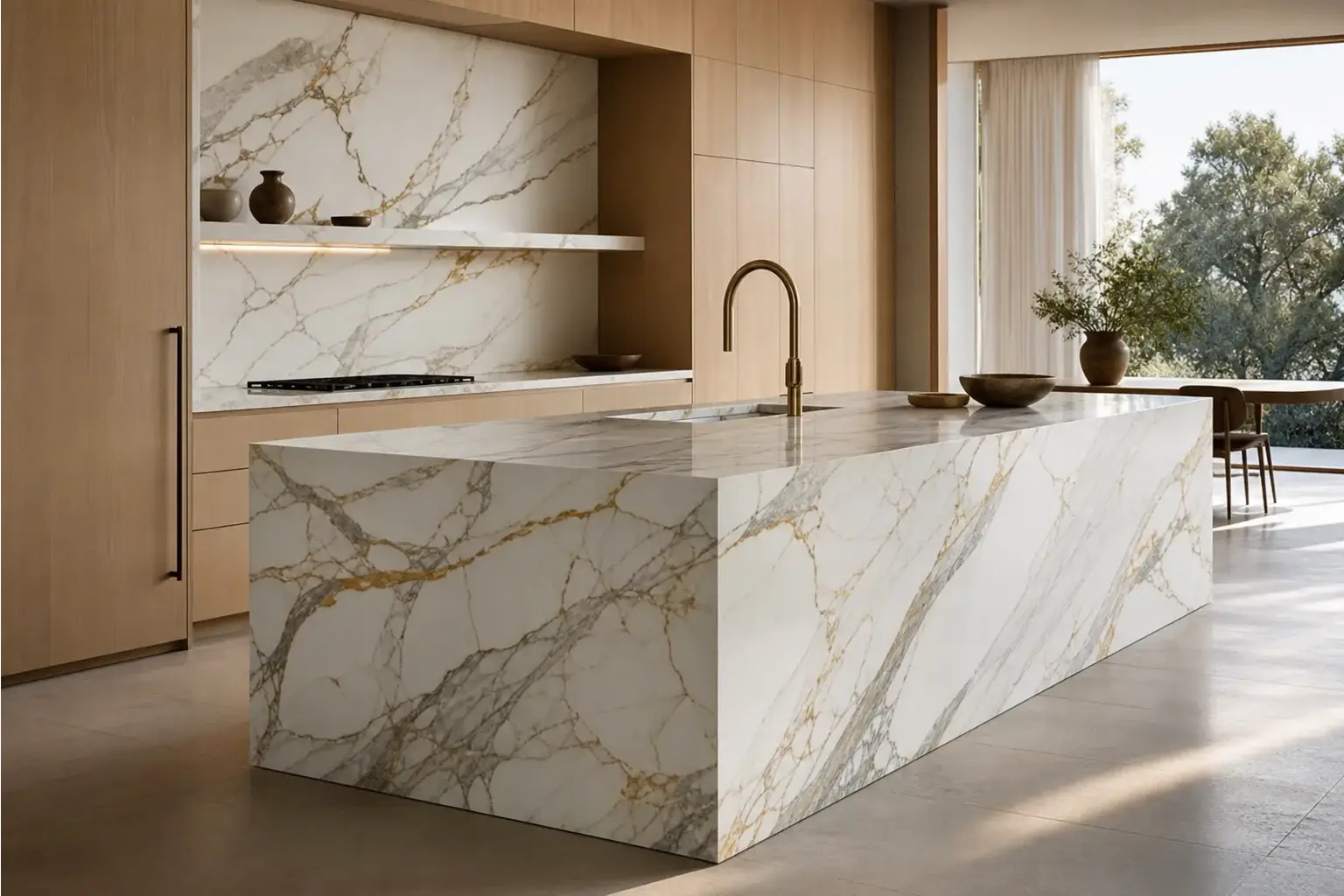
Step 2: Choose the marble type
Marble names refer to quarries, regions and visual families. Popular choices in the U.S. include:
| Marble | Typical look |
|---|---|
| Carrara | Gray-white background, soft fine veining |
| Calacatta | Brighter white, bold dramatic veining |
| Statuario | Very white, bold gray veining |
| Arabescato | White with bold gray, often curving veins |
| Nero Marquina | Black with white veining |
| Emperador | Brown tones with lighter veining |
| Crema Marfil | Warm beige, subtle pattern |
Our Calacatta vs Carrara vs Statuario guide covers the most requested whites.
Step 3: Choose a finish
Polished marble shows color and veining vividly but makes etching more visible. Honed marble has a matte surface that hides etching better and is popular for kitchens. Leathered finishes add texture. See honed vs polished vs leathered.
Step 4: Check size and thickness
In the U.S., countertop slabs are commonly 2cm or 3cm thick. Slab sizes vary by quarry and block. A long island may need a jumbo slab to avoid seams. Ask your fabricator how many slabs your layout needs before you buy. See marble slab sizes and thickness and how many slabs do I need.
Step 5: Visit the yard or view slabs remotely
Bring cabinet door samples, paint swatches and your layout. Look at slabs in good light. If you cannot visit, ask for photos and video of each slab and a live video walkthrough. Our slab yard visit checklist lists what to bring.
Step 6: Inspect the actual slabs
Natural stone varies from slab to slab. Inspect each slab you are considering:
- Overall color and veining: does it match the look you want?
- Fissures, cracks and resin repairs.
- Pits, chips and edge damage.
- Color shifts or patches.
- Consistency between slabs if you need more than one.
Our guide on how to inspect a marble slab goes into detail.
Step 7: Place a recorded hold
When you find the right slabs, ask the yard to place a hold on the specific slab IDs, in your name and your fabricator's name, with an expiry date. Holds give you time to finalize the layout.
Step 8: Confirm the layout with your fabricator
The fabricator plans where each piece is cut, where seams fall and how veins flow. For dramatic marbles, ask to see the layout on the slab, either digitally or with templates.
Step 9: Get a written quote
The quote should list slab IDs, dimensions, thickness, finish, price, what is included, payment terms and pickup or delivery. In many U.S. purchases the fabricator buys the slab and includes it in an installed price.
Step 10: Plan care
Ask about sealing, cleaners and what to avoid. See how to clean marble.
Mistakes to avoid
- Choosing from a small sample only.
- Ignoring etching until after installation.
- Buying too few slabs for the layout.
- Letting a hold expire on a perfect slab.
- Paying without slab IDs on the paperwork.
Frequently asked questions
Where can I buy marble slabs?
From stone distributors and slab yards, usually through a countertop fabricator who buys the slabs and installs them. Many yards let homeowners and designers select slabs directly.
Can I buy marble slabs directly as a homeowner?
Some yards sell directly to homeowners, but most U.S. kitchen projects run through a fabricator who purchases, cuts and installs the slabs.
How many marble slabs does a kitchen need?
It depends on the layout and slab size. Many kitchens need two to four slabs. Your fabricator should calculate it from your measurements.
Is marble a good choice for kitchen countertops?
Yes, if you accept that it can etch and develop patina. Honed finishes and good care help. If you want a pristine surface, consider true quartzite.