
Calacatta vs Carrara vs Statuario: How to Tell Them Apart
Compare Calacatta, Carrara and Statuario marble: background color, veining, rarity, price level, typical uses and how to choose the right Italian white marble.
The short answer
Carrara usually has a light gray to gray-white background with soft, fine, feathery veining and is the most widely available. Statuario has a brighter white background with bolder gray veining. Calacatta is typically bright white with thick, dramatic veining, often gray or gold, and is the rarest and most expensive of the three. All come from the Apuan Alps around Carrara, Italy.
Key takeaways
- Carrara: grayer background, softer and finer veining.
- Statuario: whiter background, bold gray veining.
- Calacatta: bright white, thick dramatic veining, often gold or gray.
- Names vary by supplier; judge the actual slab.
Where they come from
All three are quarried in the Apuan Alps in Tuscany, around the towns of Carrara, Massa and Seravezza. The area has supplied white marble since Roman times. Read the history of Carrara marble.
Side-by-side comparison
| Feature | Carrara | Statuario | Calacatta |
|---|---|---|---|
| Background | Gray-white to light gray | Bright white | Bright to warm white |
| Veining | Soft, fine, feathery | Bold gray, defined | Thick, dramatic, gray or gold |
| Availability | Widely available | Less common | Limited |
| Typical price level | Most accessible | Premium | Premium to very premium |
| Best for | Classic kitchens, baths, floors | Statement surfaces | Islands, feature walls, bookmatches |
Carrara
Carrara is the most common Italian white marble. Its softer pattern suits large areas and traditional designs. Variants such as Bianco Carrara C or CD and Venatino differ in background tone and vein density.
Statuario
Statuario, historically valued by sculptors, combines a whiter background with bold gray veins. It sits between Carrara and Calacatta in drama and rarity.
Calacatta
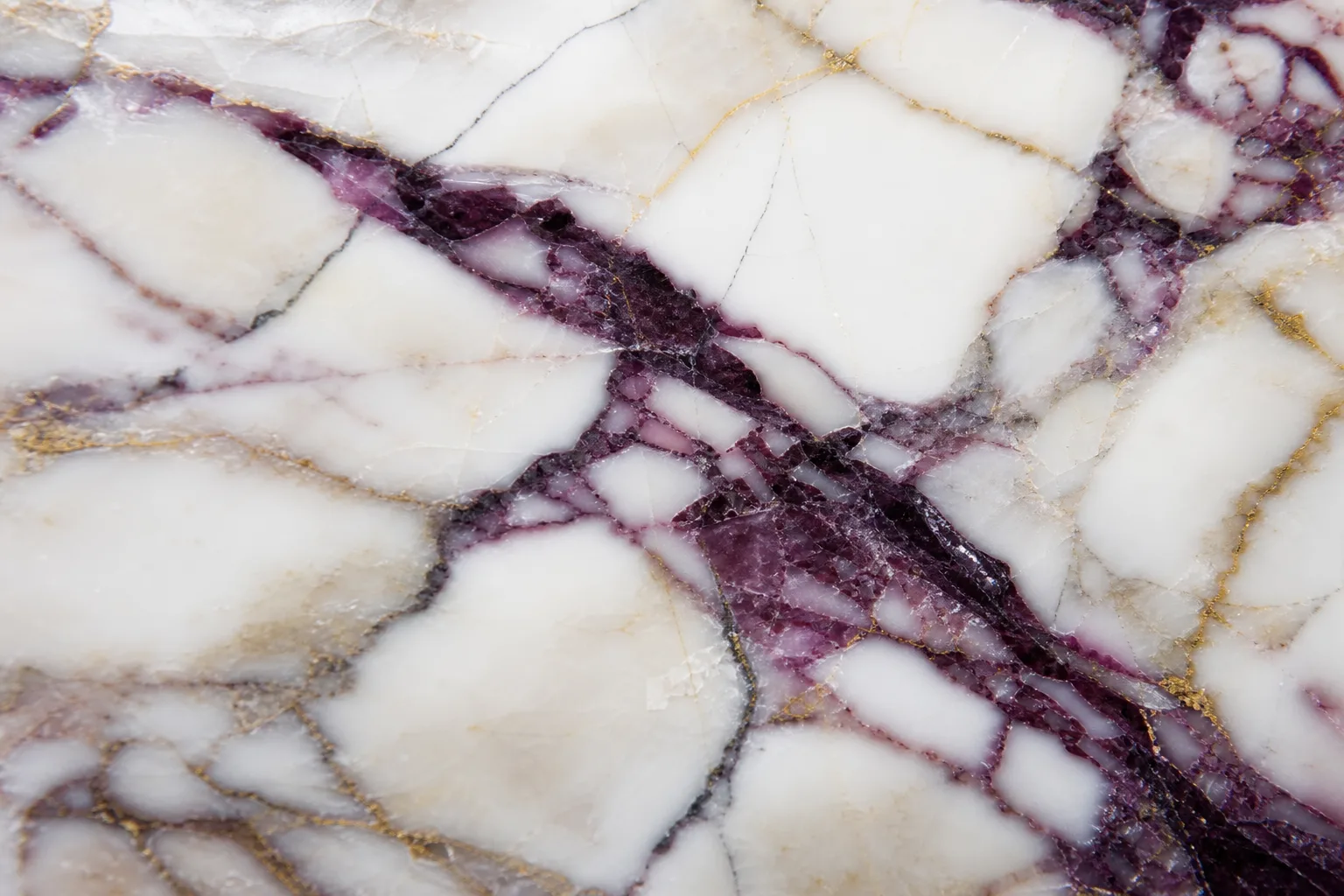
Calacatta is the showpiece. Its thick veins and bright background create strong contrast. There are many named varieties, such as Calacatta Oro, Borghini, Macchia Vecchia and Viola, each with a different color and pattern. See our Calacatta marble guide.
Names are not standardized
Different suppliers may use different names for similar material, or the same name for material that looks different. Always judge the actual slab rather than relying on the name alone. See stone trade names explained.
How to choose
- Want a calm, classic look over large areas: Carrara.
- Want brighter white with defined veining: Statuario.
- Want a dramatic centerpiece: Calacatta.
Performance
All three are calcitic marbles. They etch with acids and can stain if not sealed and cared for. Performance differences between slabs of the same name can be greater than differences between names. Read choosing marble for a kitchen.
Alternatives
If you love the look but want less maintenance, consider white quartzites or dolomites. Read white marble alternatives.
Budget strategies
If Calacatta is beyond budget for the whole kitchen, use it on the island and choose Carrara or a quieter white for perimeters. The contrast can look intentional and saves money.
Frequently asked questions
Which is more expensive, Calacatta or Carrara?
Calacatta is generally more expensive because high-quality material is rarer and its dramatic look is in high demand.
Is Statuario the same as Calacatta?
No. Both are bright white Italian marbles, but Statuario typically has bold gray veining while Calacatta often has thicker, more dramatic veins, sometimes gold.
Which white marble is best for kitchens?
All three can work with the right finish and care. Carrara's busier, softer pattern hides marks well; honed finishes help any of them.