
Choosing Marble for a Kitchen: Pros, Cons and Best Options
Is marble right for your kitchen? Learn about etching, staining, finishes, the best marbles for kitchens, alternatives and how to care for marble countertops.
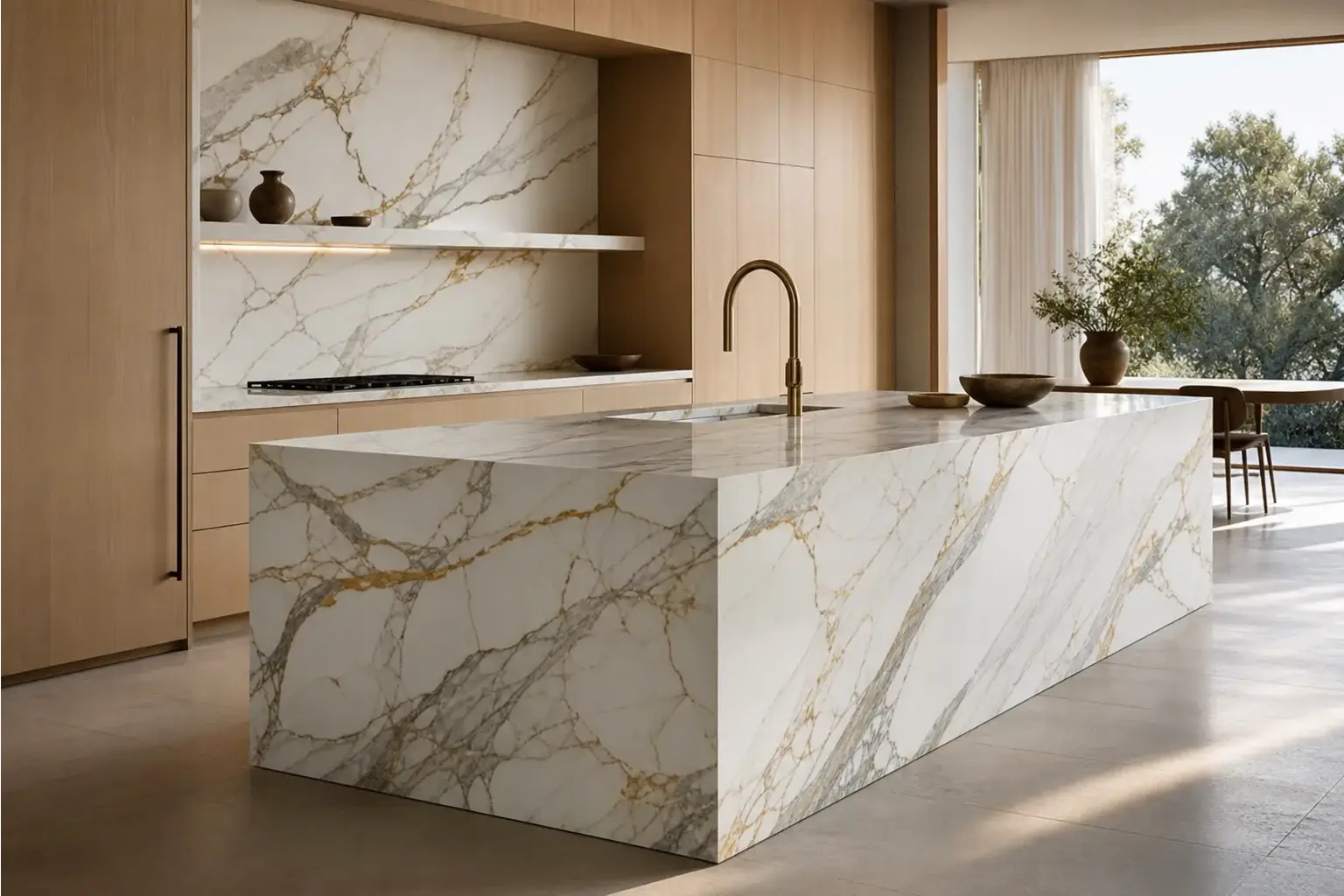
The short answer
Marble works beautifully in kitchens for people who accept patina. It is heat tolerant and timeless, but it etches when exposed to acids and can stain if spills are left. Choose a honed finish to hide etching, seal to reduce staining, use cutting boards and pH-neutral cleaners, and consider true quartzite if you want a marble look with fewer marks.
Key takeaways
- Marble etches with acids; sealing does not prevent this.
- Honed marble hides etching better than polished.
- Lower-absorption marbles resist staining better.
- Choose marble for its character, not for perfection.
Why people love marble kitchens
Marble has been used in kitchens and bakeries for centuries. It stays cool, which bakers appreciate, and its veining adds depth no manufactured surface can quite match. In many European homes, marble counters show decades of use as a soft patina that owners consider part of the charm.
Pros
- Timeless, natural beauty.
- Each slab is unique.
- Good heat tolerance compared with resin-based surfaces.
- Cool surface for pastry.
- Can be honed or polished again if worn.
Cons
- Etches with acids such as lemon, vinegar, wine and tomato.
- Can stain if spills are left, especially on more porous marbles.
- Softer than granite and quartzite, so it scratches more easily.
- Requires some care and acceptance of change over time.
Etching vs staining
Etching is a dull mark where acid has reacted with the calcite in marble. Staining is a color absorbed into the stone. Sealers reduce staining but do not prevent etching. Read why marble etches.
Choose the right finish
| Finish | Kitchen suitability |
|---|---|
| Honed | Popular; hides etching and scratches better |
| Polished | Shows color vividly; etching marks more visible |
| Leathered | Textured; disguises marks, needs cleaning attention in texture |
Best marbles for kitchens
There is no single best marble, but some considerations help:
- Denser, lower-absorption marbles resist staining better.
- Busy veining hides marks better than plain white.
- Dolomitic marbles are often slightly harder than calcitic marbles, though they still etch.
Popular choices include Carrara for a soft, classic look, Calacatta for drama and many other Italian, Greek, Spanish and Portuguese marbles. Ask your supplier about absorption and test a sample with water, oil and lemon juice before you commit.
Smart design choices
- Use marble on the island and a tougher stone on the perimeter where most cooking happens, or vice versa.
- Choose a honed finish.
- Use a full-height marble backsplash for drama where it gets less wear.
Care routine
- Wipe spills promptly, especially acids and oils.
- Use pH-neutral stone cleaners.
- Use cutting boards and trivets.
- Reseal as recommended for your stone and sealer.
- Hone or polish professionally if needed.
See how to clean marble and how to remove stains from marble.
Alternatives
If you want a marble look with less maintenance, consider true quartzite, some granites or other surfaces. Read white marble alternatives.
Frequently asked questions
Is marble a bad idea for kitchen countertops?
Not if you understand that it will etch and develop patina. Many people love marble kitchens for exactly that lived-in character.
Should marble kitchen countertops be honed or polished?
Honed is popular for kitchens because it hides etching and scratches better. Polished shows marks more but has a classic shine.
How often should marble countertops be sealed?
It depends on the marble and sealer. Test with water drops: if water darkens the stone quickly, it is time to reseal.