
Selling Marble Honestly: Setting Expectations About Etching
How stone sellers should explain marble etching and staining to clients: what causes it, how finishes differ, sealing, care and when to suggest alternatives.
The short answer
Marble etches because acids such as lemon juice, wine, vinegar and some cleaners react with calcite. Sealing helps resist stains but does not prevent etching. Sell marble honestly by explaining this before purchase, showing how honed finishes hide etching better than polished, recommending simple care and suggesting quartzite or other materials for clients who want a worry-free surface.
Key takeaways
- Etching is a chemical reaction, not a stain, and sealers do not stop it.
- Honed finishes disguise etching better than polished finishes.
- Clients who accept patina often love marble for decades.
- Offer alternatives to clients who want zero maintenance.
Why this conversation matters
Unhappy marble owners are usually not unhappy with marble; they are unhappy they were not told what to expect. A two-minute explanation before purchase prevents complaints and builds trust.
What etching is
Marble is made mostly of calcite or dolomite. Acids dissolve a tiny amount of the surface, leaving a dull mark. This is etching. It is different from staining, where liquid is absorbed into the stone and leaves a color. Read why marble etches for the chemistry.
What sealing does and does not do
Penetrating sealers reduce absorption, which helps against stains. They do not stop acids from reacting with the surface. Clients should understand that a sealed marble countertop can still etch.
Finish makes a difference
| Finish | Etching visibility | Notes |
|---|---|---|
| Polished | More visible, dull spots on shine | Classic look, shows marks |
| Honed | Less visible, blends with matte surface | Popular for kitchens |
| Leathered | Texture helps disguise marks | Subtle sheen |
See our guide to honed vs polished vs leathered finishes.
Simple care to recommend
- Wipe spills promptly, especially acidic ones.
- Use pH-neutral cleaners made for stone.
- Use cutting boards and trivets.
- Reseal as recommended for the specific stone and sealer.
- Have a professional hone or polish if needed.
Talk about patina
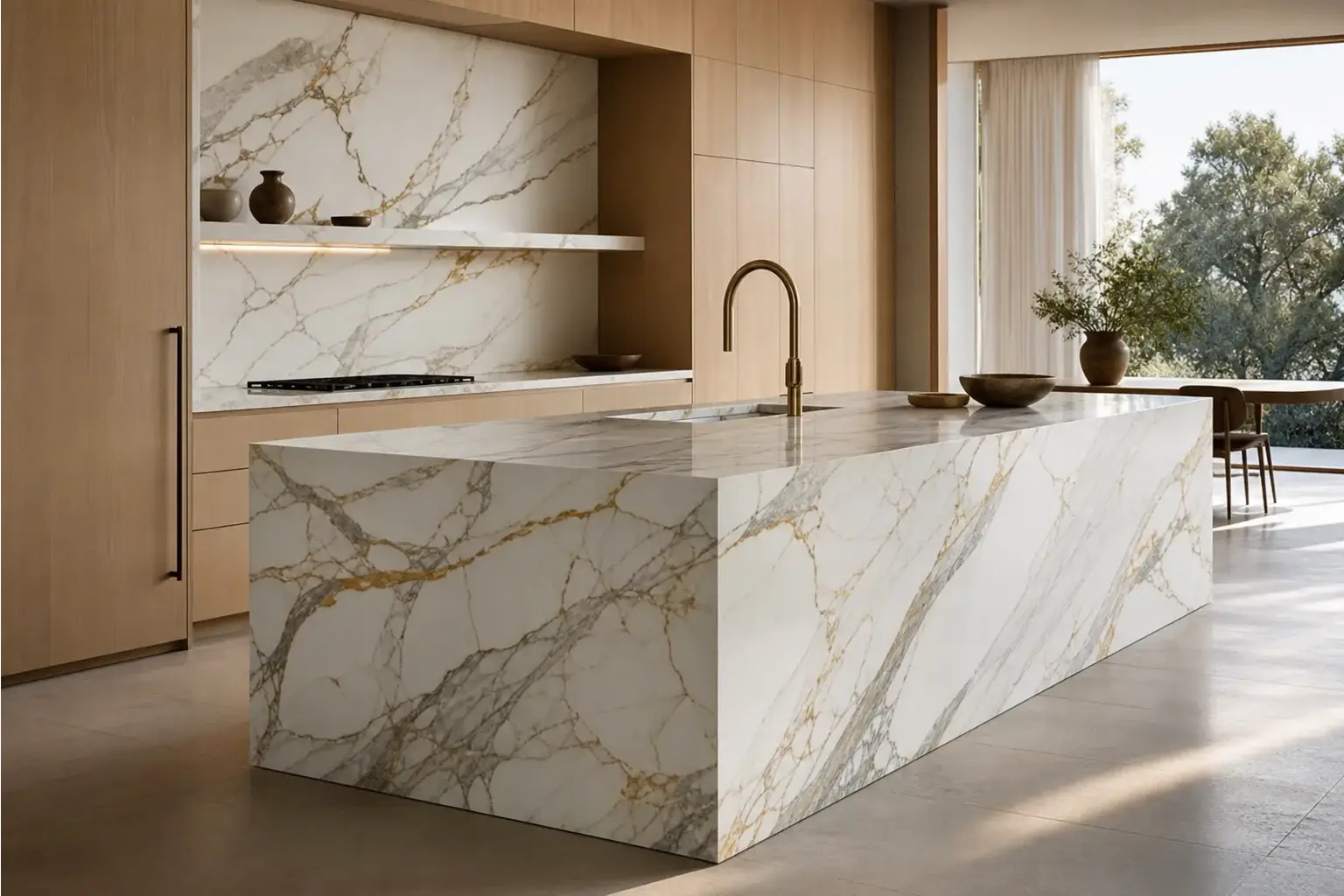
Many clients love the lived-in look of marble in European kitchens. Showing photos of well-used marble can help them decide whether patina is a feature or a worry for them.
Offer alternatives when needed
For clients who want marble's look without etching concerns, suggest true quartzite, some granites or other surfaces, and explain the trade-offs. Make sure any "quartzite" is really quartzite; see how to tell if quartzite is real.
A simple demonstration
Keep a polished and a honed marble sample at the showroom with a few old etch marks. Let clients see and feel the difference. A ten-second demonstration communicates more than a page of warnings, and clients appreciate the honesty.
Supporting honest sales with iBlocky
iBlocky lets you attach care sheets and certificates to each material, so the information you share with buyers travels with the slab link.
Frequently asked questions
Does sealing marble prevent etching?
No. Sealers reduce staining by limiting absorption, but acids still react with the marble surface.
Is honed marble better for kitchens?
Honed marble shows etching less than polished, which is why many homeowners choose it for kitchens.
Can etching be repaired?
Light etching can often be removed with marble polishing products or professional honing and polishing.