
Why Marble Etches: The Chemistry Explained Simply
Why marble etches when it touches lemon, vinegar or wine: the calcite-acid reaction, etching vs staining, which stones etch, prevention and repair.
The short answer
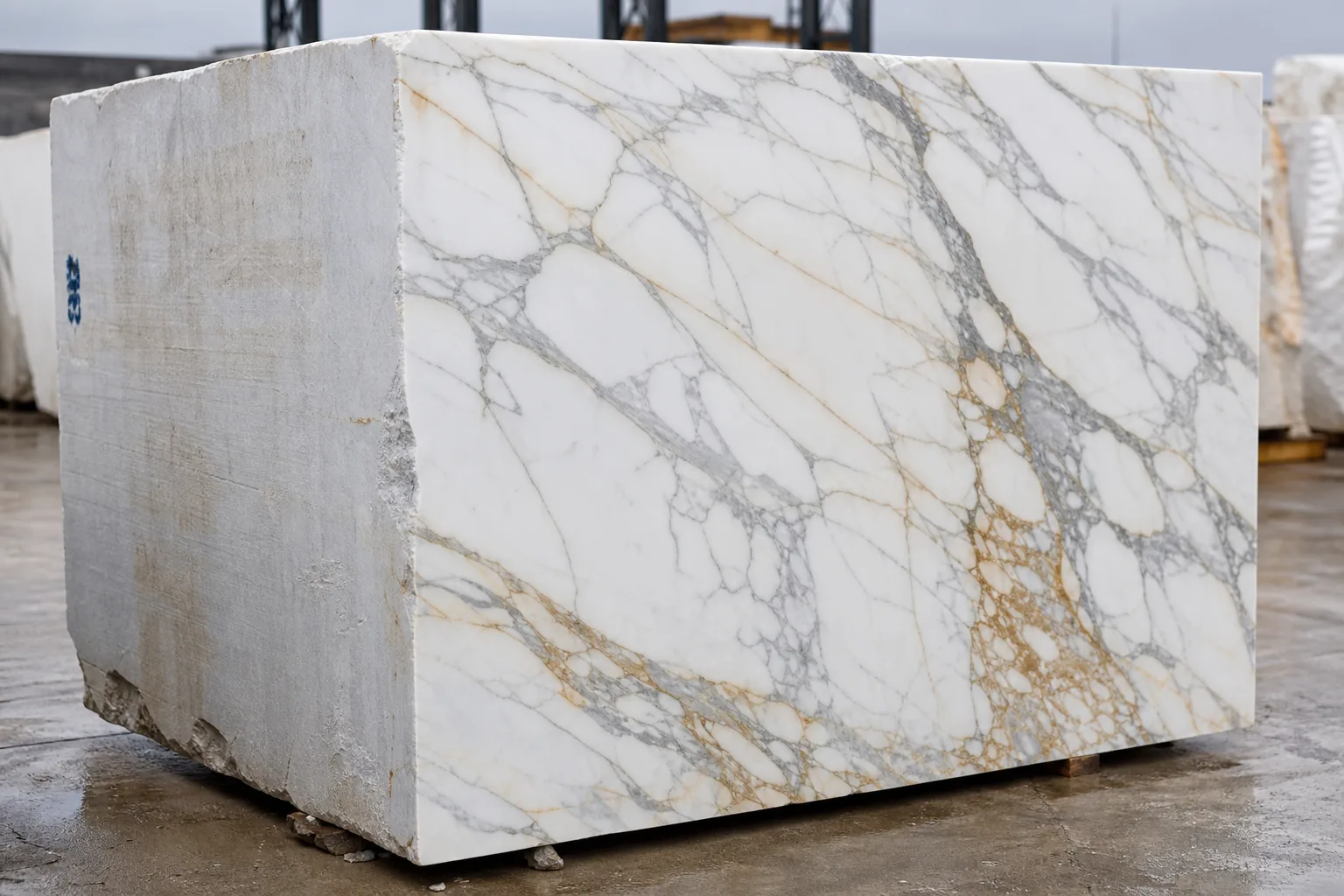
Marble etches because its main mineral, calcite, is calcium carbonate, which reacts with acids. When lemon juice, vinegar, wine or acidic cleaners touch the surface, they dissolve a microscopic layer of calcite, leaving a dull mark. Sealers reduce stains but cannot stop this reaction. Etching can be minimized with honed finishes and removed by polishing.
Key takeaways
- Acids dissolve calcite, leaving dull spots.
- Etching is surface damage; staining is absorbed color.
- Sealers do not prevent etching.
- Light etching can be polished out.
The reaction
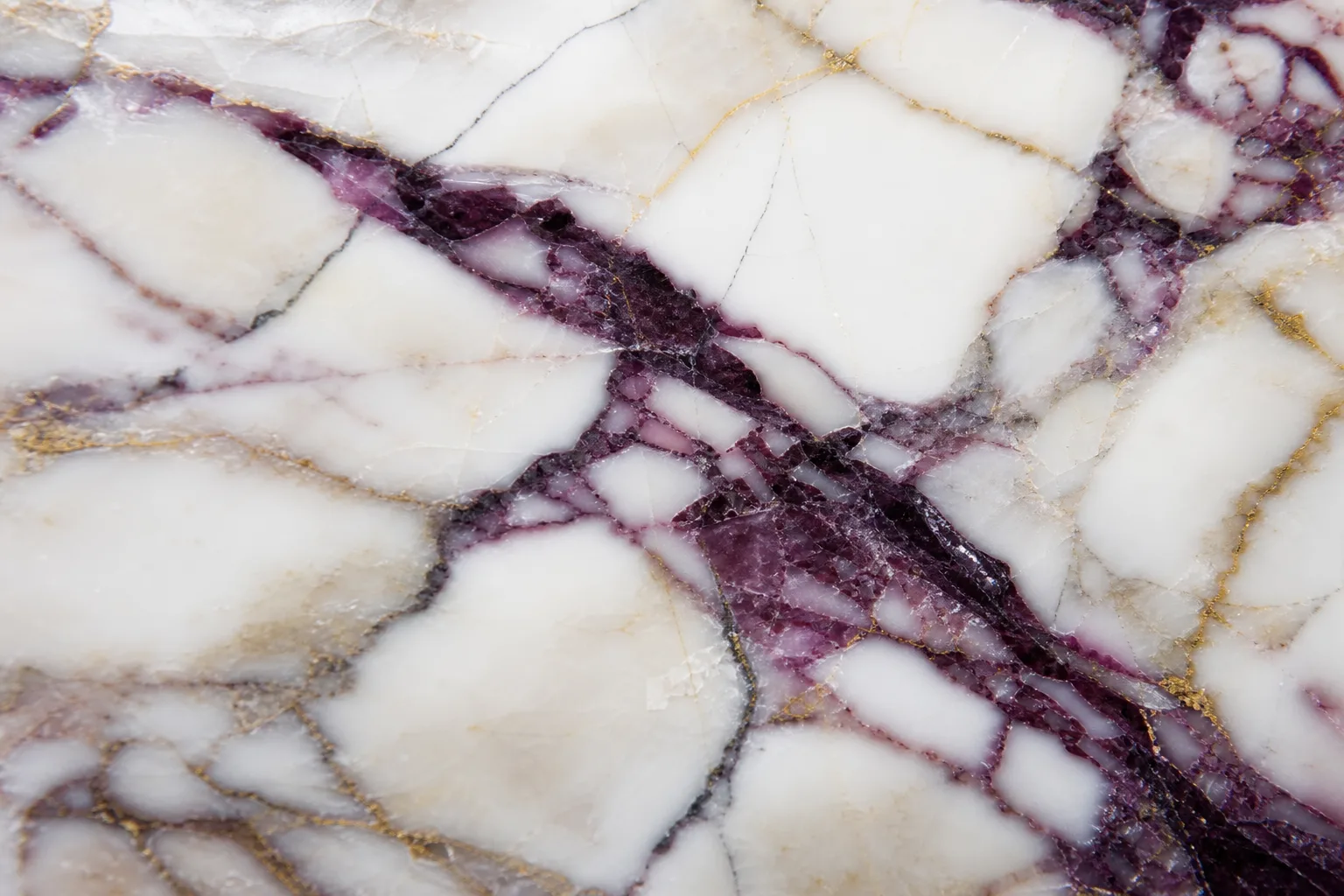
Calcite is calcium carbonate. Acids donate hydrogen ions that react with carbonate to form water and carbon dioxide, freeing calcium ions into the liquid. In simplified form: calcium carbonate plus acid becomes a calcium salt, water and carbon dioxide. The same reaction makes chalk fizz in vinegar. On a countertop, it happens on a microscopic scale, removing the polished surface layer and leaving a duller, slightly rough spot.
Common culprits
| Substance | Etch risk |
|---|---|
| Lemon and lime juice | High |
| Vinegar and dressings | High |
| Wine and soda | Moderate to high |
| Tomato sauce | Moderate |
| Coffee | Low to moderate |
| Acidic bathroom cleaners | High |
| Some cosmetics and toothpaste | Variable |
Etching vs staining
- Etching: chemical damage to the surface. Looks dull or lighter, especially on polished stone. Cannot be wiped off.
- Staining: a substance absorbed into the stone's pores, leaving color. Can often be drawn out with a poultice.
Read how to remove stains from marble.
Why sealers do not stop it
Penetrating sealers fill pores below the surface to slow absorption. They do not coat the surface with a barrier against acid. The acid still meets calcite at the top. Some specialized surface treatments and films claim etch protection; they change the look and need maintenance.
Which stones etch?
- Calcite marbles: yes, quickly.
- Dolomitic marbles: yes, more slowly.
- Limestone, travertine and onyx: yes.
- True quartzite, most granites, soapstone: generally no.
How to live with it
- Choose a honed or leathered finish to disguise marks.
- Wipe acidic spills promptly.
- Use cutting boards and trays.
- Use pH-neutral cleaners.
- Accept patina as part of marble's character.
Repairing etch marks
Light etching can be reduced with marble polishing compounds designed for calcite. Deeper or widespread etching needs professional honing and polishing. See marble polishing and restoration.
Testing before you buy
Place a drop of lemon juice on a sample for a few minutes, wipe and look at an angle. It shows exactly how your chosen stone will react.
Sharing care facts with buyers
Clear expectations prevent unhappy clients. iBlocky lets distributors attach care sheets and test notes to marble slabs so etching guidance reaches the homeowner with the slab link. See also setting expectations about marble etching.
Frequently asked questions
Can you prevent marble from etching?
Not completely. You can reduce visible etching with honed finishes, prompt cleanup and care, but acids will react with calcite.
Is etching the same as a stain?
No. Etching is surface damage from acid; staining is a substance absorbed into the stone.
Does quartzite etch?
True quartzite does not etch from household acids. Stones that etch are likely marble or dolomite.