
How to Clean Marble Countertops, Floors and Showers
Daily, weekly and deep cleaning for marble: pH-neutral cleaners, what never to use, showers and floors, disinfecting safely and protecting the finish.
The short answer
Clean marble with warm water and a pH-neutral cleaner made for stone, using a soft cloth or mop, then dry it. Avoid vinegar, lemon, bleach-heavy or ammonia cleaners, abrasive powders and scrubbing pads. Wipe spills quickly, use mats on floors, squeegee showers and reseal when water starts darkening the stone.
Key takeaways
- pH-neutral stone cleaner and a soft cloth are enough daily.
- Acidic and abrasive cleaners damage marble.
- Drying prevents water spots and mineral buildup.
- Grit is the enemy of marble floors.
The golden rule
Marble is calcium carbonate, so anything acidic reacts with it and anything gritty scratches it. Most marble damage in homes comes from well-intended cleaning with the wrong product.
Daily countertop routine
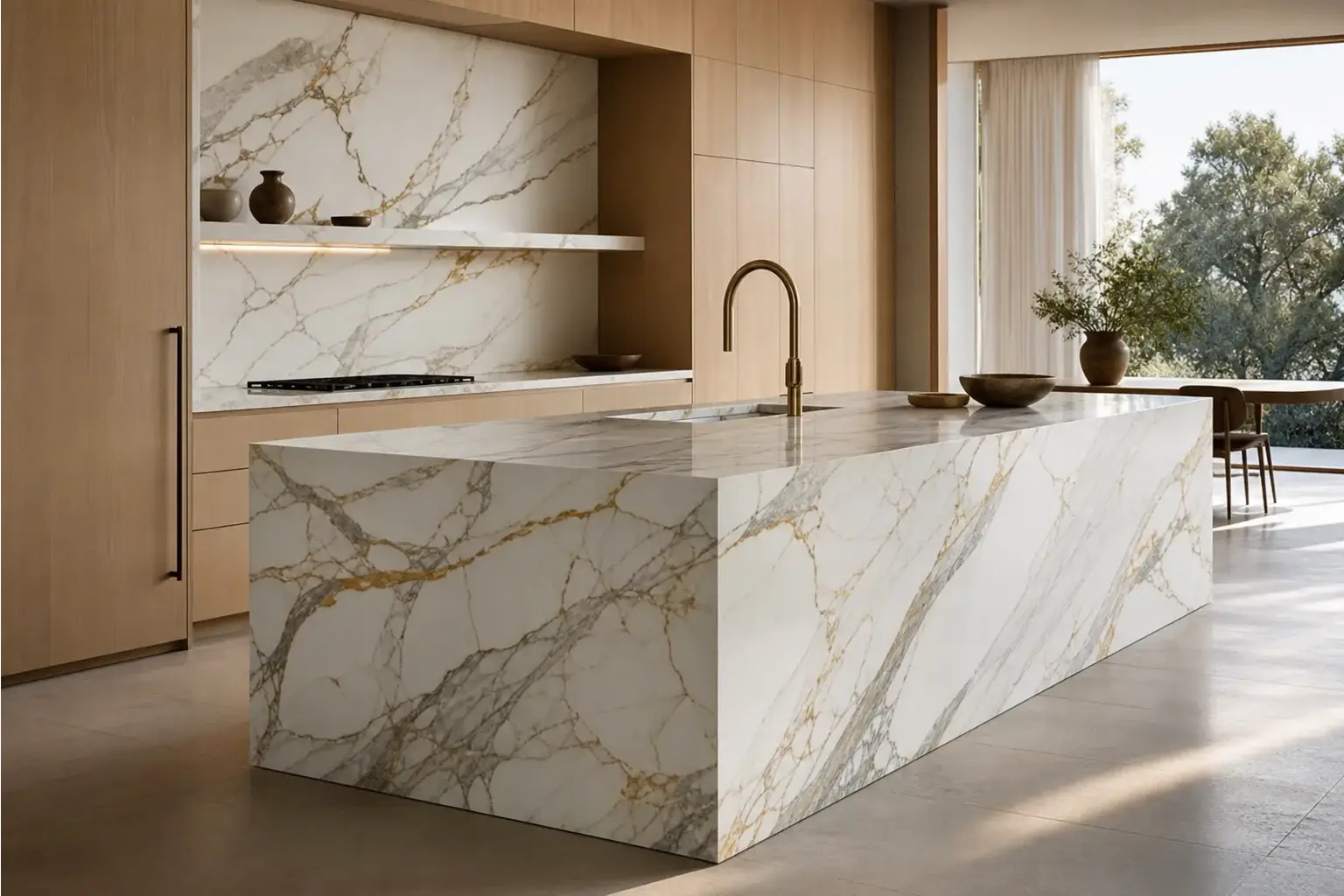
- Wipe crumbs and spills with a damp microfiber cloth.
- Spray a pH-neutral stone cleaner, or use a drop of mild dish soap in warm water.
- Wipe in sections, then dry with a clean towel.
Drying matters on polished marble, where water spots and streaks show easily.
Never use on marble
| Product | Why |
|---|---|
| Vinegar, lemon, citrus cleaners | Etch the surface |
| Generic bathroom and tub cleaners | Often acidic |
| Bleach or ammonia used regularly | Can dull and degrade sealers |
| Abrasive powders and creams | Scratch the finish |
| Scouring pads, steel wool | Scratch and leave metal marks |
| Glass cleaners | Often contain ammonia or acids |
Disinfecting safely
For occasional disinfection, many stone care makers offer stone-safe disinfectant products. Diluted isopropyl alcohol is commonly used as a quick sanitizer on sealed stone, followed by a wipe with clean water. Avoid frequent strong bleach.
Marble floors
- Use entrance mats to trap sand and grit.
- Dust mop daily with a clean, dry microfiber mop.
- Damp mop with pH-neutral cleaner; change water often.
- Avoid steam cleaners unless the stone professional approves.
- Use felt pads under furniture.
Marble showers and bathrooms
- Squeegee walls after each shower.
- Use a pH-neutral or stone-specific bathroom cleaner weekly.
- Ventilate to dry surfaces.
- Keep cosmetics on trays; some contain acids or oils.
Soap scum on marble needs stone-safe soap scum removers, not acidic tub products.
Weekly and monthly care
- Check for water darkening as a sign to reseal.
- Clean grout lines gently with a soft brush.
- Inspect for etching and consider a marble polishing product for light marks.
When to call a professional
Widespread dullness, deep scratches or heavy etching need professional honing and polishing; see marble polishing and restoration. Stains have their own method in how to remove stains from marble.
Care guides that travel with the slab
Homeowners get care advice from whoever sold the stone. iBlocky lets distributors attach a care sheet to each marble material, so fabricators and clients receive it with the slab link.
Frequently asked questions
Can I use dish soap on marble?
A small amount of mild dish soap in warm water is generally fine. Rinse and dry to avoid film.
Is vinegar safe for marble?
No. Vinegar is acidic and etches marble.
Can I use Clorox wipes on marble?
Frequent use of bleach-based wipes is not recommended. Use stone-safe disinfectants or occasional diluted alcohol instead.