
Marble vs Quartzite: Look, Hardness, Etching and Cost
Marble vs quartzite explained: composition, Mohs hardness, etching, staining, fabrication cost and how to avoid dolomite sold as quartzite.
The short answer
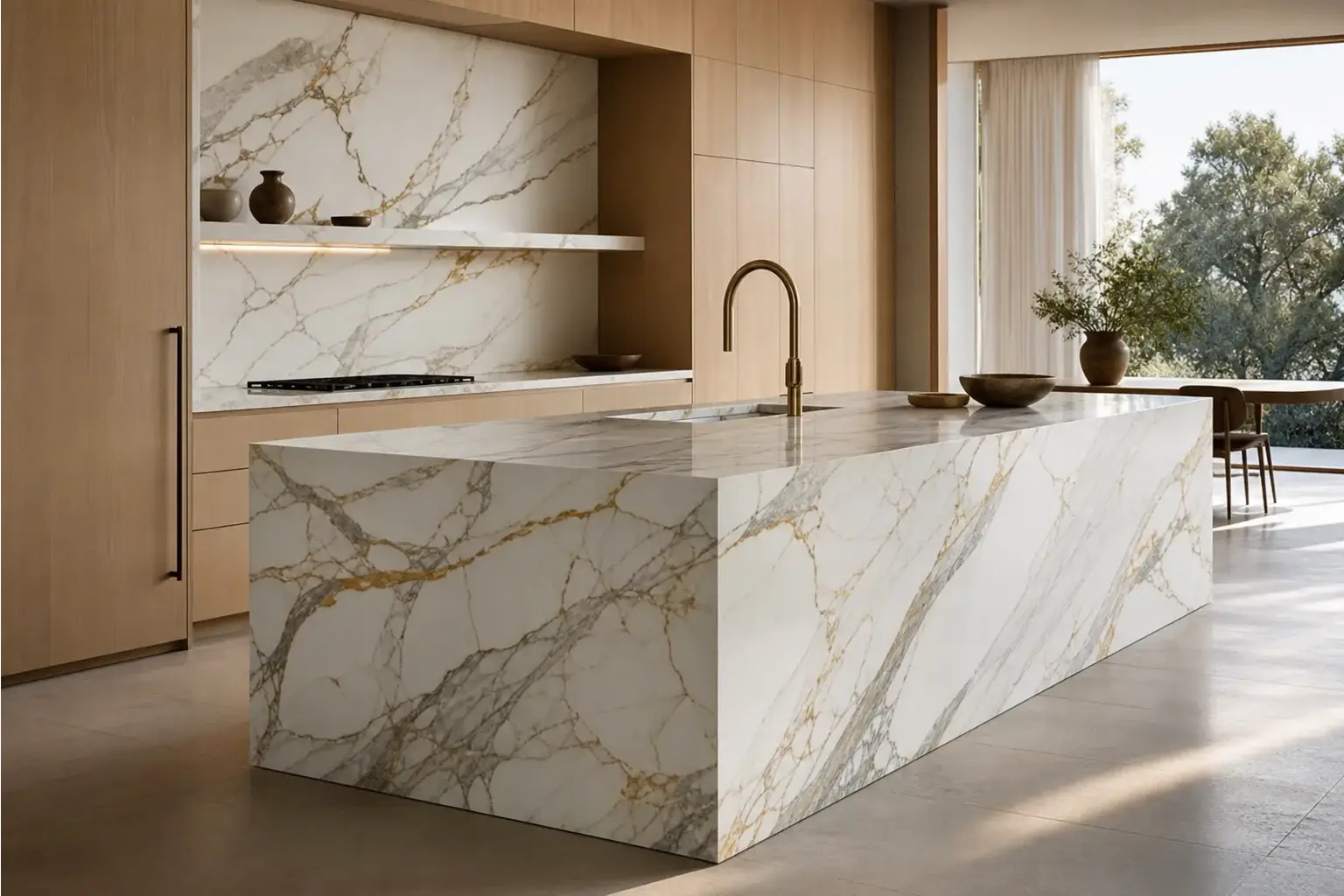
Marble is a carbonate stone of calcite or dolomite that scratches more easily and etches with acids. Quartzite is a metamorphic stone made mostly of quartz, about twice as hard on the Mohs scale, and it does not etch from household acids. Quartzite often looks similar to marble, but it is harder to fabricate and some stones sold as quartzite are actually dolomite.
Key takeaways
- Quartzite is mostly quartz; marble is mostly calcite or dolomite.
- True quartzite resists etching and scratching.
- Quartzite costs more to fabricate because it is harder.
- Test samples to confirm a quartzite is genuine.
Why the comparison is so popular
Over the last decade, white and light-colored quartzites became the go-to answer for homeowners who love marble but fear etching. Stones with names like Taj Mahal, Mont Blanc or White Macaubas promise a marble look with granite-like durability. Sometimes they deliver exactly that; sometimes the stone is not what the name suggests.
How each forms
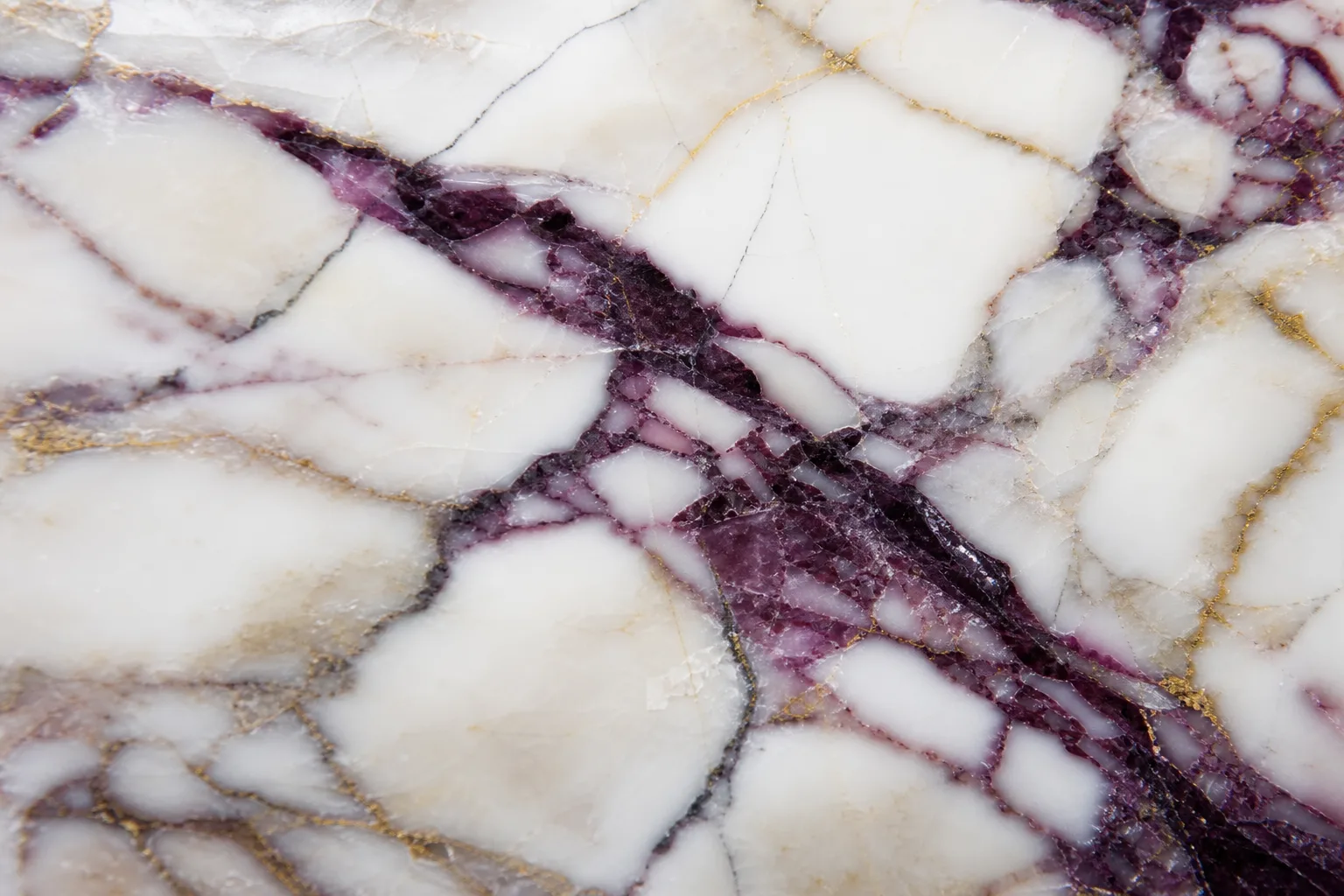
Marble forms from limestone or dolostone. Quartzite forms from quartz-rich sandstone: heat and pressure fuse the sand grains and their silica cement into a dense, interlocking quartz mass. Because quartz is chemically very stable, quartzite shrugs off the acids that etch marble.
Comparison at a glance
| Marble | True quartzite | |
|---|---|---|
| Main mineral | Calcite or dolomite | Quartz |
| Mohs hardness | About 3 to 4 | About 7 |
| Etches with lemon or vinegar | Yes | No |
| Scratched by a steel knife | Yes | No |
| Typical absorption | Low to moderate | Varies widely |
| Fabrication | Easier, faster | Slower, harder on tools |
| Look | Classic veining, soft glow | Often marble-like, sometimes glassy |
The mislabeling problem
The biggest risk with quartzite is buying a stone that is not really quartzite. Some popular "quartzites" are dolomitic marbles, sometimes marketed as soft quartzite. They etch, more slowly than calcite marble, and scratch more easily than real quartzite. A simple sample test settles the question: true quartzite scratches glass and does not etch. Full instructions are in how to tell if quartzite is real.
Staining
Quartzite does not etch, but it can stain. Some quartzites are surprisingly porous between their crystals. Test absorption with water and oil drops on a sample, and seal when needed.
Cost
Slab prices overlap widely. What changes is fabrication: cutting and polishing quartzite takes longer and wears diamond tools faster, so installed cost is often higher than for a comparable marble.
Which one should you choose?
Choose marble if you want classic Italian veining, plan a honed finish and enjoy patina. Choose true quartzite if you cook with acidic ingredients, want a polished surface that stays pristine and are willing to pay for harder fabrication. If budget and appearance point to dolomite, choose it knowingly, with marble-style care.
Helping buyers compare with confidence
Distributors who label quartzites accurately and attach test results build long-term trust. In iBlocky, each slab record can carry its geological type, test notes and photos, so the facts travel with the slab when you share it. For the sales conversation itself, see explaining quartzite vs marble to buyers.
Frequently asked questions
Is quartzite stronger than marble?
Yes. True quartzite is made of quartz, about 7 on the Mohs scale, while marble's calcite is about 3.
Does quartzite need to be sealed?
Often, yes. It does not etch, but porosity varies, so test absorption and seal if water or oil darkens the surface.
Why is quartzite more expensive to install?
It is harder, so cutting, edging and polishing take longer and wear tools faster.