
Marble vs Granite Countertops: Differences That Matter
Marble vs granite: how they form, hardness, etching, staining, heat, maintenance and looks. A clear comparison for U.S. kitchens and bathrooms.
The short answer
Marble is a soft carbonate rock that etches with acids and scratches more easily but offers classic veining. Granite is a hard igneous rock of quartz and feldspar that resists scratches, heat and household acids, with granular or flowing patterns. Choose granite for low-maintenance work surfaces and marble when you value its look and accept patina.
Key takeaways
- Granite is igneous and hard; marble is metamorphic and softer.
- Marble etches with acids; granite generally does not.
- Both tolerate heat better than resin-based surfaces.
- Many granites need less maintenance than marble.
Two very different rocks
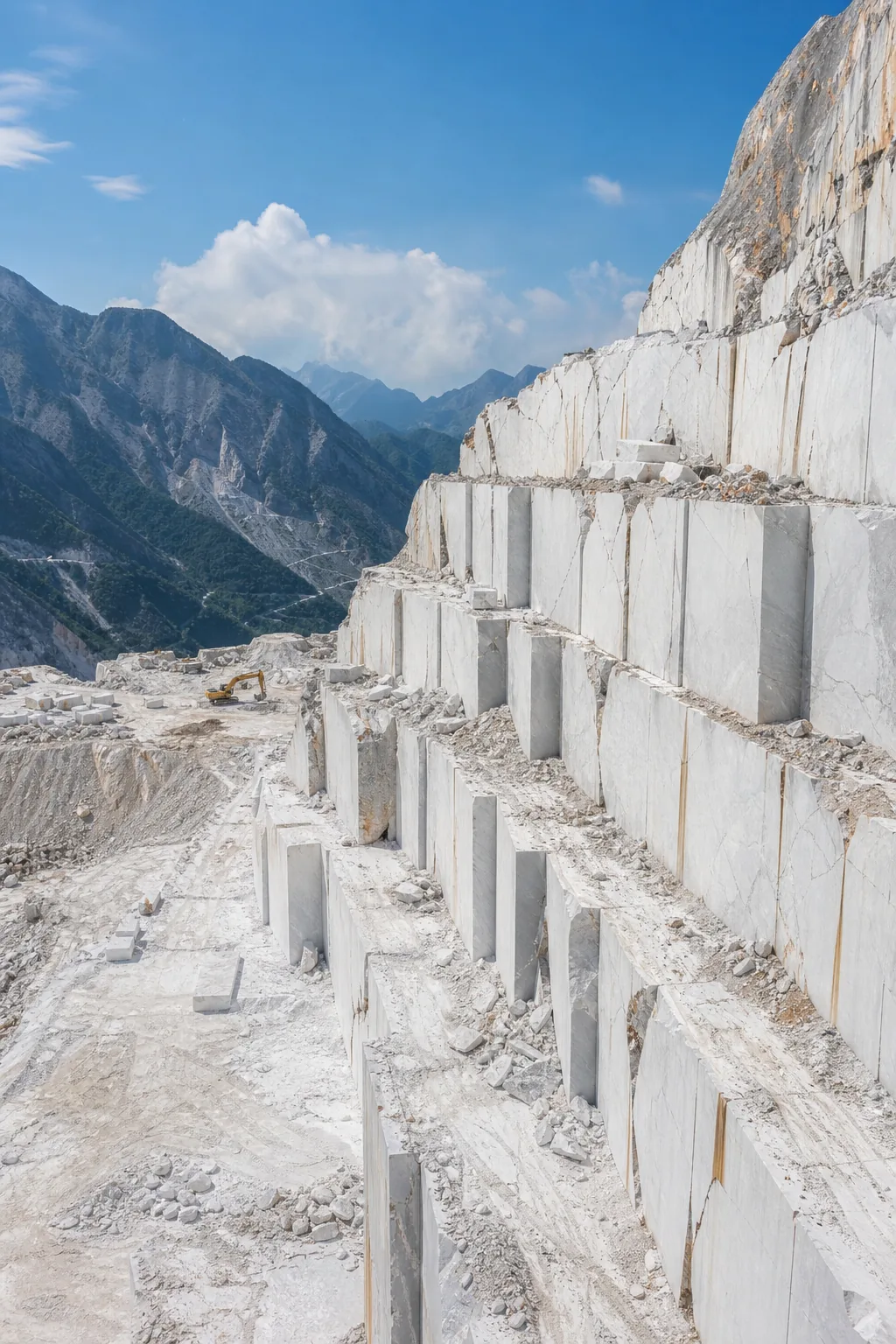
Granite crystallized from molten magma deep underground. As it cooled slowly, minerals such as quartz, feldspar and mica grew into the speckled or flowing patterns you see in a slab. Marble started as limestone on ancient seabeds and was later transformed by heat and pressure. That different origin explains almost every practical difference.
Side-by-side comparison
| Feature | Marble | Granite |
|---|---|---|
| Rock type | Metamorphic carbonate | Igneous silicate |
| Main minerals | Calcite or dolomite | Quartz, feldspar, mica |
| Mohs hardness | About 3 to 4 | About 6 to 7 |
| Reaction to acids | Etches | Generally resistant |
| Scratch resistance | Lower | High |
| Stain resistance | Moderate; sealing helps | Varies; many are dense |
| Typical look | Veined, soft, luminous | Granular, speckled or flowing |
| Maintenance | Higher | Lower |
Everyday kitchen use
Imagine a Saturday brunch: orange juice, coffee, a cutting board with lemons. On polished marble, a forgotten ring of juice leaves a dull etch mark. On most granites, it wipes away without a trace. That is the core difference. Granite forgives; marble records.
Marble lovers often embrace those marks as patina, especially on honed surfaces. If that sounds stressful rather than charming, granite or quartzite is a better fit. See choosing marble for a kitchen.
Appearance
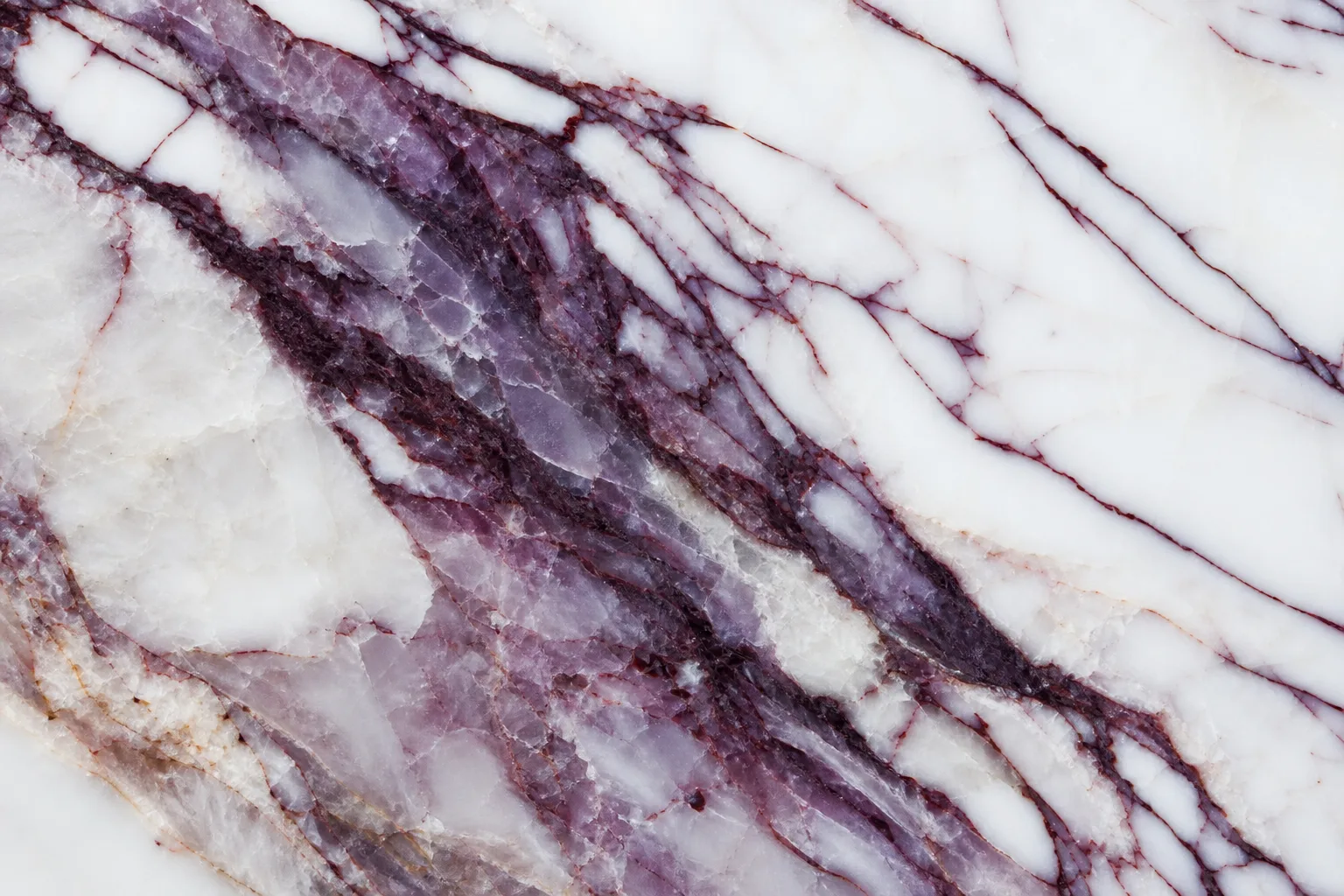
Marble's appeal is its veining and the way light enters the surface. Granite has evolved well beyond the speckled browns of the 1990s: white and gray granites, dramatic movement and leathered finishes give it a modern look. Some stones sold as granite are other igneous or metamorphic rocks, such as gneiss, which can show marble-like flow.
Heat and durability
Both stones tolerate heat far better than engineered quartz. Still, sudden temperature changes can stress any stone, and resin-treated surfaces can mark, so trivets are always wise. Read heat resistance of countertop materials.
Cost
Neither is automatically cheaper. Common granites can be very affordable, while exotic granites rival premium marble. Carrara marble can cost less than rare granites. Rarity, slab size and quality drive price more than rock type.
Which to choose
- Busy family kitchen, heavy cooking: granite.
- Classic look, honed patina welcome: marble.
- Bathroom vanity: either; marble is common and loved.
- Outdoor kitchen: granite.
For stone distributors
Customers comparing marble and granite usually want to see both side by side. With iBlocky, your team can share a mixed selection of real marble and granite slabs in one link so buyers compare actual pieces, not catalog swatches.
Frequently asked questions
Which is more durable, marble or granite?
Granite is harder and more resistant to scratches and acids, so it is usually considered more durable for kitchen work surfaces.
Is marble more expensive than granite?
Not always. Price depends on rarity, quality and slab size. Some granites cost more than common marbles and vice versa.
Can I put hot pans on granite or marble?
Both handle heat well, but use trivets to avoid thermal shock and protect sealers and resin treatments.