
Stone Trade Names Explained: Why Names Confuse Buyers
How natural stone trade names work, why the same stone has many names, commercial vs geological categories and how to compare stones accurately.

The short answer
Stone trade names are commercial labels chosen by quarries, processors and distributors, not scientific classifications. The same stone can be sold under several names, different stones can share one name, and commercial categories like granite or marble are broader than their geological meanings. Compare stones by geological type, origin, appearance and test data rather than names alone.
Key takeaways
- Trade names are marketing labels, not geology.
- One stone can have many names and vice versa.
- Commercial 'granite' and 'marble' are broad categories.
- Ask for geological type and origin.
Where names come from
Names may refer to:
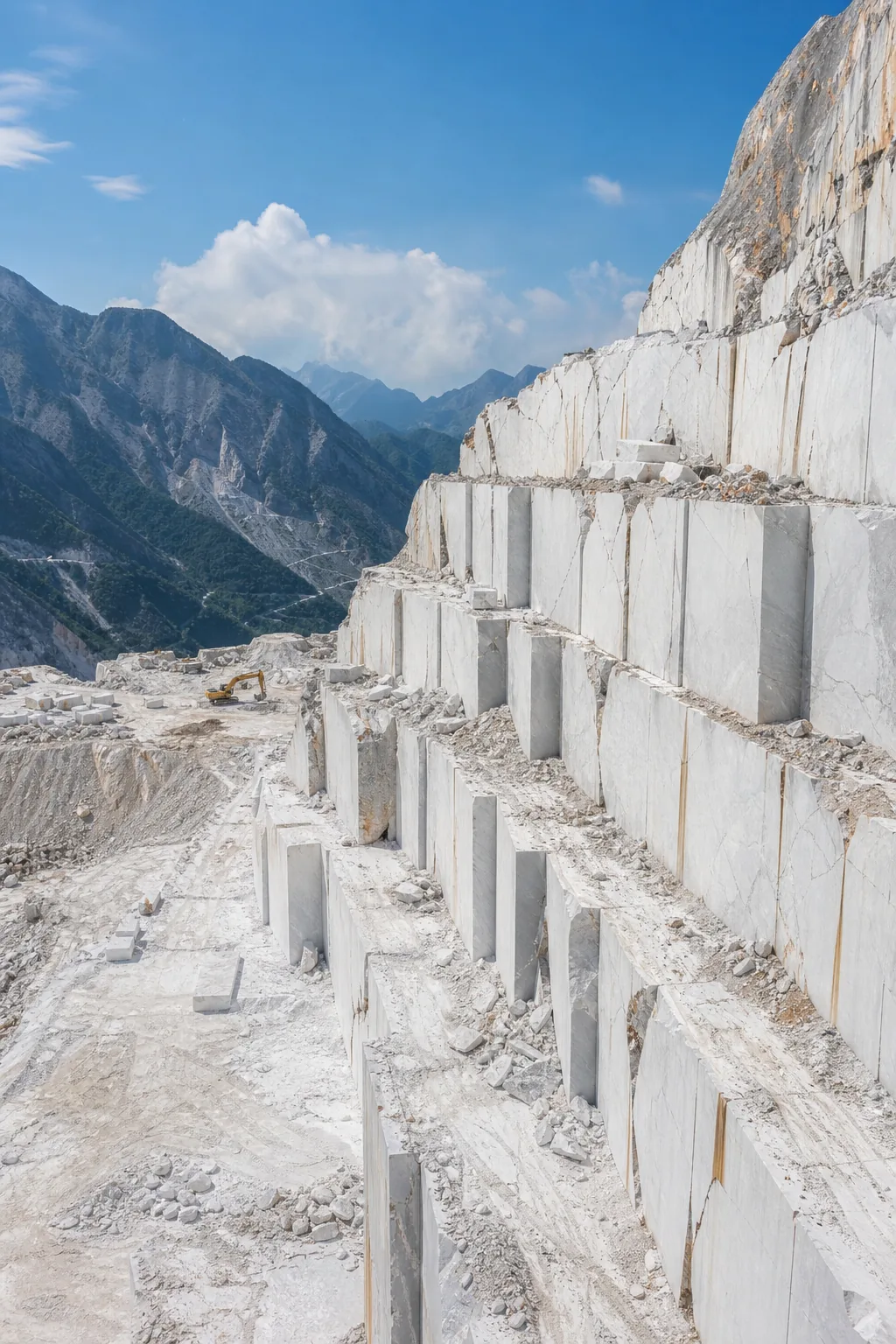
- A quarry or region: Carrara, Danby, Thassos.
- A color or look: Crema Marfil, Nero Marquina, Verde Guatemala.
- A famous place or idea: Taj Mahal, Patagonia, Fantasy.
- A distributor's branding: exclusive names for the same imported stone.
Why the same stone has many names
Different importers rename stone to differentiate their offer, avoid price comparisons or appeal to local tastes. A stone might be sold under three names in three U.S. cities.
Commercial vs geological categories
| Commercial category | Often includes |
|---|---|
| Granite | Granite, gneiss, gabbro, diabase, charnockite and other hard silicate rocks |
| Marble | True marble plus dense limestones and serpentines that polish |
| Quartzite | True quartzite and, sometimes, dolomite |
| Onyx | Banded calcite or aragonite |
| Limestone | Limestones and some dolomites |
ASTM specifications follow these commercial groupings with defined property requirements, which is why it is useful to know which specification applies.
Problems this causes
- Buyers compare prices of stones that are not equivalent.
- Performance expectations are wrong, as with dolomite sold as quartzite.
- Reordering the "same" stone from a new supplier yields something different.
How to compare stones properly
- Ask for geological type.
- Ask for country and region of origin.
- Compare slab photos side by side.
- Request test data for performance-critical projects.
- Test samples for etching and scratching.
Good naming practice for sellers
Use the common trade name buyers search for, and add the geological type and origin. Consistent naming across your catalog makes internal search and reorders easier.
Examples of naming confusion
- A white quartzite sold under several invented names by different importers in the same city.
- A dolomite marketed as quartzite, leading to unexpected etching.
- A gneiss sold as "granite" with marble-like movement.
- The same Brazilian stone carrying a different name after reaching the U.S.
Building a naming policy
Distributors can reduce confusion with a simple policy: use the most widely recognized trade name, add geological type and origin, keep supplier names as aliases in your system, and never rename a stone to mislead buyers. Consistent names also help customers find materials online and help AI assistants match your inventory to buyer questions.
Naming in iBlocky
iBlocky lets distributors record a trade name, geological type, origin and supplier code on each material, so buyers searching for "Calacatta" or "quartzite" find the right slabs and know what they are.
Frequently asked questions
Are stone names standardized?
No. Trade names are chosen by quarries and sellers, so they vary.
Why is a gneiss sold as granite?
Commercially, granite covers many hard crystalline rocks with similar performance.
How can I find the same stone from another supplier?
Compare origin, geological type and slab photos rather than relying on the name.