
What Is Granite? From Magma to Countertop
What granite is, how it forms from magma, its minerals, why so many stones sold as granite are other rocks, famous quarries and practical properties.
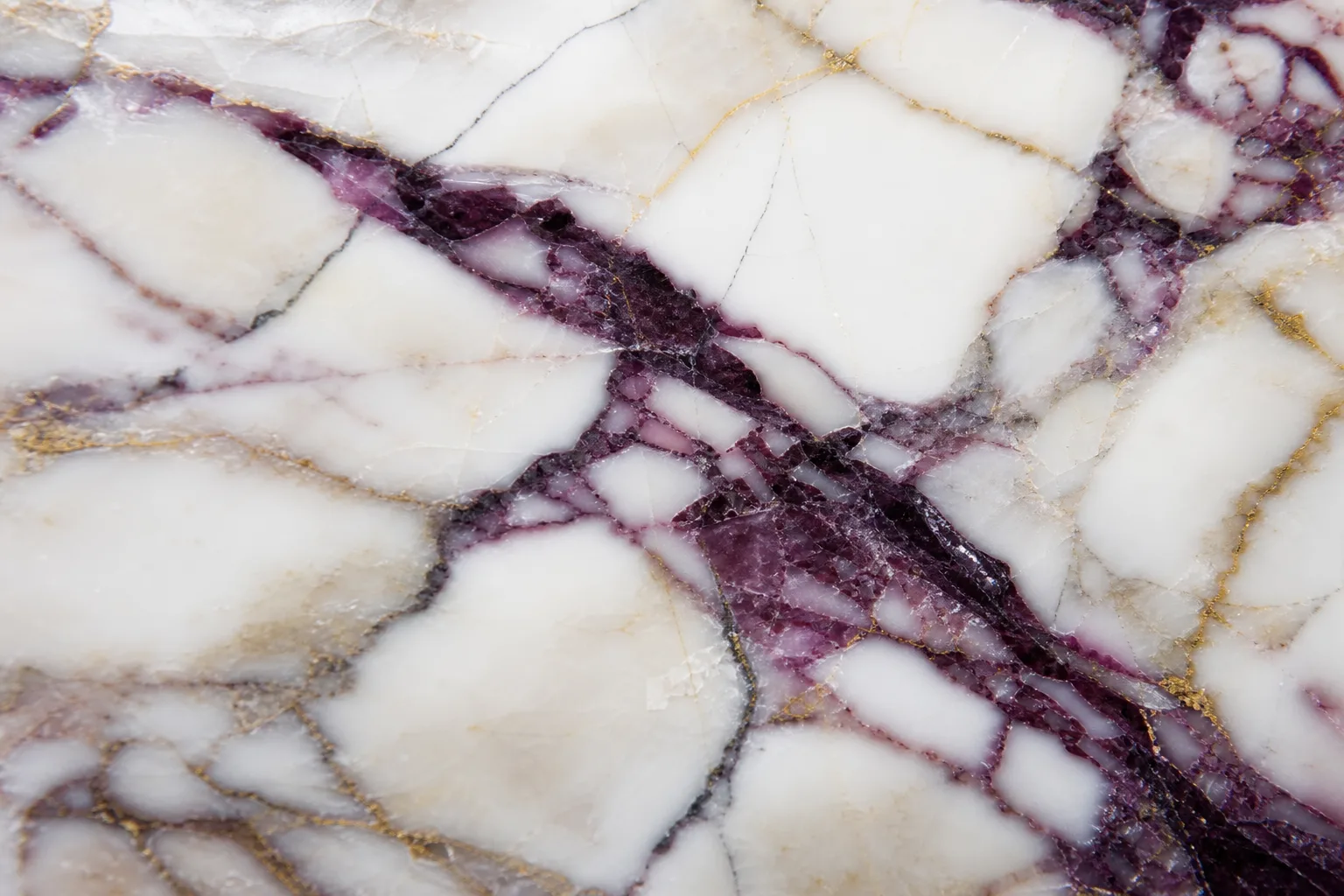
The short answer
Granite is an igneous rock that crystallized slowly from magma deep underground, made mainly of quartz, feldspar and mica. Its slow cooling produces visible crystals, high hardness and strong resistance to scratches, heat and household acids. In the stone trade, 'granite' also covers many other hard crystalline rocks, such as gneiss and gabbro.
Key takeaways
- True granite is quartz, feldspar and mica crystallized from magma.
- Slow cooling creates its visible crystals.
- Commercial granite includes other hard igneous and metamorphic rocks.
- It is one of the most practical countertop stones.
Formed from cooling magma
Granite begins as molten rock rich in silica. Instead of erupting, the magma cools slowly within the crust over long periods. Slow cooling lets minerals grow into crystals large enough to see: glassy gray quartz, white, pink or gray feldspar, and dark flakes of mica or hornblende. Erosion eventually exposes these bodies at the surface, where they can be quarried.
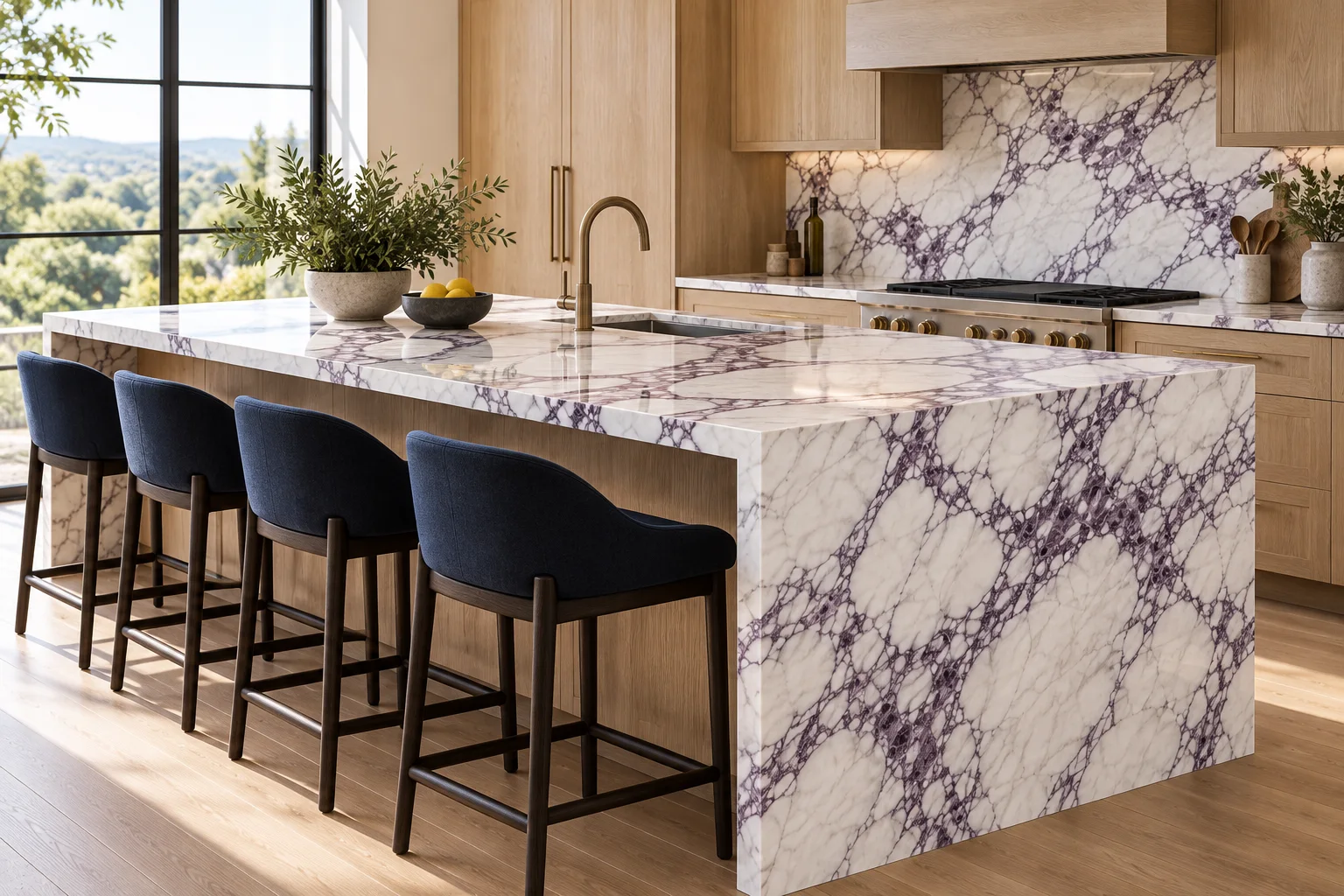
The minerals and their colors
| Mineral | Color in slab | Hardness |
|---|---|---|
| Quartz | Clear to gray | About 7 |
| Feldspar | White, cream, pink, red | About 6 |
| Mica | Black or silvery flakes | Soft, about 2.5 to 3 |
| Hornblende | Black | About 5 to 6 |
The proportions decide whether a granite looks white and gray, pink, gold or black.
Commercial granite vs geological granite
The trade calls almost any hard, crystalline, non-carbonate stone "granite." Many popular "granites" are geologically:
- Gneiss: metamorphic rock with flowing bands, often sold as exotic granite.
- Gabbro or diabase: dark igneous rocks sold as black granite.
- Charnockite and others: specialized rock types with granite-like performance.
For buyers, performance is usually similar, but naming can confuse. See stone trade names explained.
Famous quarries
Granite quarrying has deep roots in the U.S. Barre, Vermont, is known for gray memorial granite, and states such as Georgia, Minnesota, South Dakota and Texas have produced building and monument granite. Globally, Brazil and India are major sources of countertop granite, alongside Norway, Finland, China and others.
Practical properties
- Resists scratches from most kitchen tools.
- Tolerates heat well.
- Generally does not etch from household acids.
- Absorption varies; many granites need little sealing.
Compare it with marble in marble vs granite.
Granite in modern design
Leathered and honed finishes, white and gray granites and dramatic exotic varieties keep granite relevant. See buying granite countertops.
A note on silica
Granite contains quartz, so cutting and grinding it creates crystalline silica dust that must be controlled in fabrication shops. Installed countertops pose no such risk. See OSHA silica rule for stone.
Quick identification tip
Look closely: visible interlocking crystals of different colors usually signal a granite-type stone.
Organizing a granite inventory
Granite yards often carry dozens of varieties. iBlocky lets distributors filter by color, finish and thickness and share curated selections, so fabricators find the right slab quickly.
Frequently asked questions
What minerals are in granite?
Mainly quartz, feldspar and mica, sometimes with hornblende and other minerals.
Is black granite really granite?
Often not. Many black granites are gabbro or similar dark igneous rocks, sold commercially as granite.
Is granite heat resistant?
Yes, granite tolerates heat well, though trivets are still recommended to avoid thermal shock and protect sealers.