
Calacatta Marble Guide: Varieties, Looks and Care
A guide to Calacatta marble: origin in the Apuan Alps, Calacatta Oro, Borghini, Macchia Vecchia and Viola, how to choose a slab and how to care for it.
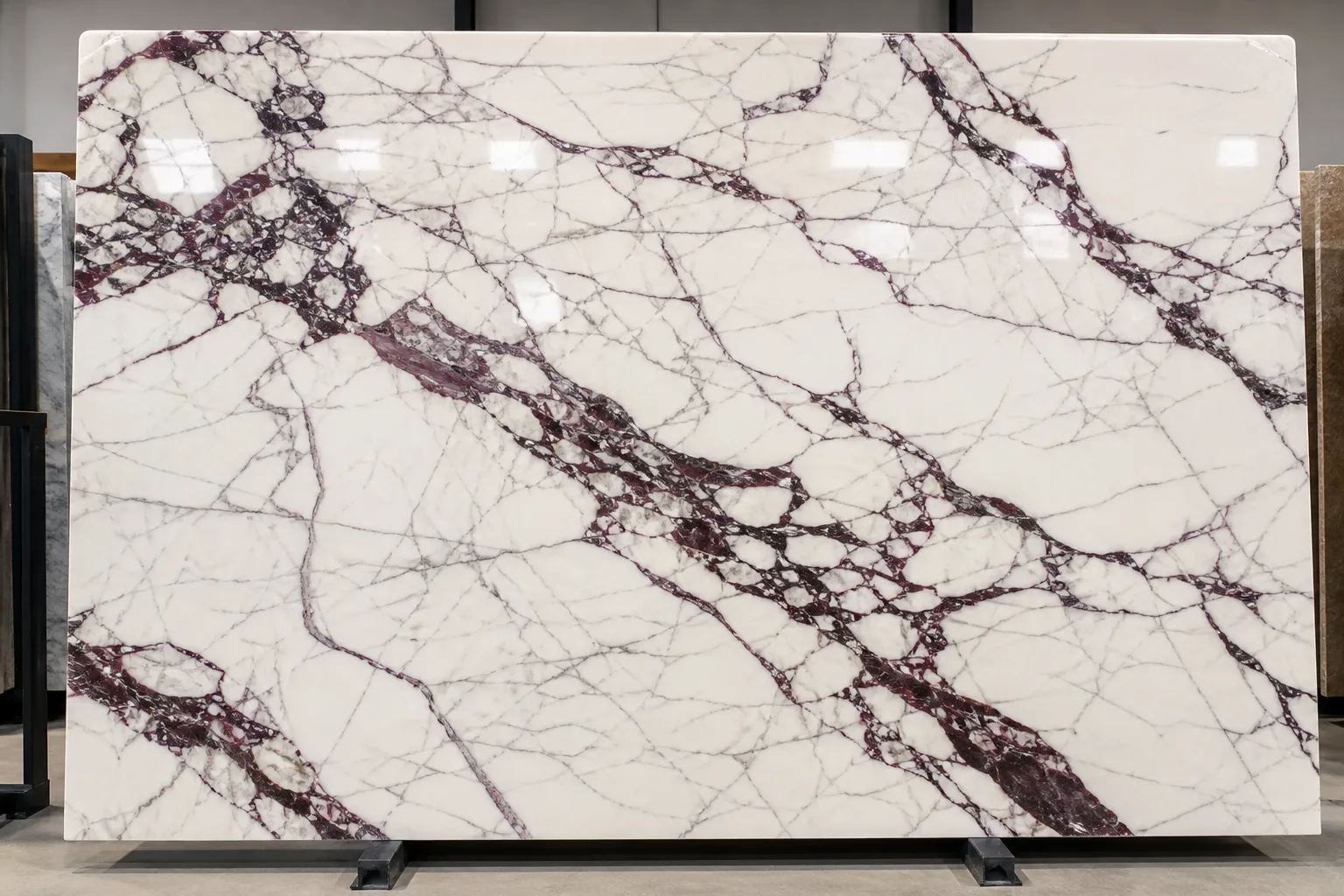
The short answer
Calacatta is a premium white marble from the Apuan Alps of Tuscany, recognized by its bright background and bold, dramatic veining in gray, gold or other colors. Named varieties such as Calacatta Oro, Borghini, Macchia Vecchia and Viola differ in vein color and density. Supply of top material is limited, so each slab is chosen individually and priced by quality.
Key takeaways
- Calacatta means bright white with bold, often thick veins.
- Variety names describe vein color and pattern.
- High-quality blocks are scarce, so prices are high.
- It is still marble: it etches and needs care.
What makes a marble 'Calacatta'
Calacatta is a commercial family rather than a single quarry. In general, Calacatta slabs have a whiter background than Carrara and veining that is thicker, more contrasting and more dramatic. The best slabs combine a luminous background with balanced, flowing veins that look striking at full scale on an island or wall.
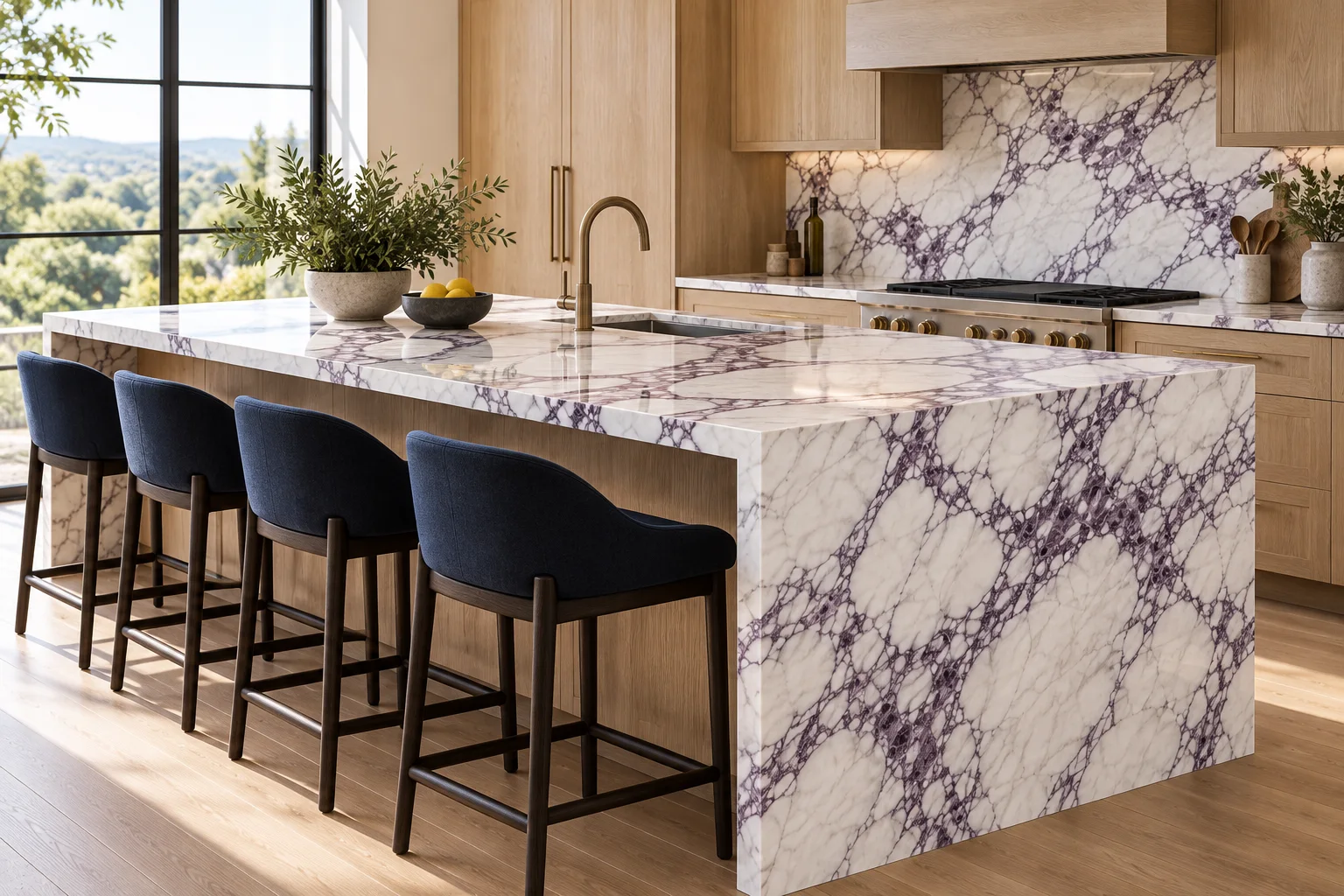
Popular varieties
| Variety | What to expect |
|---|---|
| Calacatta Oro | Warm white with gold and gray veining |
| Calacatta Borghini | Bold gray veins with gold accents |
| Calacatta Macchia Vecchia | Large patches and dramatic veining |
| Calacatta Vagli | Variable patterns, often with warm tones |
| Calacatta Viola | White with deep burgundy to plum veining |
| Calacatta Gold | Trade name used for warm-veined material |
Names are not standardized. Two suppliers may sell visually different stone under the same name, so always judge the actual slab.
Why Calacatta is expensive
The marble occurs in limited zones within the Apuan quarries, and a large share of extracted material does not meet top-grade standards. Demand from luxury residential and hospitality projects worldwide keeps prices high. Slab size matters too: jumbo Calacatta slabs for seamless islands command premiums.
Choosing a Calacatta slab
- View the slab at full scale, not just a sample.
- Decide where the most dramatic veins should land: island top, waterfall or backsplash.
- Check for fissures, resin repairs and color patches.
- Ask for consecutive slabs if you want a bookmatch.
- Review the fabricator's layout on slab photos.
See how to inspect a marble slab and buying bookmatched slabs.
Calacatta Viola: a modern favorite
Calacatta Viola, with its white ground and wine-colored veins, has become one of the most photographed marbles in design media. It is bold, so it works best as a single statement surface: an island, vanity or fireplace, often with quieter materials around it.
Living with Calacatta
Calacatta is calcite marble: acids etch it and spills can stain if left. Many homeowners choose a honed finish for kitchens and polished for vanities and walls. Seal, use pH-neutral cleaners and accept that a well-used Calacatta island will show its history. Read setting expectations about marble etching.
Selling Calacatta slab by slab
Because every Calacatta slab is unique, buyers expect to see the exact piece. iBlocky lets distributors present each slab with photos, video and dimensions, share bookmatched pairs and, on Elite, generate illustrative AI renders. Sales tips are in selling Calacatta marble.
Frequently asked questions
Where does Calacatta marble come from?
From the Apuan Alps in Tuscany, Italy, the same mountain range that produces Carrara and Statuario marble.
What is the difference between Calacatta Gold and Calacatta Oro?
Both describe white Calacatta with warm, gold-toned veining. Usage varies by supplier, so compare actual slabs.
Is Calacatta Viola a real marble?
Yes. Calacatta Viola is a natural Italian marble with white background and burgundy to violet veining.