
How Many Stone Slabs Do I Need for My Kitchen?
How to estimate how many marble, granite or quartzite slabs a kitchen needs: measuring, slab size, waste, seams, backsplash, islands and vein matching.
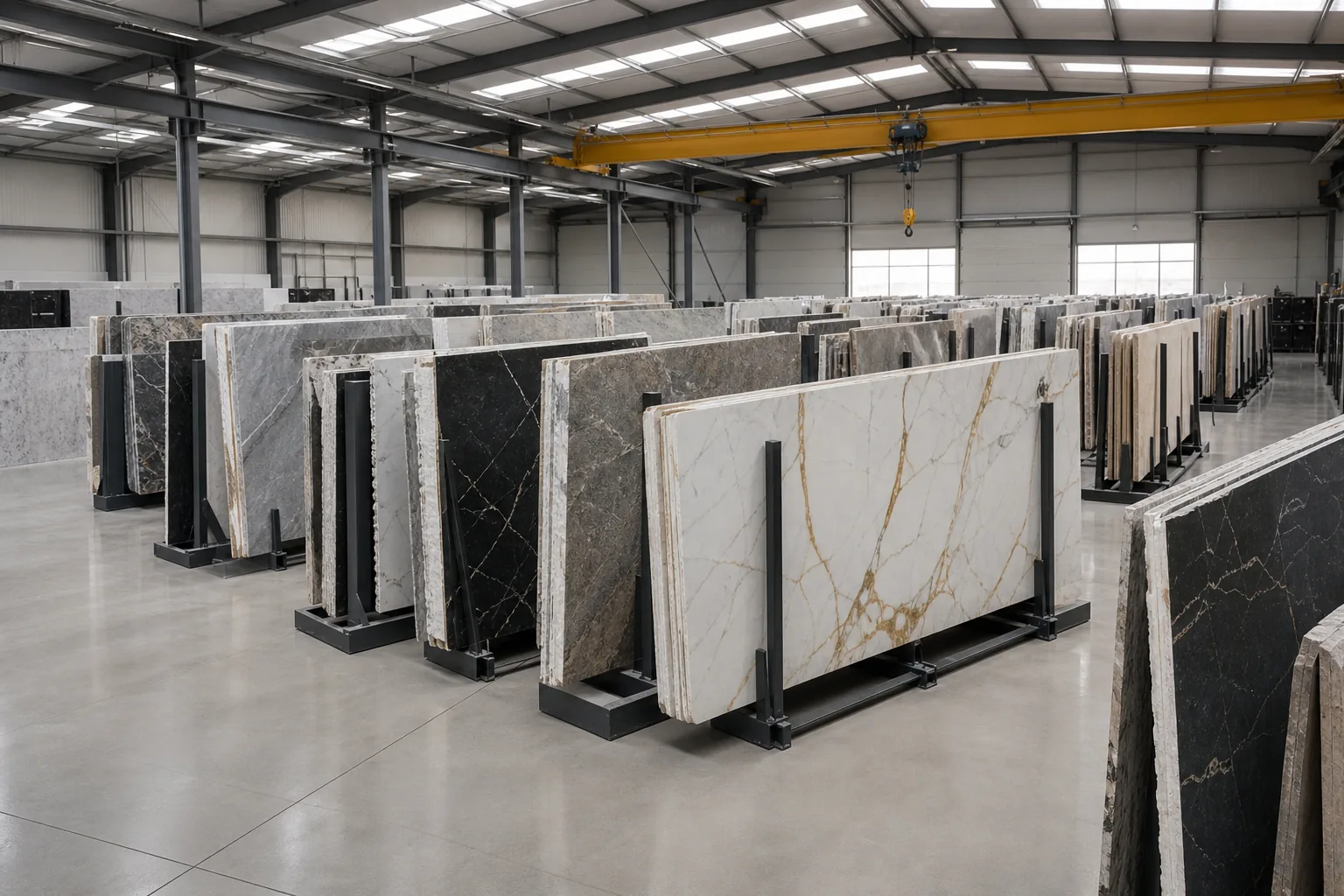
The short answer
Most kitchens need two to four slabs, but the real number depends on your countertop area, slab dimensions, island size, backsplash height and how carefully veins must match. Measure each surface, compare with the usable size of the slabs you like, add allowance for cutouts and waste, and ask your fabricator to confirm with a layout before buying.
Key takeaways
- Calculate from measured surfaces, not guesses.
- Usable slab size matters more than nominal size.
- Islands and full-height backsplashes add slabs quickly.
- Vein matching and waterfalls increase waste.
Step 1: Measure each surface
Measure every countertop run: length times depth, including overhangs. Measure the island separately. Add backsplash areas if using stone.
Step 2: Know your slab size
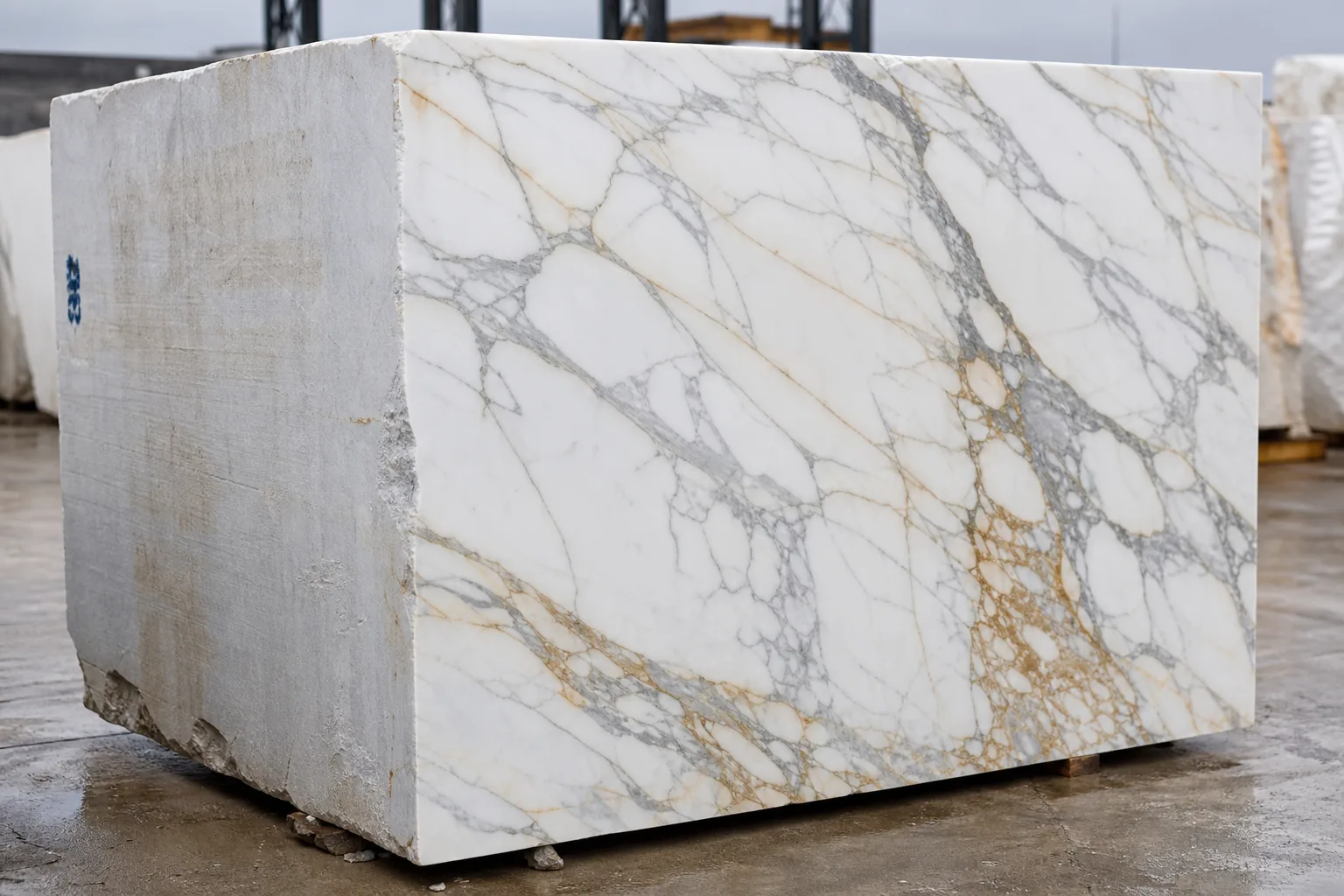
Slabs vary. Use the usable dimensions of the slabs you are considering. See marble slab sizes and thickness.
Step 3: Consider how pieces fit
Slabs are rectangles, and pieces must fit within them. A 10-foot run cannot come from a 9-foot slab without a seam. Long islands may need a jumbo slab.
Step 4: Add for waste and features
| Feature | Effect on slab count |
|---|---|
| Sink and cooktop cutouts | Little extra stone but affects layout |
| Waterfall edges | Additional pieces, ideally from the same slab |
| Full-height backsplash | Significant extra area |
| Mitered thick edges | Extra strips of stone |
| Vein matching | More waste to align patterns |
Step 5: Ask for a layout
Fabricators lay out pieces on slab photos or templates. This is the only reliable way to know the exact number and to see where seams and veins fall. See slab layout and templating.
Example thinking
A simple kitchen with an L-shaped perimeter and a modest island may fit on two or three slabs. Add a full-height backsplash and a waterfall island, and four or more slabs may be needed.
Buy from the same bundle
If you need several slabs, choose consecutive slabs from the same bundle so color and pattern match.
Should you buy an extra slab?
For high-variation stones or complex layouts, a spare slab can avoid delays if a piece breaks. Discuss with your fabricator; extra stone is costly, but delays can be too.
A worked example
Imagine an L-shaped perimeter of about 18 linear feet at standard depth, plus a 9-foot island. If your chosen slabs are roughly 120 by 70 inches usable, the island might come from one slab with room for a small backsplash, while the perimeter might need one or two more slabs depending on seam placement. Add a full-height backsplash, and another slab may be required. Your fabricator's layout will confirm the exact count.
Ordering extra for future needs
Some homeowners buy a small remnant or extra slab for future projects, such as a matching vanity or repairs. Ask the seller whether remnants from your slabs can be set aside.
Frequently asked questions
How many slabs does an average kitchen need?
Many kitchens need two to four slabs. Layout, slab size and backsplash choices change the number.
Can I buy half a slab?
Some suppliers sell half slabs or remnants for smaller projects, but full slabs are standard for kitchens.
Do I need extra slabs for a waterfall island?
Often yes. Waterfall sides should come from the same slab or bundle to continue the pattern.