
Shipping Natural Stone in Containers: What Importers Should Know
How natural stone ships in containers: 20-foot vs 40-foot, weight limits, bundles on A-frames, bracing, insurance, transit times and common risks.

The short answer
Natural stone usually ships in 20-foot containers because stone reaches weight limits before filling the space. Slabs travel in bundles on A-frames or in crates, braced and strapped to prevent movement. Importers must respect road and container weight limits, insure cargo adequately, plan for transit and port delays and work with forwarders experienced in heavy cargo.
Key takeaways
- Stone containers are limited by weight, not volume.
- 20-foot containers are common for stone.
- Bracing and packing prevent most breakage.
- Insure cargo adequately; carrier liability is limited.
Weight, not volume
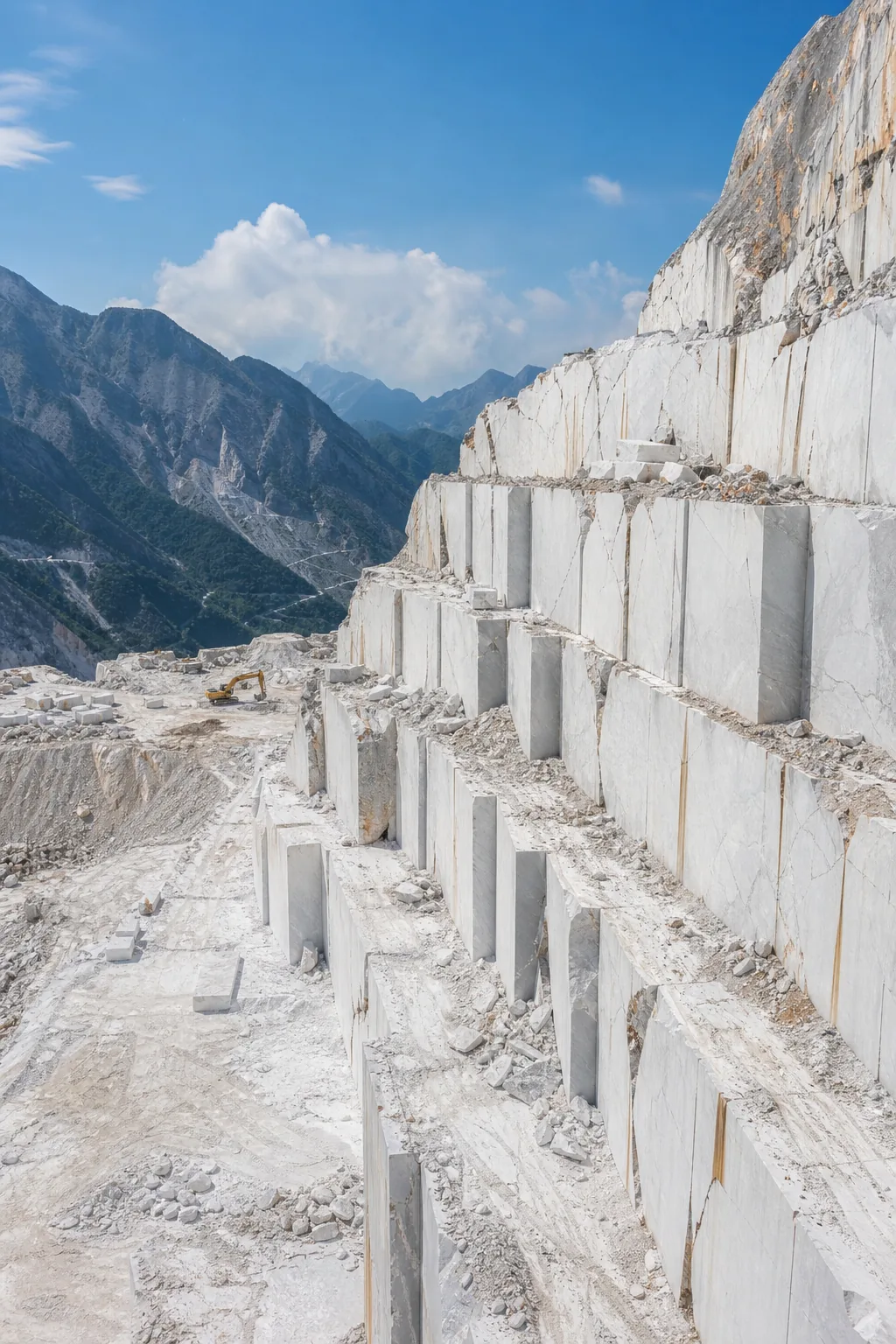
Stone is dense. A container fills up by weight long before it fills by volume. Container ratings, vessel rules and especially U.S. road weight limits for trucking determine how much stone you can load. Your forwarder will specify safe payloads for your route.
Why 20-foot containers
Because weight limits are reached quickly, 20-foot containers often carry stone efficiently and are easier to handle. Some loads use 40-foot containers with careful distribution.
How slabs are packed
| Method | Description |
|---|---|
| Bundles on A-frames | Slabs lean on wooden or steel A-frames, strapped |
| Crates | Slabs enclosed in wooden crates |
| Blocks | Shipped individually, often on flat racks or in open-top containers |
Wood packaging must meet ISPM 15 requirements. See ISPM 15 wood crates.
Bracing and securing
Bundles are braced with timber and strapped to prevent movement during sea motion and rail or truck transport. Poor bracing is a leading cause of breakage.
Transit and delays
Transit times depend on origin and route, and transshipment adds time. Port congestion, weather and customs holds can add more. Build buffers into sales planning; see stone lead times.
Insurance
Carrier liability limits are usually far below the value of stone cargo. Buy cargo insurance with adequate coverage and understand claim procedures.
Documents
The supplier provides commercial invoice, packing list, bill of lading and, when needed, certificate of origin. See stone import documents.
Risks and mitigation
- Breakage: specify packing, inspect before loading.
- Weight violations: confirm payload with forwarder.
- Delays: track shipments, communicate with customers.
- Moisture: dry slabs before packing; ventilate if needed.
- Documentation errors: review documents before shipment.
Open-top and flat-rack containers
Blocks and oversized items sometimes ship in open-top or flat-rack containers that allow crane loading. These require careful securing and may cost more. Ask your forwarder which equipment suits your cargo.
Moisture and condensation
Slabs packed wet or stored in humid conditions can stain or develop mold on packing. Ensure slabs are dry before loading.
Track every container as inventory
Containers in transit are sellable inventory if buyers can see them. iBlocky lets importers record incoming containers with supplier photos and pre-sell slabs before arrival; see pre-selling incoming containers.
Frequently asked questions
How many slabs fit in a container?
It depends on slab size, thickness and weight limits. Containers of stone are typically limited by weight.
Why do stone importers use 20-foot containers?
Because stone reaches weight limits before filling a container, smaller containers are often more practical.
Do I need cargo insurance for stone?
Yes, carrier liability is limited and rarely covers the value of stone shipments.