
Slab Handling Safety: Preventing Injuries in Stone Yards
Key safety practices for handling stone slabs: rack hazards, tipping, lifting equipment, A-frame transport, training, visitors and OSHA resources.

The short answer
Stone slabs are heavy and can tip, slide or break without warning, causing serious injuries. Safe handling relies on rated and anchored racks, proper lifting equipment, never standing between a slab and a rack, securing slabs during transport, trained operators and keeping visitors away from active work. Silica dust controls also apply when cutting.
Key takeaways
- Never stand between a moving slab and a rack or wall.
- Use rated equipment and inspect it daily.
- Secure slabs during storage and transport.
- Keep visitors out of active handling zones.
Why slab handling is dangerous
A single 3cm slab can weigh hundreds of pounds; bundles weigh tons. When slabs tip from racks or A-frames, or slide during lifting, they can crush workers. OSHA has published hazard information about stone slab storage and handling incidents; check OSHA's website for current resources.
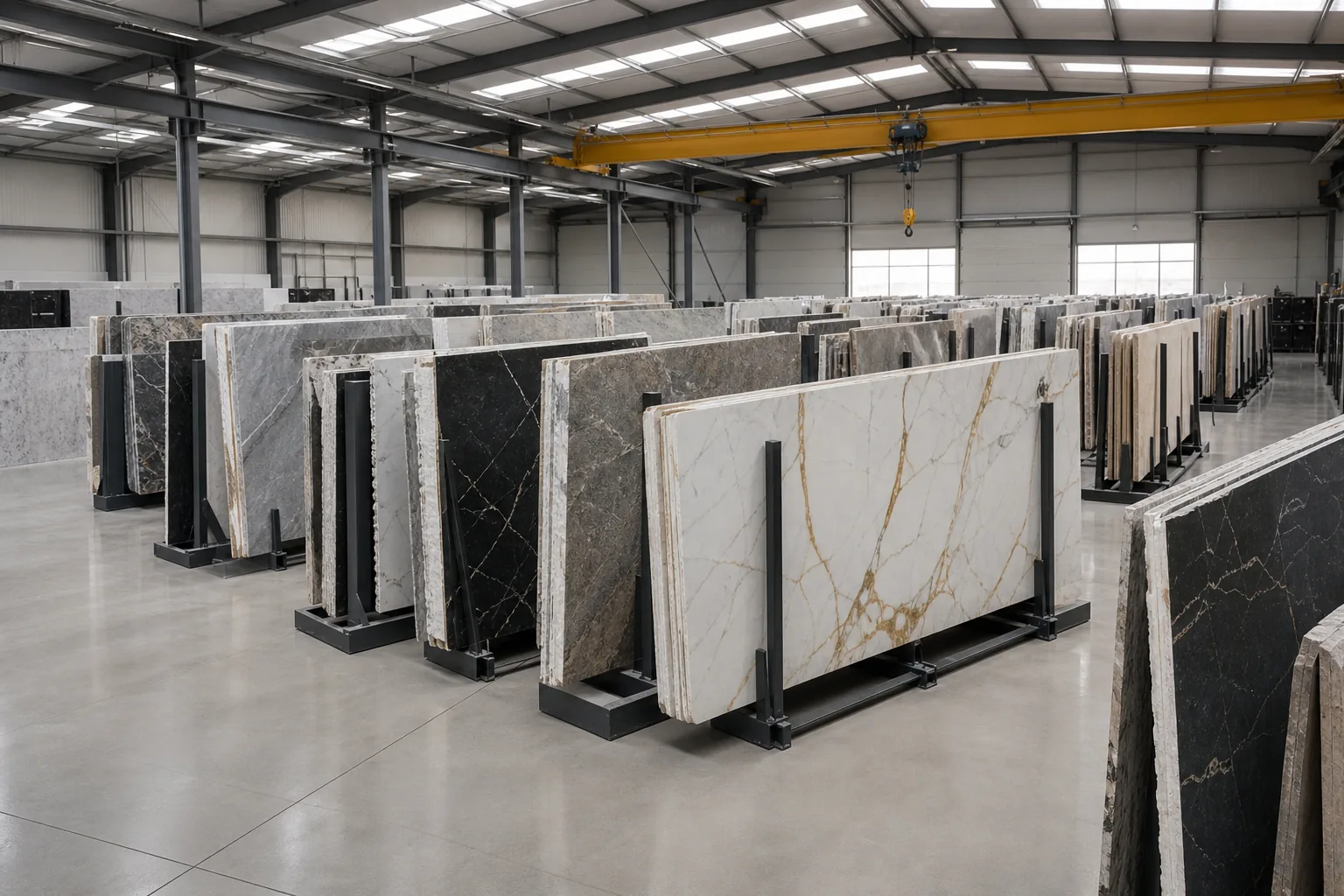
Main hazards
| Hazard | Example |
|---|---|
| Tipping | Slabs falling when adjacent slabs are removed |
| Crushing | Worker caught between slab and rack |
| Equipment failure | Clamp or vacuum lifter releasing |
| Breakage | Slab snapping during lifting |
| Transport | Unsecured slabs shifting on trucks |
| Dust | Silica exposure during cutting and grinding |
Safe practices
- Never stand between a slab being moved and a rack, wall or other slabs.
- Use rated clamps, vacuum lifters or slings appropriate for the slab.
- Inspect lifting equipment before each shift.
- Remove slabs from racks in an order that keeps remaining slabs stable.
- Secure slabs on racks with restraints where needed.
- Use two people or equipment; never manually lift full slabs.
- Keep hands and feet clear of pinch points.
Transport on A-frames
Slabs on trucks and trailers must be strapped to A-frames, balanced on both sides and protected at contact points. Drivers should check straps after the first miles.
Training
Train all yard staff and forklift operators on equipment, rack procedures and emergency steps. Forklift operators need training and evaluation under OSHA's powered industrial truck standard.
Visitors
Customers, drivers and contractors should stay in designated areas and be escorted near racks. Never allow visitors to move or lean on slabs.
Housekeeping
Clean floors of debris and water, keep aisles clear and store tools away from walkways.
Dust
When slabs are cut, ground or polished, silica controls are required. See OSHA silica rule for stone.
Near-miss reporting
Encourage staff to report near misses, such as a slab shifting unexpectedly or a clamp slipping. Near misses reveal hazards before someone is hurt, and reviewing them weekly keeps safety visible.
Fewer moves, fewer risks
Every unnecessary slab move is a risk. When salespeople can show slabs from photos and find their exact location in the system, the yard team moves slabs only when needed. iBlocky supports that with slab-level photos, locations and QR codes.
Frequently asked questions
What causes most slab accidents?
Tipping slabs and workers caught between slabs and racks or walls are common causes.
Do slab yards need OSHA training?
Forklift operators need training under OSHA's powered industrial truck standard, and employers must address recognized hazards, including slab storage and silica.
How should slabs be secured on trucks?
Strapped to A-frames, balanced on both sides and protected at contact points, with straps checked during the trip.