
Handling Returns and Claims in Stone Distribution
How stone distributors handle customer returns and claims: policies, inspection, photos, natural variation vs defects, supplier claims and records.
The short answer
A clear returns and claims process defines what can be returned and when, how claims are submitted with photos and slab IDs, how natural variation is distinguished from defects, who inspects and decides, and how supplier or carrier claims are filed. Written policies and good records resolve most disputes quickly and fairly.
Key takeaways
- Write a returns and claims policy and share it.
- Require photos and slab IDs for every claim.
- Separate natural variation from true defects.
- Pass valid claims back to suppliers or carriers.
Why stone claims are tricky
Natural stone varies, and fabricators sometimes discover issues only after cutting. Without clear rules, every claim becomes a negotiation.

Write a policy
| Topic | Define |
|---|---|
| Returns | Whether uncut slabs can be returned, timeframe, fees |
| Cut slabs | Generally not returnable unless defect proven |
| Natural variation | Not a defect |
| Defects | Cracks, failed resin, thickness issues |
| Process | How to submit and who decides |
Claim submission
Require slab IDs, photos, a description and, for fabrication issues, photos before and after cutting.
Inspection
Inspect the slab or photos promptly. Compare with original slab photos taken at receiving or pickup.
Natural variation vs defect
Color shifts, veining, natural fissures and pits are usually characteristics. Structural cracks, delamination, failed resin or incorrect thickness may be defects. See explaining natural stone variation.
Supplier and carrier claims
If a defect originates at the supplier or damage occurred in transit, file claims with documentation. See receiving damaged slabs.
Resolution options
Replacement, credit, partial refund or no action, according to policy.
Learn from claims
Track claims by material, supplier and cause to improve purchasing and handling.
Preventing claims in the first place
Many claims trace back to unclear expectations. Accurate slab photos, honest notes about fissures and resin and written approval of slab IDs before purchase prevent a large share of disputes.
Response times
Respond to claims quickly, even if only to acknowledge receipt and explain next steps. Silence turns minor issues into disputes.
Training staff
Train sales and yard staff on the policy so they give consistent answers and collect the right information from the start.
Example scenario
A fabricator reports a crack discovered after cutting. The distributor reviews pickup photos showing no visible crack, inspects the piece and finds a natural fissure that opened during fabrication. Following policy, they offer a partial credit as goodwill for a loyal account and pass details to the supplier. Clear records made the decision fast.
Publishing the policy
Put the policy on your website, quotes and invoices, so customers know the rules before buying.
Records make claims easier
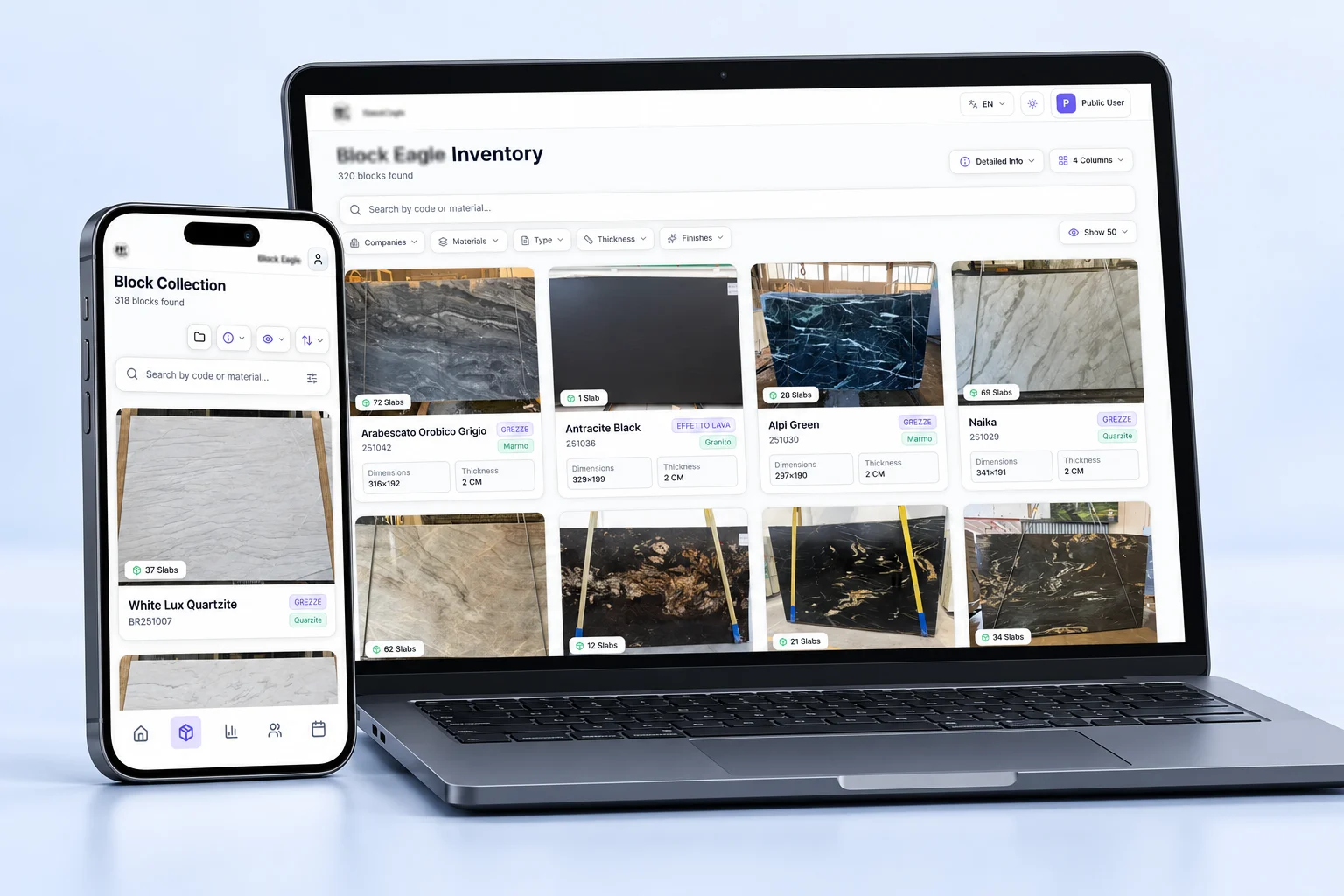
Slab-level photos from receiving and pickup are the best evidence. iBlocky keeps these photos and the slab history on each record.
Frequently asked questions
Can I return a stone slab?
It depends on the seller's policy. Uncut slabs may be returnable within set terms; cut slabs usually are not unless defective.
Is natural variation a defect?
Generally no. Color shifts, veining and natural fissures are characteristics of natural stone.
What evidence is needed for a slab claim?
Slab IDs, clear photos and a description, plus before-and-after photos for fabrication issues.