
Buying Onyx Slabs: Backlighting, Fragility and Care
How to buy onyx slabs for feature walls, bars and vanities: what onyx is, translucency, backlighting, resin and mesh, fragility and maintenance.
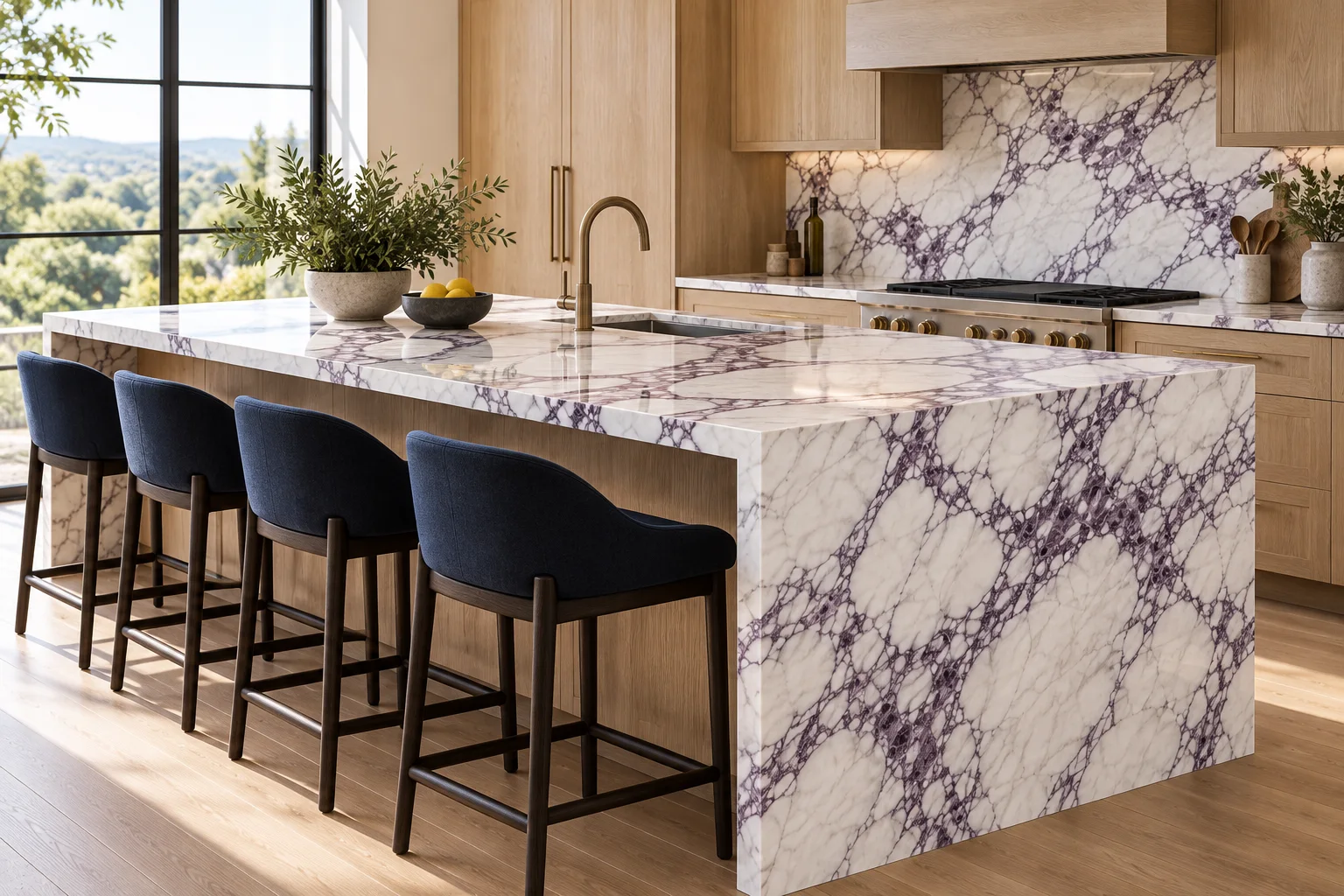
The short answer
Onyx in the stone trade is a banded calcite stone prized for vivid color and translucency. It is softer and more fragile than many stones, often resin-treated and mesh-backed, and etches with acids. Buy it for feature walls, bars, vanities and backlit panels, inspect each slab carefully, plan backlighting with the fabricator and protect it from heavy use.
Key takeaways
- Trade onyx is calcite-based, soft and translucent.
- Ideal for feature and backlit applications.
- Most slabs are resin-treated and mesh-backed.
- Avoid high-wear kitchen work surfaces.
What onyx is
In the stone trade, "onyx" usually means banded calcite deposited from water, often in caves or around springs. It is different from the gemstone onyx, a variety of chalcedony. Read what is onyx.
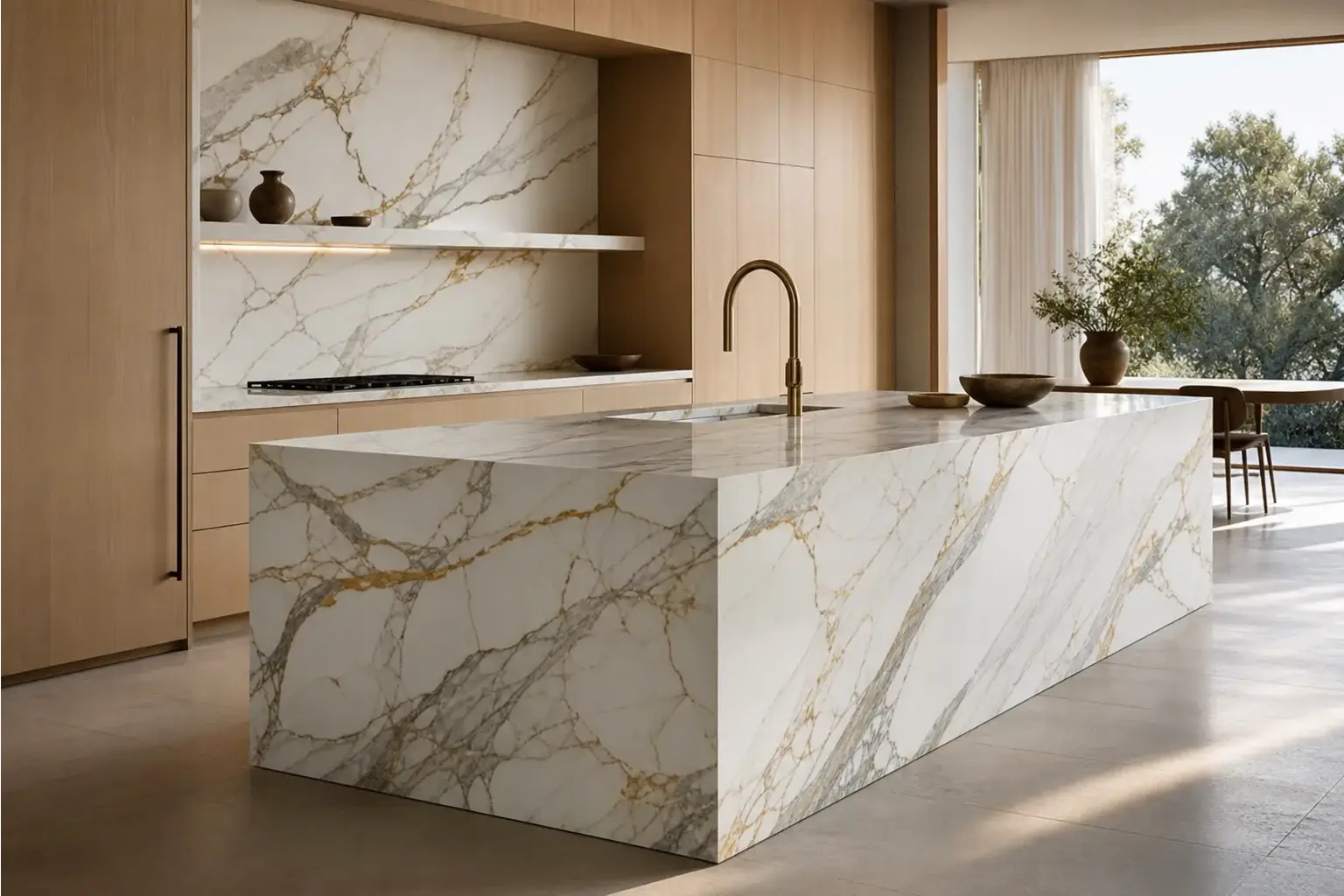
Why people love it
Onyx offers dramatic colors, from honey and white to green, pink and blue, and when backlit, glows. It makes unforgettable bars, feature walls and vanities.
Limitations
- Soft and brittle compared with granite or quartzite.
- Etches with acids.
- Often has fissures, filled with resin.
- Usually needs mesh backing.
Inspection
Look at each slab individually, including against light if possible. Check resin quality, fissures and mesh bonding. See resin and mesh-backed slabs.
Backlighting
Backlit onyx requires removing or using translucent backing, careful LED planning to avoid hot spots and proper ventilation. Coordinate fabricator and lighting designer.
Best applications
| Application | Suitability |
|---|---|
| Feature wall | Excellent |
| Bar front or top | Good with care |
| Bathroom vanity | Good with care |
| Kitchen work surface | Generally not recommended |
Care
Use pH-neutral cleaners, wipe spills, avoid abrasives and protect surfaces.
Onyx colors and their character
| Color | Notes |
|---|---|
| Honey and amber | Classic, warm glow when backlit |
| White | Soft, elegant, modern |
| Green | Fresh and distinctive |
| Red and multicolor | Dramatic and rare |
| Blue and pink | Very rare, premium |
Planning a backlit feature
Decide early whether the onyx will be backlit, because it affects slab selection, backing method, thickness and lighting design. Choose slabs whose patterns look best with light behind them.
Fabrication considerations
Onyx needs gentle handling, supported cutting and experienced fabricators. Ask whether your fabricator has worked with backlit onyx before.
Budgeting
Onyx slabs, lighting systems and specialized fabrication add up. Include all three in your budget.
Alternatives
If onyx feels too fragile, consider translucent quartzites or composite panels, which can offer glowing effects with different properties.
Inspecting onyx slab by slab
Hold a flashlight behind thin edges or ask for a backlit photo. Look for fissures that may become visible when lit, and check that resin-filled areas do not create dark lines under light. Ask whether consecutive slabs are available for bookmatched backlit walls.
Lead times
Onyx is often available in small lots. If you need several matching slabs for a large feature, secure them early.
Care after installation
Use coasters, avoid acidic drinks on onyx bars without protection and clean with pH-neutral products.
Frequently asked questions
Is onyx good for kitchen countertops?
Generally not for heavy-use work surfaces, because it is soft, etches and can be fragile. It is better for feature applications.
Why is onyx backlit?
Onyx is translucent, so light passing through reveals its bands and colors dramatically.
Is all onyx mesh-backed?
Many onyx slabs are mesh-backed for strength. For backlit applications, fabricators use translucent backing methods.