
What Is Onyx Stone? Translucent Calcite Explained
What onyx stone is, how banded calcite onyx forms in caves and springs, why it glows when backlit, colors, sources, uses and limitations.
The short answer
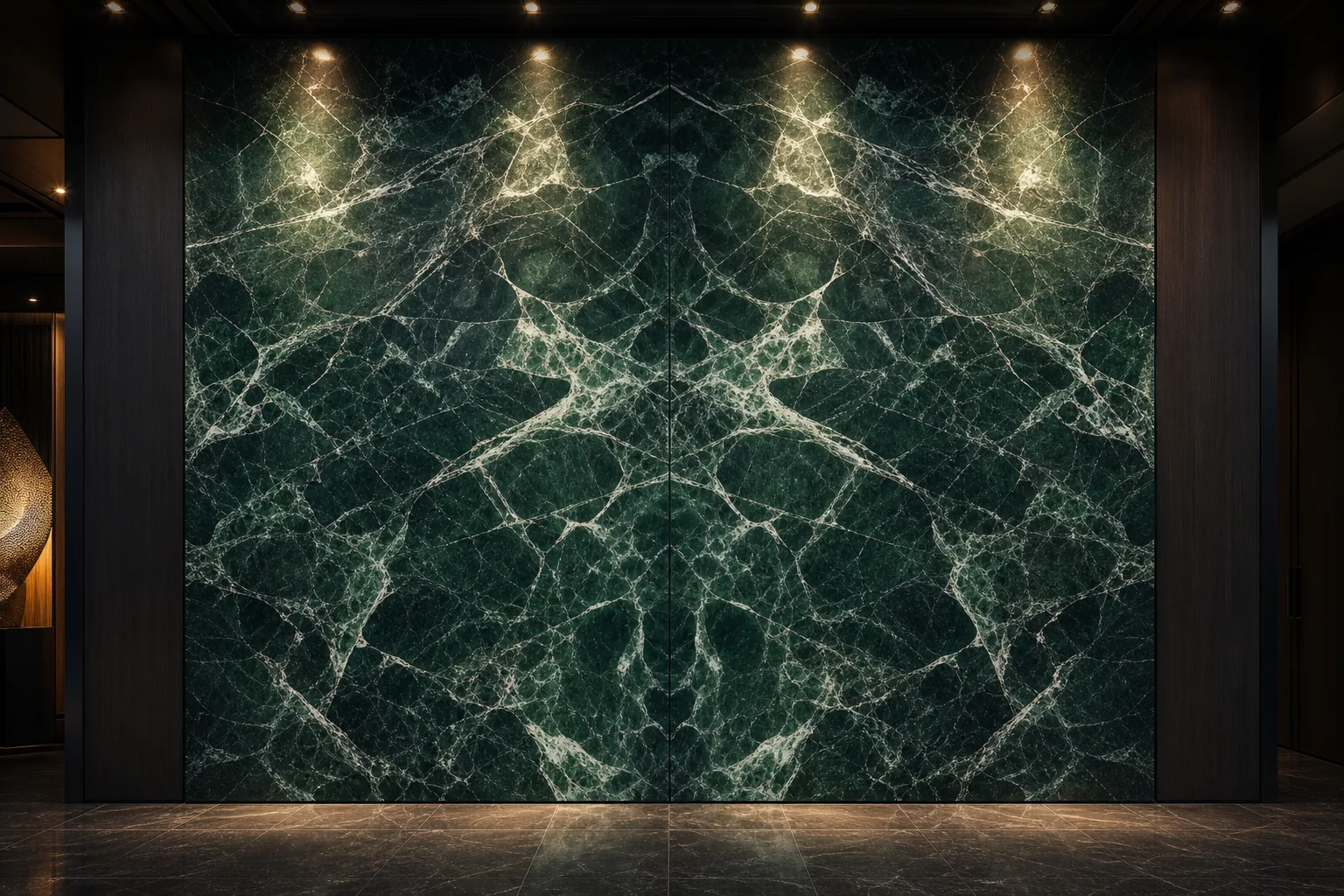
In architecture and interiors, onyx is a banded, translucent stone made of calcite or aragonite deposited layer by layer from mineral-rich water in caves and around springs. It is different from gemstone onyx, a type of chalcedony. Its bands and translucency make it spectacular when backlit, but it is soft, often fragile and etches with acids.
Key takeaways
- Architectural onyx is banded calcite, not gemstone onyx.
- It forms from water depositing calcium carbonate in layers.
- Translucency makes it ideal for backlit features.
- It is soft, often fissured and usually reinforced.
Two kinds of onyx
Jewelers use "onyx" for a banded variety of chalcedony, a form of quartz, often dyed black. The stone trade uses the word for something completely different: banded calcite, sometimes called onyx marble, cave onyx or Mexican onyx. This article covers the architectural kind.
How onyx forms
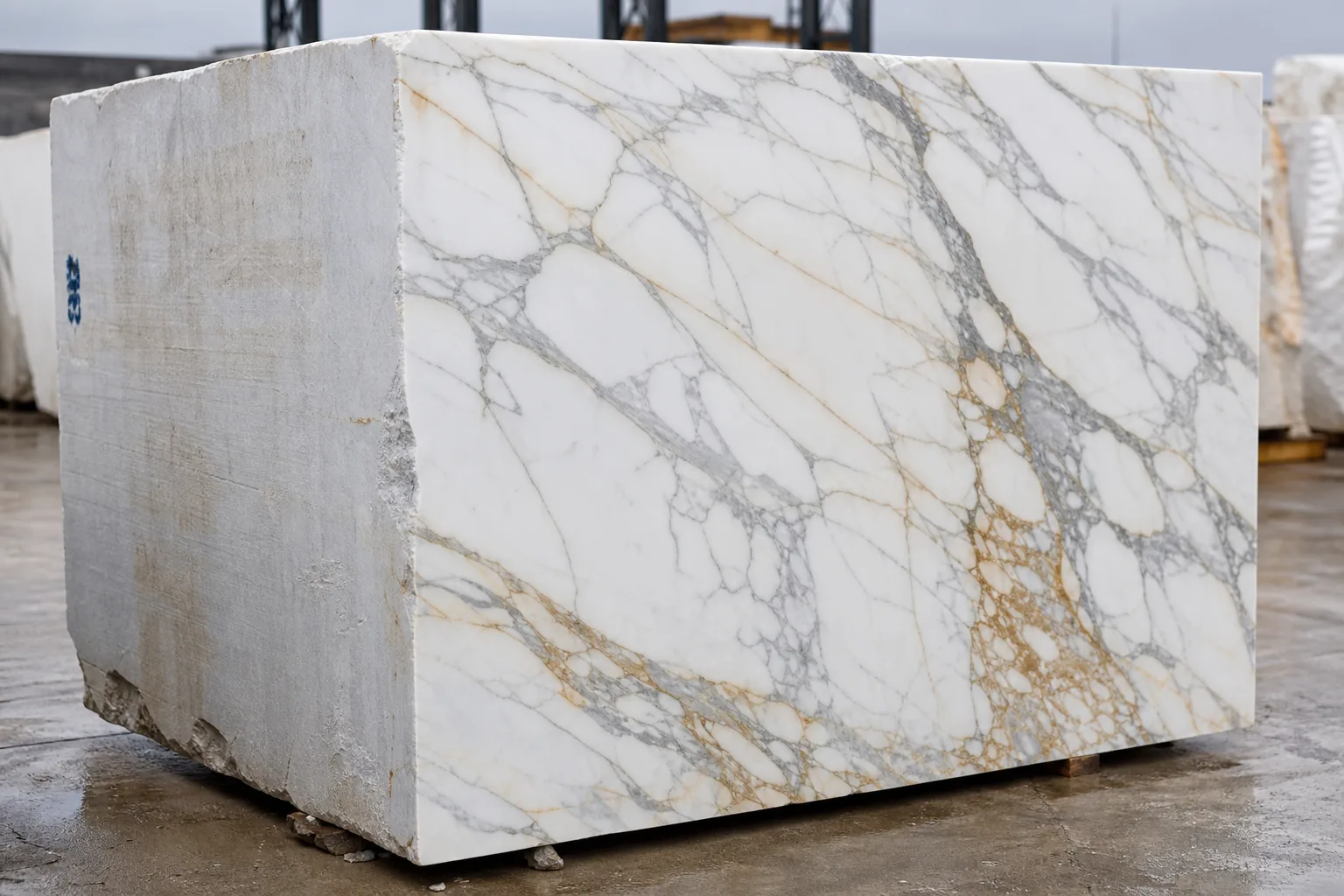
Onyx forms the way stalactites and travertine do. Water rich in dissolved calcium carbonate seeps through rock, then loses carbon dioxide as it reaches caves or the surface. Calcium carbonate precipitates in thin layers. Over long periods, those layers build up into banded deposits. Variations in trace minerals, especially iron and manganese, create the honey, amber, red, green and white bands.
Why onyx glows
Unlike most marbles, onyx crystals are arranged in relatively clear layers that let light pass through. A slab a little over a centimeter thick can transmit light, especially in lighter colors. Backlit with LEDs, the bands seem to glow from within, which is why onyx is used for bar fronts, reception desks, feature walls and even ceilings.
Colors and sources
| Color family | Typical character | Common sources |
|---|---|---|
| Honey and amber | Warm, glowing bands | Iran, Turkey, Mexico |
| White onyx | Milky with soft bands | Iran, Pakistan, Turkey |
| Green onyx | Light green to emerald | Pakistan, Iran |
| Red and multicolor | Dramatic, fiery | Iran, Mexico |
| Blue and pink | Rare, premium | Various |
Limitations
- Softness: calcite, so about 3 on the Mohs scale.
- Fragility: layered structure and natural fissures make slabs brittle.
- Etching: acids dull the surface.
- Treatment: most slabs are resin-filled and many are mesh-backed.
These are reasons onyx usually appears on vertical or low-wear surfaces rather than busy kitchen counters. Read buying onyx slabs.
Designing with backlit onyx
Backlighting needs planning: even LED spacing to avoid hot spots, a diffuser layer, heat management, access for maintenance and a clear or translucent backing instead of opaque mesh. Fabricators and lighting designers should coordinate early. Thin onyx laminated to glass is sometimes used for large backlit panels.
Onyx through history
Ancient builders used banded calcite for vessels and decoration; Egyptian alabaster objects are a related material. In the 19th and 20th centuries, Mexican onyx became popular in American hotels and theaters for its glowing warmth.
Caring for onyx
Use pH-neutral cleaners, soft cloths and coasters. Avoid acidic drinks on onyx bar tops or protect them with a professional treatment. Have a stone professional handle polishing.
Showing onyx online
Photos rarely capture onyx's glow. Video with backlighting does. iBlocky lets distributors attach videos to each onyx slab and share them with designers by link, so the effect is clear before anyone visits.
Frequently asked questions
Is onyx a marble?
Architectural onyx is a banded calcite stone often called onyx marble. It forms from water deposits rather than metamorphism.
Why is onyx translucent?
Its calcite layers are relatively clear and fine-grained, letting light pass through, especially in lighter colors.
Can onyx be used in a kitchen?
It is possible for low-use surfaces, but its softness, fragility and etching make it better for bars, walls and feature pieces.