
How Marble Is Quarried: From Mountain to Block
How marble is extracted: open-pit benches, underground quarries, diamond-wire saws, chain saws, block squaring, safety and environmental practices.
The short answer
Marble is quarried by cutting large blocks from the rock mass, today mainly with diamond-wire saws and chain saws in open-pit benches or underground chambers. Workers isolate a large section, topple it onto a cushion of debris, cut it into transportable blocks, square them and haul them to sawmills where they become slabs.
Key takeaways
- Modern quarries cut rock with diamond wire and chain saws.
- Open-pit quarries create stepped benches.
- Underground quarries follow marble beds into mountains.
- Only part of the extracted rock becomes premium blocks.
Finding good stone
Quarry operators study the deposit: fracture patterns, color zones, impurities and the direction of veining. Cutting along the wrong plane can waste valuable material or produce unstable blocks. Experienced quarrymen read the mountain as much as any instrument.
Open-pit benches
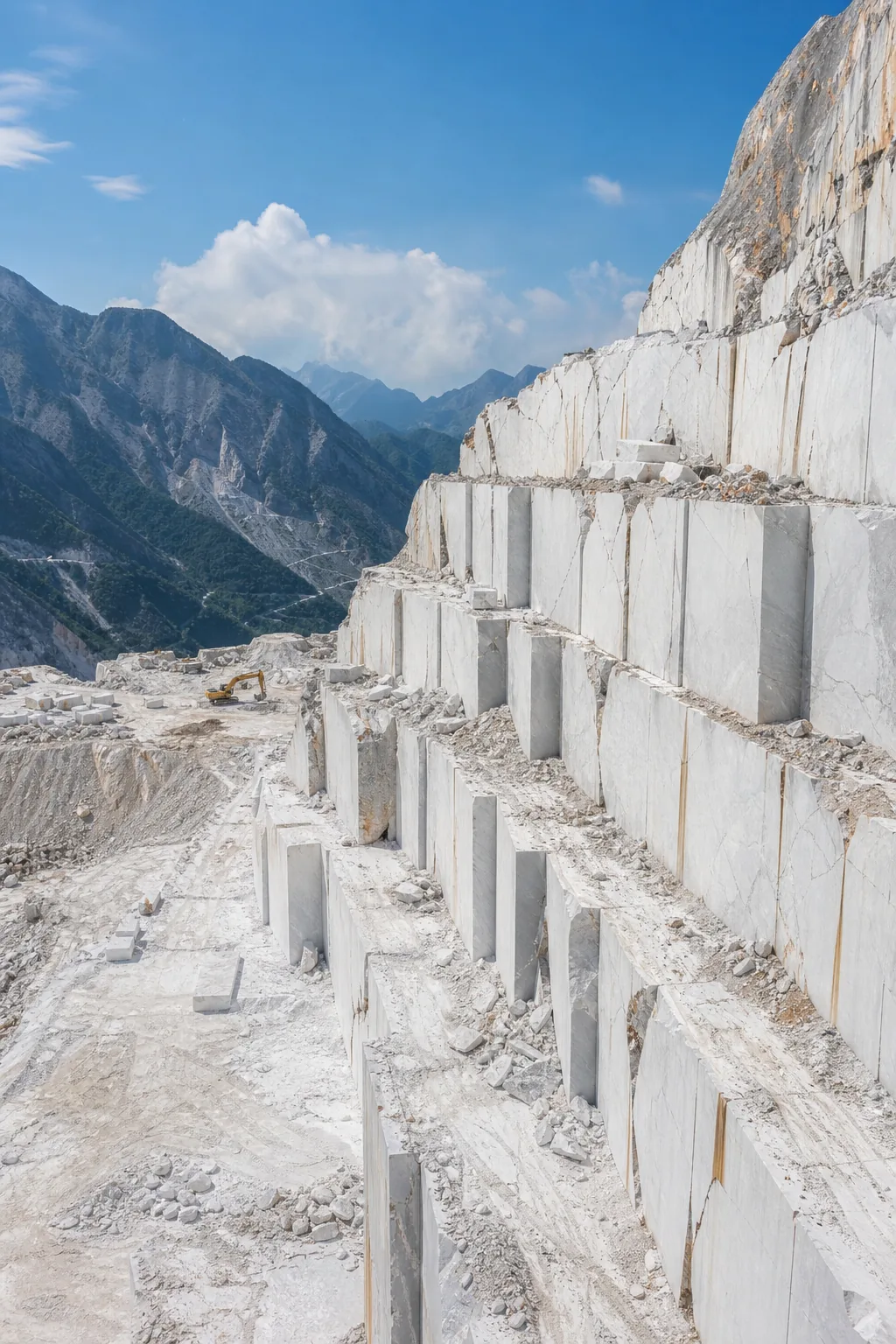
Most marble quarries work in benches, horizontal steps cut into the mountain. Workers drill holes to thread a diamond wire, a steel cable fitted with diamond-impregnated beads, around a section of rock. The wire loops through a machine that pulls it at high speed, cooled with water, slicing through the marble.
After several cuts, a large section called a bancata is isolated. Hydraulic jacks or airbags push it over onto a bed of crushed stone that cushions the fall.
Cutting into blocks
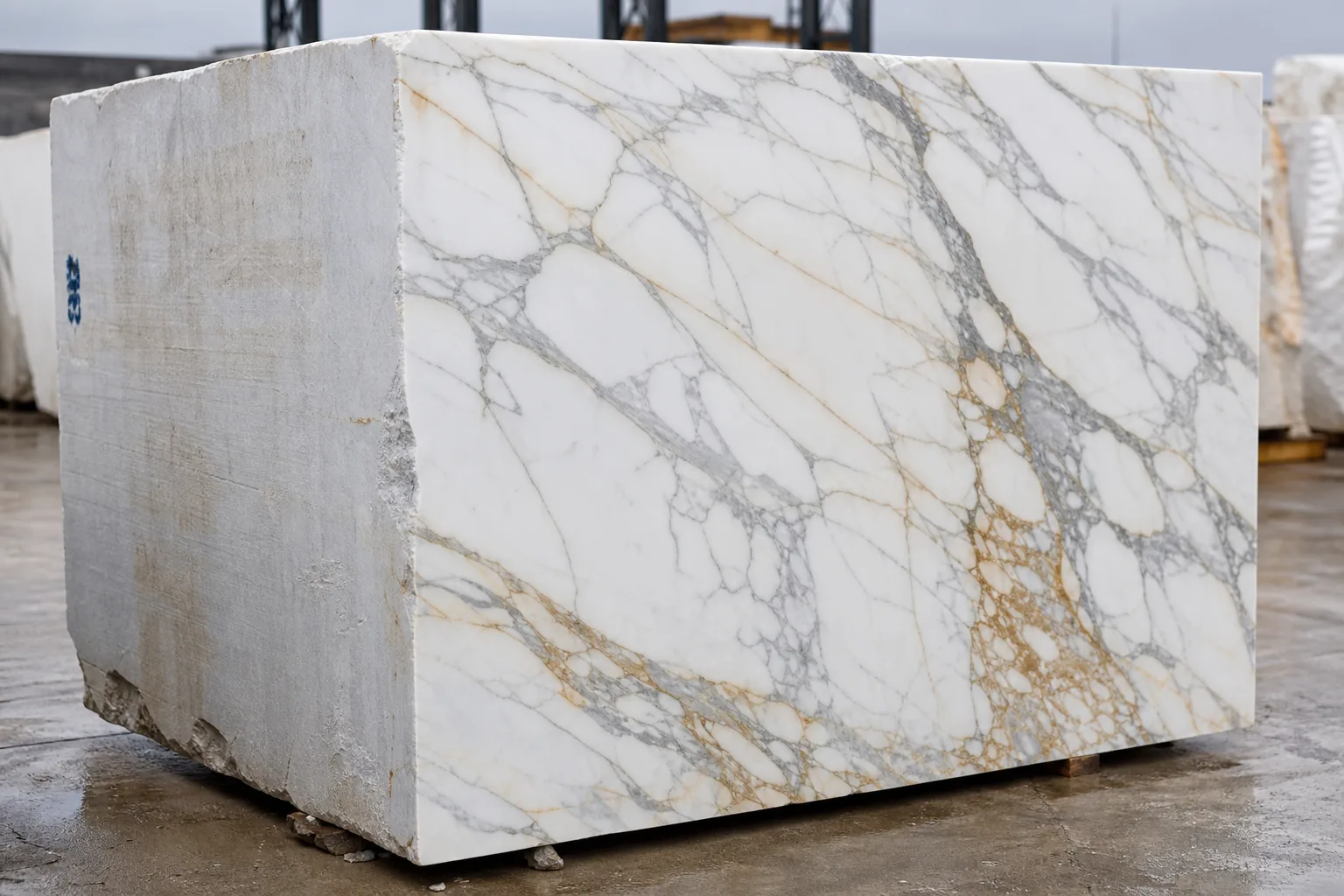
The toppled section is cut into blocks sized for transport and sawmills, often weighing many tons each. Blocks are squared to remove irregular edges, inspected, numbered and recorded.
Underground quarrying
Where the marble bed runs deep or the surface is protected, quarries tunnel into the mountain. Chain saws with carbide or diamond teeth cut galleries, leaving pillars of marble to support the roof. The Apuan Alps and Vermont both have significant underground quarries.
Old methods
Before wire saws, quarrymen used wedges, explosives and, from the late 1800s, helical wire saws that ran abrasive sand under a twisted steel wire. Moving blocks down slopes once relied on lizzatura, sledding blocks on greased timbers; see Carrara marble history.
Yield and waste
Only part of the extracted rock becomes premium dimension blocks. Fractured or off-color material becomes smaller blocks, tiles, aggregate or calcium carbonate powder used in industry.
Safety and environment
Quarrying involves heavy machinery, falling rock and dust. Modern quarries use water to control dust, monitor slope stability and plan reclamation. Water from cutting is filtered and recycled in many operations. See natural stone sustainability.
From block to slab
Blocks travel by truck to sawmills, where gang saws or multi-wire saws cut them into slabs. Read how stone slabs are cut.
Tracing slabs back to the block
Knowing which block a slab came from helps with matching and claims. iBlocky lets importers record block numbers, photos and the slabs produced from each block, keeping traceability from quarry to rack.
Frequently asked questions
How do quarries cut marble?
Mainly with diamond-wire saws and chain saws, cooled with water.
How big is a marble block?
Sizes vary, but commercial blocks often weigh many tons and are sized for transport and sawmill capacity.
Are there underground marble quarries?
Yes. Some quarries in Italy and Vermont tunnel into mountains, leaving marble pillars for support.