
How Marble Veining Forms: The Story in Every Slab
How marble gets its veins: impurities, fractures, mineral-filled cracks, folding during metamorphism, vein colors and why no two slabs are the same.
The short answer
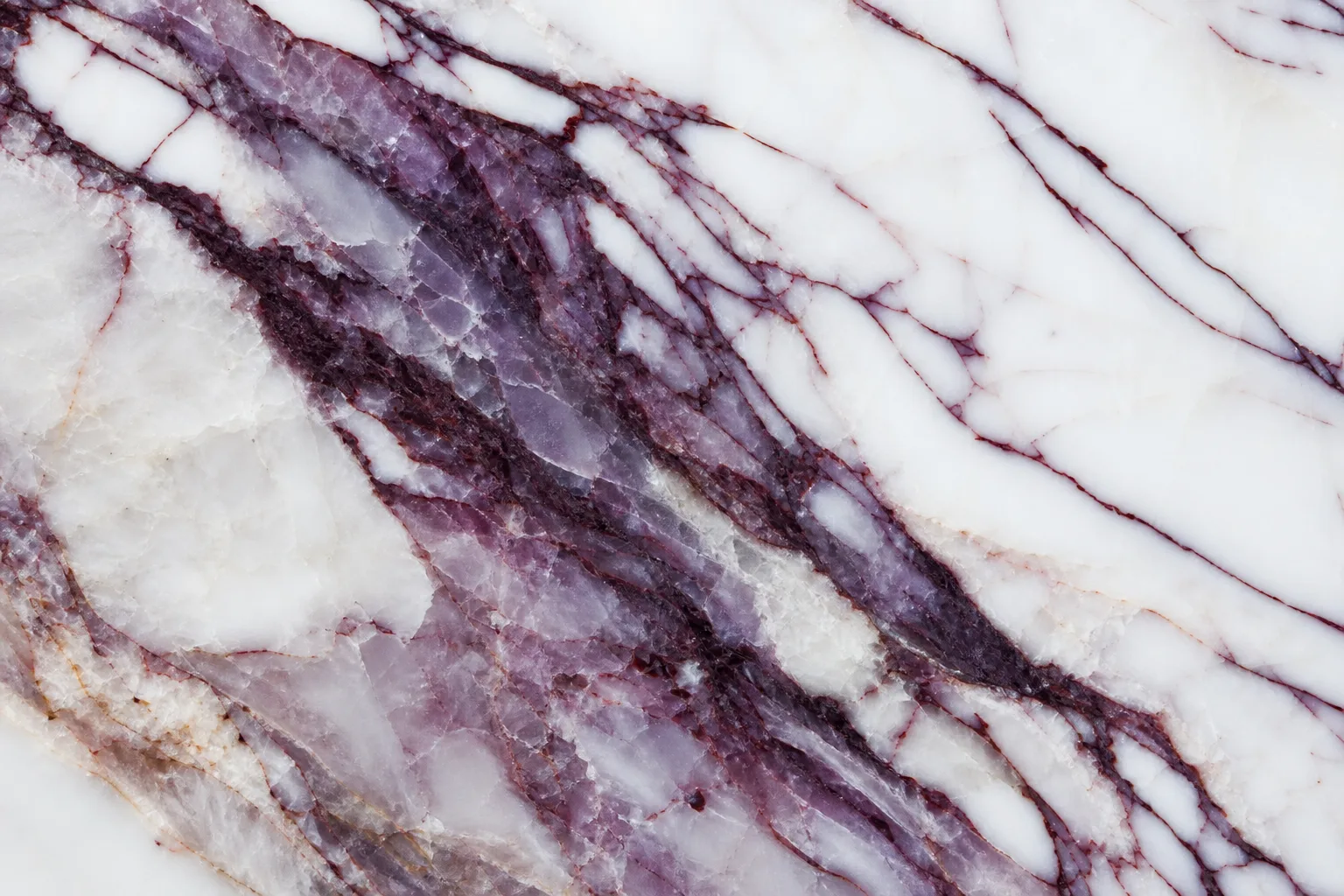
Marble veins form from impurities and fractures. When limestone is metamorphosed, clay, iron oxides, graphite and other materials migrate and concentrate into bands. Fractures created by tectonic stress fill with new minerals. Folding and flowing under heat and pressure stretch these features into the swirls and lines seen in Carrara, Calacatta and other marbles.
Key takeaways
- Veins are concentrations of non-calcite minerals or filled fractures.
- Color depends on the mineral: graphite gray, iron gold or red.
- Folding and stretching shape the vein patterns.
- Cutting direction changes how veins appear on a slab.
Start with impure limestone
Limestone rarely forms as pure calcium carbonate. Clay, silt, organic matter, iron minerals and other sediments settle with the shells and carbonate mud. These impurities are scattered in layers within the original rock.
Heat, pressure and migration
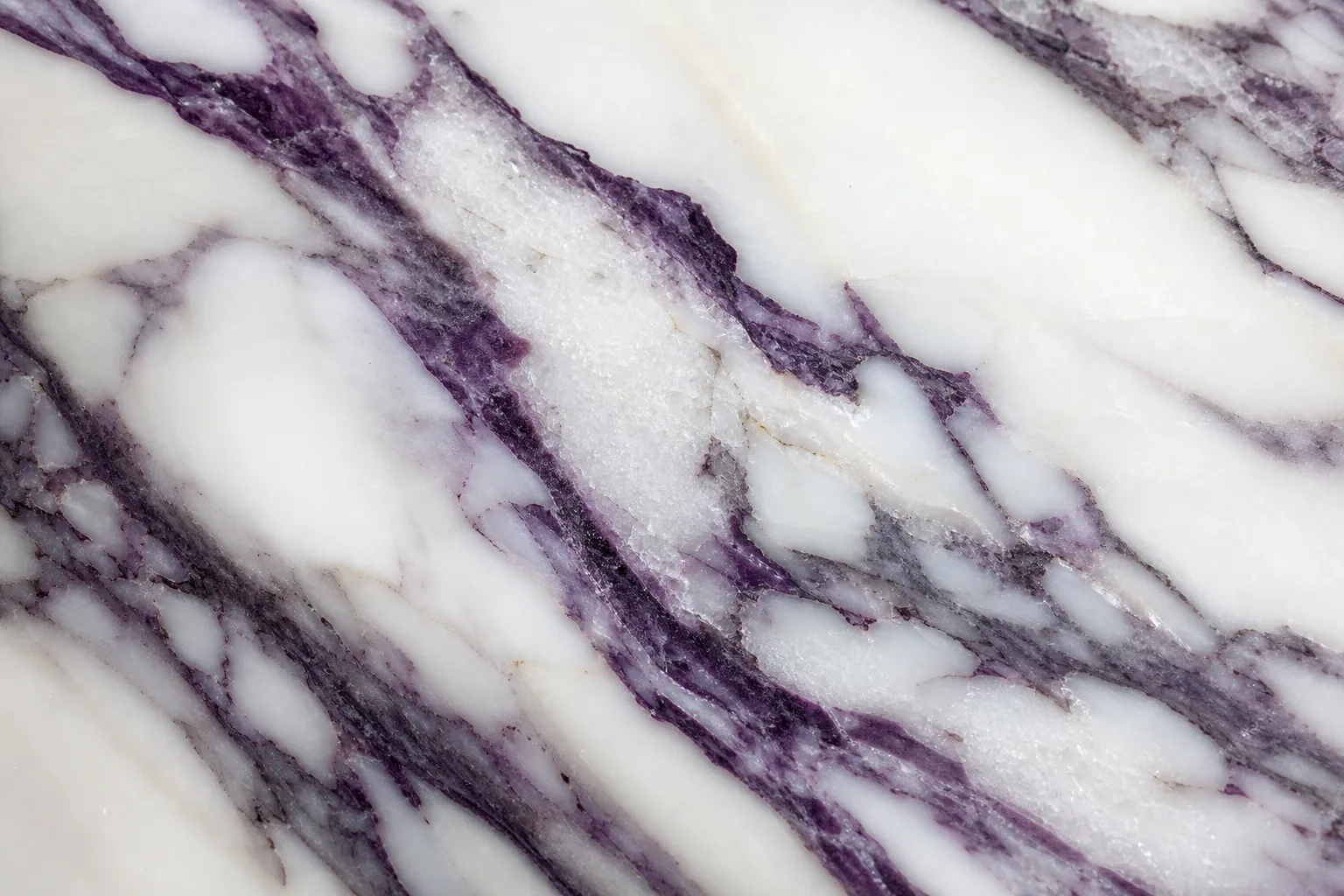
During metamorphism, calcite recrystallizes and the rock becomes plastic, able to flow slowly under pressure. Impurities do not fit into calcite crystals, so they are pushed aside and concentrate along boundaries and planes. Organic carbon becomes graphite, producing gray to black veins. Iron minerals produce gold, yellow, brown or red tones. Clay minerals can turn into micas and other silicates.
Fractures and healing
Tectonic stress also breaks rock. Fractures open, and mineral-rich fluids flow in, depositing new calcite, quartz or other minerals. These healed fractures can appear as crisp white veins on darker stones, like the white lines in Nero Marquina or Emperador, or as colored veins in white marble.
Folding creates movement
Under continuing pressure, layers fold and stretch. Veins that began as straight lines become wavy, swirling or broken into fragments. Breccia marbles show angular fragments cemented together, evidence of rock that shattered and re-cemented.
What vein colors tell you
| Vein color | Typical cause |
|---|---|
| Gray to black | Graphite or organic carbon |
| Gold, yellow, brown | Iron oxides and hydroxides |
| Red and pink | Hematite and other iron minerals |
| Green | Serpentine, chlorite or micas |
| White in dark stone | Calcite-filled fractures |
| Violet and plum | Mineral and trace element staining, as in Calacatta Viola |
Why cutting direction matters
A block is three-dimensional. Sawing parallel to the veins produces slabs with long linear veins; sawing across them produces cloudy, scattered patterns. The same block can therefore yield very different slabs. See how stone slabs are cut.
Fissures and veins
Some veins are weaker than the surrounding calcite and can open as fissures during cutting or handling. Processors fill and reinforce them with resin. Natural, stable fissures are part of the stone's character; see explaining natural stone variation.
Why no two slabs match
Because veins record a unique geological history, every block and slab is different. That is the core appeal of natural stone and the reason buyers want to see the exact slab.
Showing every vein
iBlocky lets distributors upload full-slab photos, video and mapscans for each slab, so buyers see the actual veining instead of a representative sample.
Frequently asked questions
What causes gray veins in marble?
Usually graphite or organic carbon concentrated during metamorphism.
Why do some marbles have gold veins?
Iron oxides and hydroxides in the veins create gold, yellow and brown tones.
Are marble veins weak points?
Some veins are weaker and can open as fissures, which is why processors often reinforce them with resin.