
HTS Codes for Marble, Granite and Natural Stone Imports
How natural stone is classified in the U.S. Harmonized Tariff Schedule: chapter 25 for crude stone, chapter 68 for worked stone, and how to confirm it.

The short answer
In the U.S. Harmonized Tariff Schedule, crude or roughly trimmed stone such as marble blocks generally falls under chapter 25, for example heading 2515 for marble and 2516 for granite, while worked stone such as polished slabs and tiles generally falls under chapter 68, heading 6802. Exact subheadings depend on material and processing, so confirm classification with a licensed customs broker.
Key takeaways
- Crude stone and blocks generally fall in chapter 25.
- Worked and polished stone generally falls in heading 6802.
- Material and processing level determine the subheading.
- Confirm with a broker and the official HTS.
Why classification matters
The HTS code determines duty rates, any additional tariffs and statistical reporting. Misclassification can lead to underpayment, penalties or overpayment.
The main headings
| Heading | General description |
|---|---|
| 2515 | Marble, travertine and other calcareous stone, crude, roughly trimmed or cut into blocks or slabs by sawing |
| 2516 | Granite, porphyry, basalt, sandstone and other monumental or building stone, crude or roughly trimmed or sawn |
| 6802 | Worked monumental or building stone and articles thereof |
Within 6802, subheadings distinguish, for example, simply cut or sawn stone with flat surfaces from other worked stone, and separate marble, travertine and alabaster from granite and other stones. The precise wording and numbers are in the official schedule.
How processing changes classification
- Blocks and rough slabs: often chapter 25.
- Polished, honed or otherwise worked slabs: often heading 6802.
- Tiles, cut-to-size pieces and finished articles: generally heading 6802.
- Mosaics and certain composites: may fall elsewhere.
Quartzite and others
Classification follows the stone's characteristics and the HTS legal notes, not trade names. A stone sold as quartzite may be classified differently than a marble. Your broker may request technical information.
How to confirm
- Check the official HTS at hts.usitc.gov.
- Review CBP rulings for similar products.
- Ask your customs broker for a classification opinion.
- Request a binding ruling from CBP for complex cases.
Duty rates and additional tariffs
General duty rates for stone vary by subheading, and additional duties may apply depending on country of origin and current trade measures. These change; always check current rates. See tariff planning for stone imports.
Keep classification consistent
Record the HTS code used for each product line so future entries stay consistent. Inconsistent classification invites scrutiny.
Classification and country of origin
Classification and origin are separate questions. Duty treatment depends on both. Make sure invoices state origin accurately, especially for stone quarried in one country and processed in another.
Reminder
Classification decisions should be documented and consistent across entries.
Product data supports compliance
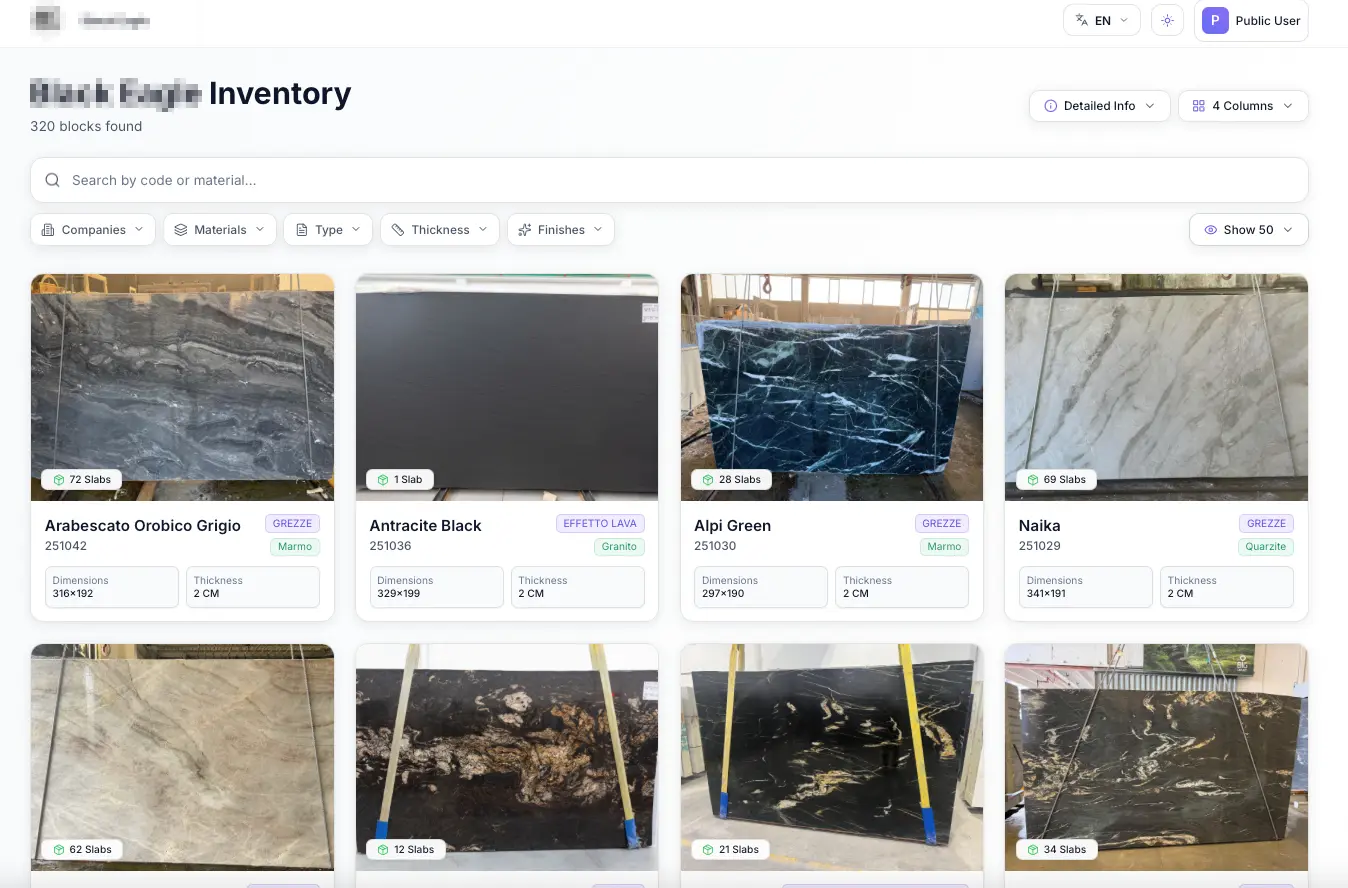
Accurate product descriptions, material type and processing details make classification easier. iBlocky lets importers store these details on each lot and slab. This article is general information, not customs advice.
Frequently asked questions
What is the HTS code for polished marble slabs?
Polished marble slabs generally fall under heading 6802. Confirm the exact subheading with the official HTS and your broker.
Are marble blocks classified differently from slabs?
Yes. Crude or roughly trimmed blocks generally fall in chapter 25, while worked slabs generally fall in chapter 68.
Where can I look up HTS codes?
On the U.S. International Trade Commission's HTS website, hts.usitc.gov.