
Choosing Natural Stone for Fireplaces and Hearths
How to choose marble, limestone, soapstone, granite or quartzite for fireplace surrounds and hearths: heat, clearances, codes, finishes and design ideas.
The short answer
Natural stone is a classic fireplace material. Marble and limestone create elegant surrounds, soapstone and granite handle heat on hearths, and quartzite adds drama. Follow building codes and the fireplace manufacturer's clearances, avoid resin-treated stone in high-heat zones, and choose finishes that are easy to clean of soot.
Key takeaways
- Codes and manufacturer clearances come first.
- Soapstone and granite excel near heat.
- Marble and limestone suit elegant surrounds.
- Avoid resin-heavy areas close to flames.
Surround, hearth and mantel
- Surround: the facing around the firebox opening.
- Hearth: the floor area in front of the firebox, which must be noncombustible.
- Mantel: the shelf above, which can be stone or wood depending on clearances.
Heat and safety
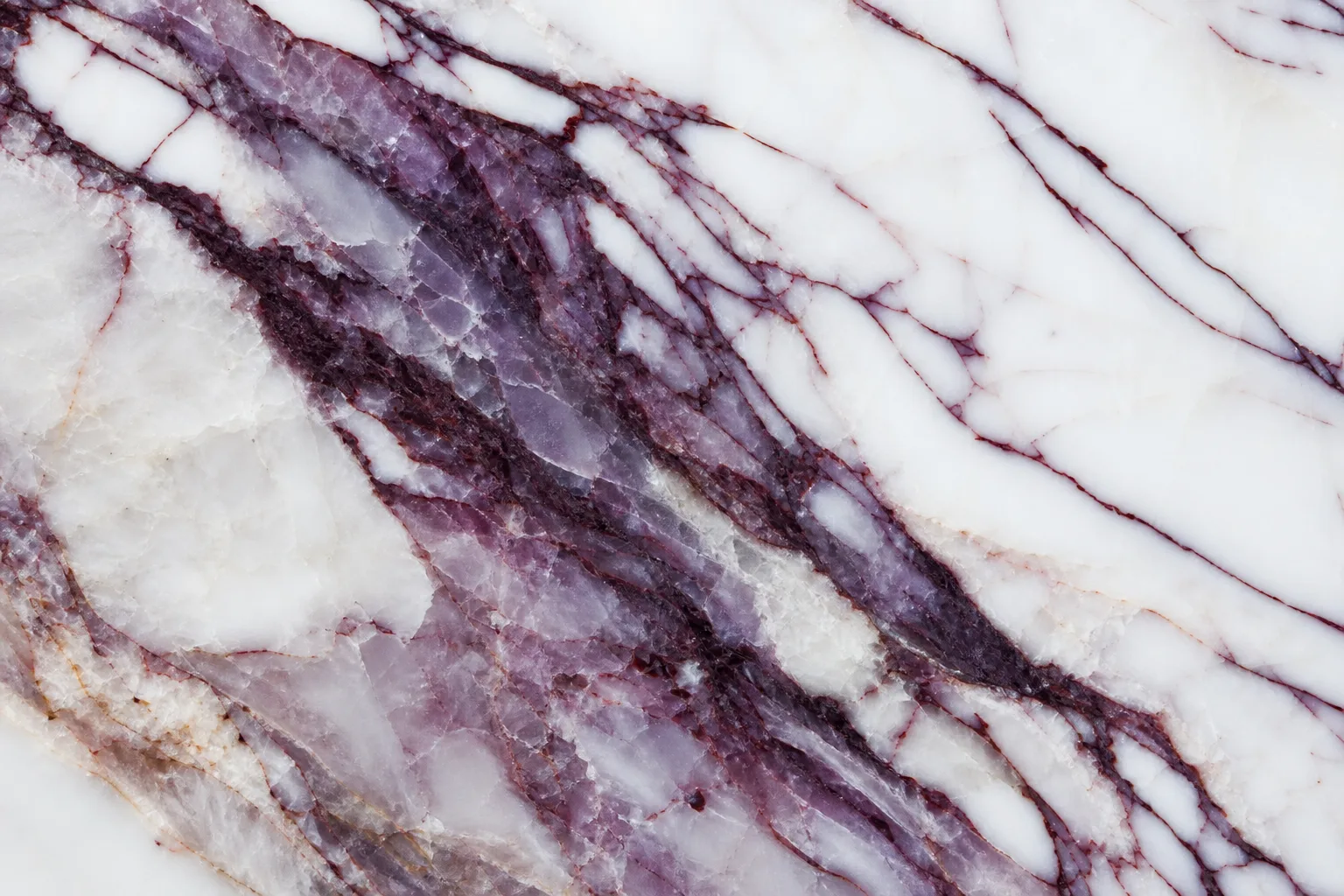
Stone is noncombustible, which is why it is traditional around fires. Still, follow local building codes and the fireplace or insert manufacturer's installation instructions for clearances and materials. Gas and electric units have specific requirements.
Stone options
| Stone | Strengths | Considerations |
|---|---|---|
| Marble | Elegant, classic, carves well | Soot can stain; etches |
| Limestone | Soft, refined, carved mantels | Porous; seal |
| Soapstone | Excellent heat tolerance and retention | Softer; patina |
| Granite | Durable, heat tolerant | Pattern may compete with design |
| Quartzite | Dramatic, durable | Resin-treated areas near heat |
| Slate | Traditional, textured | Can flake in some types |
Resin and heat
Many slabs are resin-treated. Resin can discolor or soften with high heat, so ask about treatment before using a slab close to a firebox. Read resin treatment explained.
Design ideas
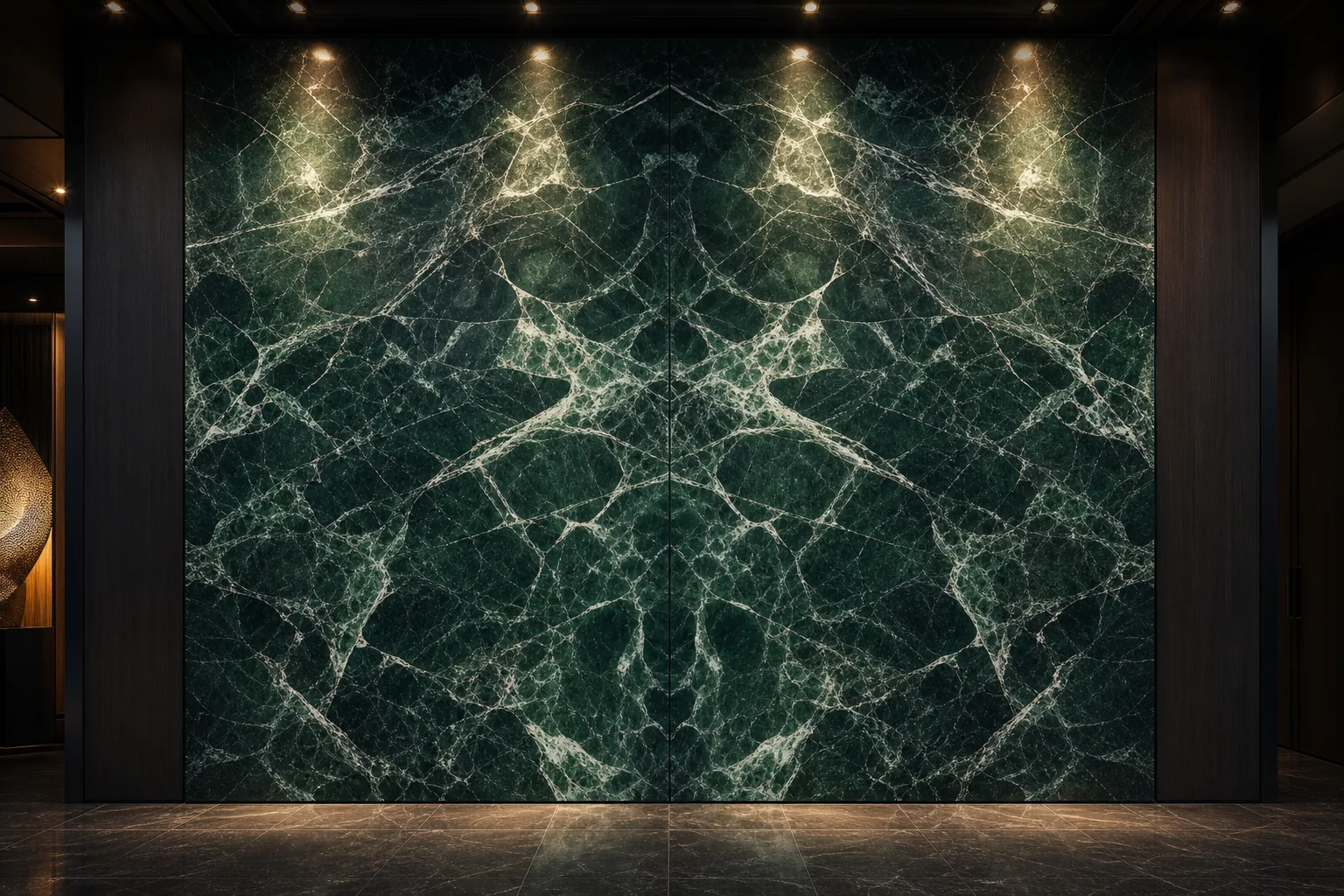
- Floor-to-ceiling bookmatched marble wall.
- Carved limestone mantel for traditional homes.
- Honed soapstone surround in a modern farmhouse.
- Thick mitered quartzite hearth.
- Dark green or black marble for drama.
Cleaning soot
Use a stone-safe cleaner and soft brush. Avoid acidic soot removers on marble and limestone. Sealing helps reduce soot absorption.
Using remnants
Fireplace surrounds are often smaller than kitchen projects, making remnants a cost-effective choice. See buying stone remnants.
Matching fireplace stone to the rest of the home
Using the same stone as the kitchen island or bathroom vanity ties a home together. Ask your supplier whether consecutive slabs or remnants from the same bundle are available.
Planning the fireplace wall
A full-height stone fireplace wall requires careful layout. Bookmatched slabs, horizontal or vertical vein orientation and the position of the TV or mantel all affect how the pattern reads. Ask your fabricator to show the layout on slab photos before cutting.
Weight and support
Large stone panels are heavy. Walls and floors must support the weight, and installers must use appropriate anchors.
Finding the right piece
iBlocky lets distributors list full slabs and remnants with dimensions and photos, so designers can find fireplace-size pieces quickly.
Frequently asked questions
Can marble be used around a fireplace?
Yes, marble is a classic surround material. Follow codes and clearances and avoid acidic soot cleaners.
What is the best stone for a hearth?
Soapstone and granite are excellent for heat, though many stones work when installed to code.
Is resin-treated stone safe near a fireplace?
Resin can discolor or soften with high heat. Ask about treatment and keep resin-heavy areas away from intense heat.