
AI in the Natural Stone Industry: Practical Uses Today
Where artificial intelligence is useful in natural stone: visualization, photo processing, search, defect detection, layout, demand insights and its limits.

The short answer
AI is already practical in natural stone for visualizing slabs in rooms, improving and organizing slab photos, helping buyers search inventory by look, assisting with fabrication layout and supporting defect detection and demand analysis. It works best as an assistant to experienced people, and its outputs, especially renders, should be presented as illustrations rather than guarantees.
Key takeaways
- AI renders help buyers imagine stone in a room.
- Image tools can organize and enhance slab photos.
- Visual search helps buyers find similar slabs.
- Human judgment remains essential.
Visualization
AI image generation can place a slab's pattern into a kitchen, bathroom or other scene in minutes. It helps clients who struggle to imagine a material installed and supports remote sales. Renders are approximate and should be labeled as illustrations. See AI renders to sell stone.
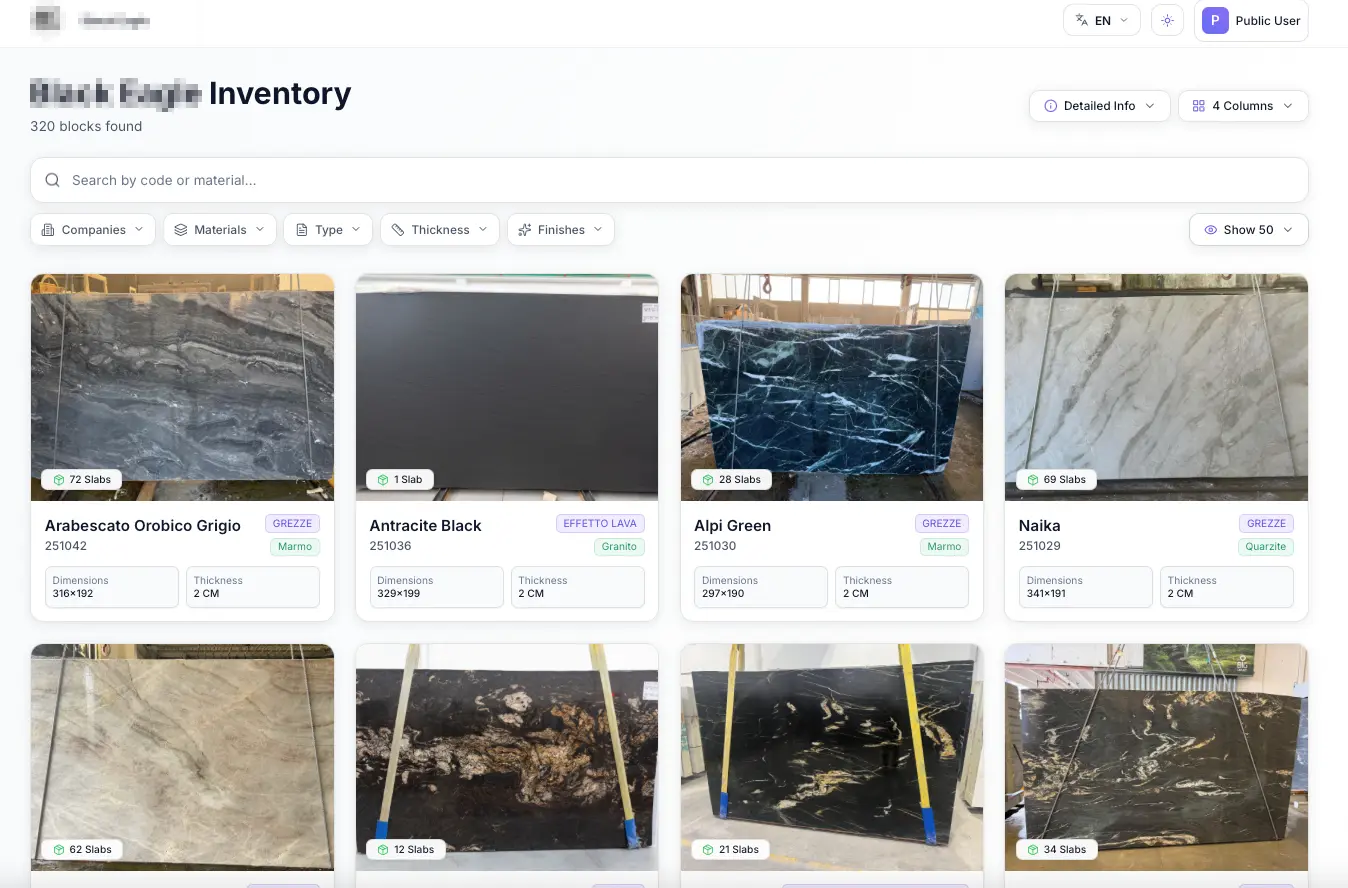
Photo processing
AI tools can correct perspective, crop backgrounds and balance color, speeding up slab photography workflows. Edits must preserve honesty; buyers compare photos with real slabs.
Search and recommendations
Visual similarity search can suggest slabs that look like a buyer's favorite, helping when the exact slab is sold.
Fabrication
Software increasingly helps fabricators nest pieces on slabs, align veins and reduce waste. Final decisions remain with experienced fabricators.
Quality and defects
Computer vision can help flag cracks, spots or resin issues in processing plants, supporting but not replacing human inspection.
Demand insights
Sales data analysis can highlight which materials, colors and sizes sell in each market, informing purchasing.
Limits and risks
| Risk | Mitigation |
|---|---|
| Misleading renders | Label as illustrative |
| Over-edited photos | Keep edits minimal |
| Bad data in, bad insights out | Maintain accurate inventory |
| Overreliance | Keep experts in the loop |
Where to start
Begin with one use that saves visible time, such as renders for designer presentations, and measure whether it shortens decisions. Expand only when the first use proves its value.
Looking ahead
For forecasts, see AI and technology in the stone industry in 2027.
Data quality comes first
AI tools are only as good as the data behind them. Accurate slab photos, consistent material names and complete records make every AI feature more useful.
Training staff on AI tools
Show salespeople how to create renders, when to use them and how to explain their limits to clients. Consistent use builds confidence.
Customer reactions
Many clients enjoy seeing renders, but some prefer real installation photos. Offer both when available.
Measuring value
Track whether AI renders shorten decision times or increase holds on premium slabs. Keep what works, drop what does not. Share successful examples with the whole sales team.
AI in iBlocky
iBlocky includes AI stone visualization: Pro offers pay-as-you-go renders and Elite includes 300 AI credits per month. Renders are illustrative, not fabrication guarantees. See AI stone visualization.
Frequently asked questions
How is AI used in the stone industry?
For visualization, photo processing, search, fabrication layout support, defect detection and demand analysis.
Are AI stone renders accurate?
They are approximate illustrations. Confirm appearance with the real slab and fabricator layout.
Will AI replace stone experts?
No. AI assists, but experienced people remain essential for selection, fabrication and customer advice.