
Stone Industry Technology in 2027: AI, Automation and Data
Technology shaping natural stone operations in 2027: AI visualization, slab scanning, automated fabrication, connected inventory and data-driven buying.
The short answer
In 2027, stone companies are likely to rely more on connected inventory systems, high-quality slab scanning and photography, AI visualization and image tools, messaging-integrated sales, automated fabrication with digital layouts and data analysis for purchasing. The winners will be companies whose physical slabs and digital records match perfectly.
Key takeaways
- Accurate digital twins of slabs become the foundation.
- AI moves from novelty to routine sales support.
- Fabrication relies more on digital templates and layouts.
- Data guides buying and pricing decisions.
The direction of travel
The natural stone industry has historically adopted technology slowly, with notable exceptions such as diamond-wire saws, CNC machines and waterjets. Digital sales and inventory tools are now catching up. By 2027, the gap between digitally organized companies and paper-based ones is likely to widen.
Key technologies
| Technology | What it does | Why it matters |
|---|---|---|
| Slab scanning and photography | Captures accurate images and dimensions | Remote selection, layout |
| Connected inventory | Live slab records, holds and locations | No double selling, fast answers |
| AI visualization | Illustrative renders of slabs in rooms | Faster client decisions |
| AI image tools | Crop, correct and tag photos | Less manual work |
| Messaging integration | Sharing via WhatsApp, iMessage | Meets buyers where they are |
| Digital templating and nesting | Plan cuts on slab images | Less waste, better matching |
| Analytics | Turnover, aging, demand | Smarter purchasing |
Digital twins of slabs
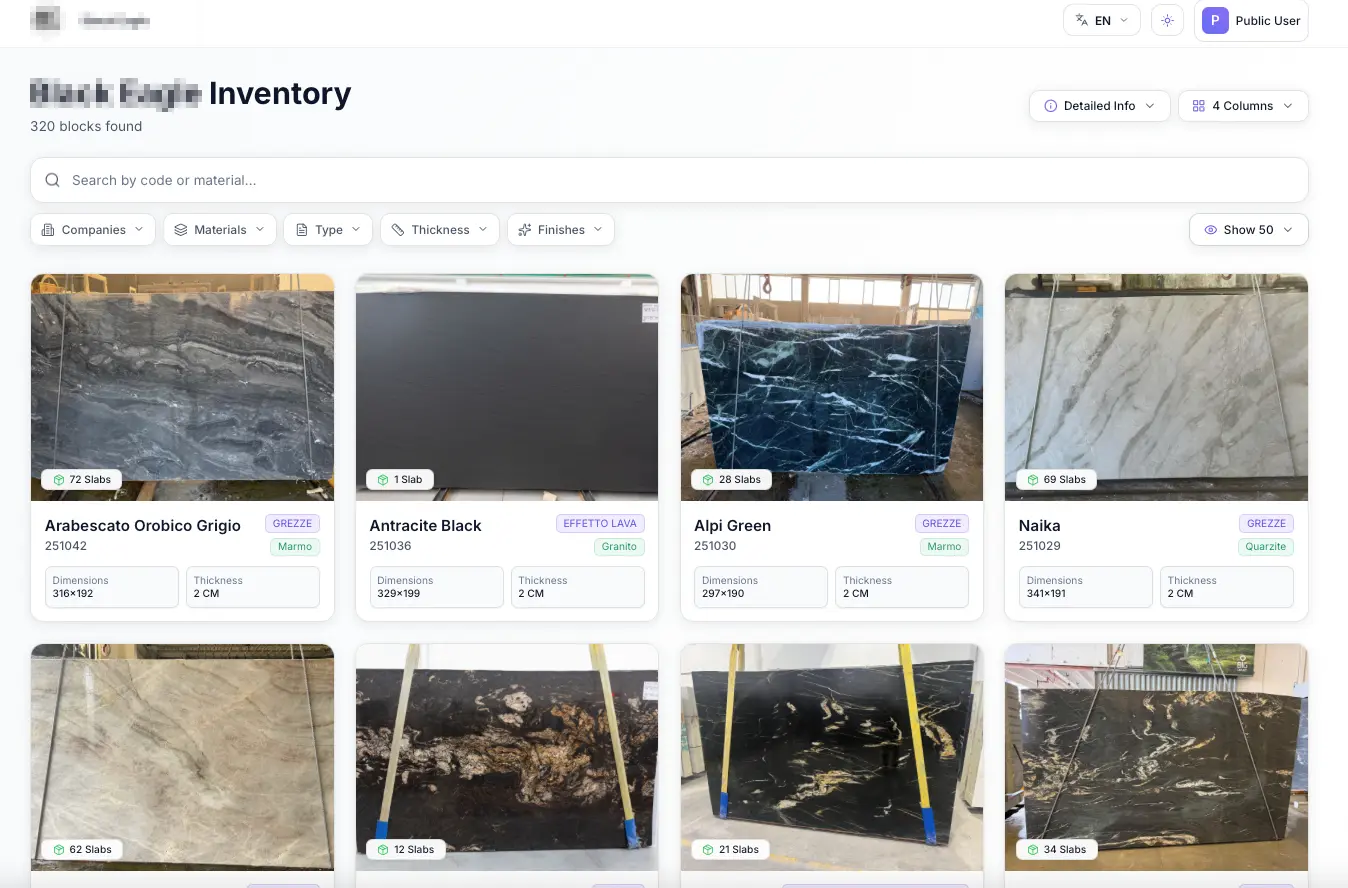
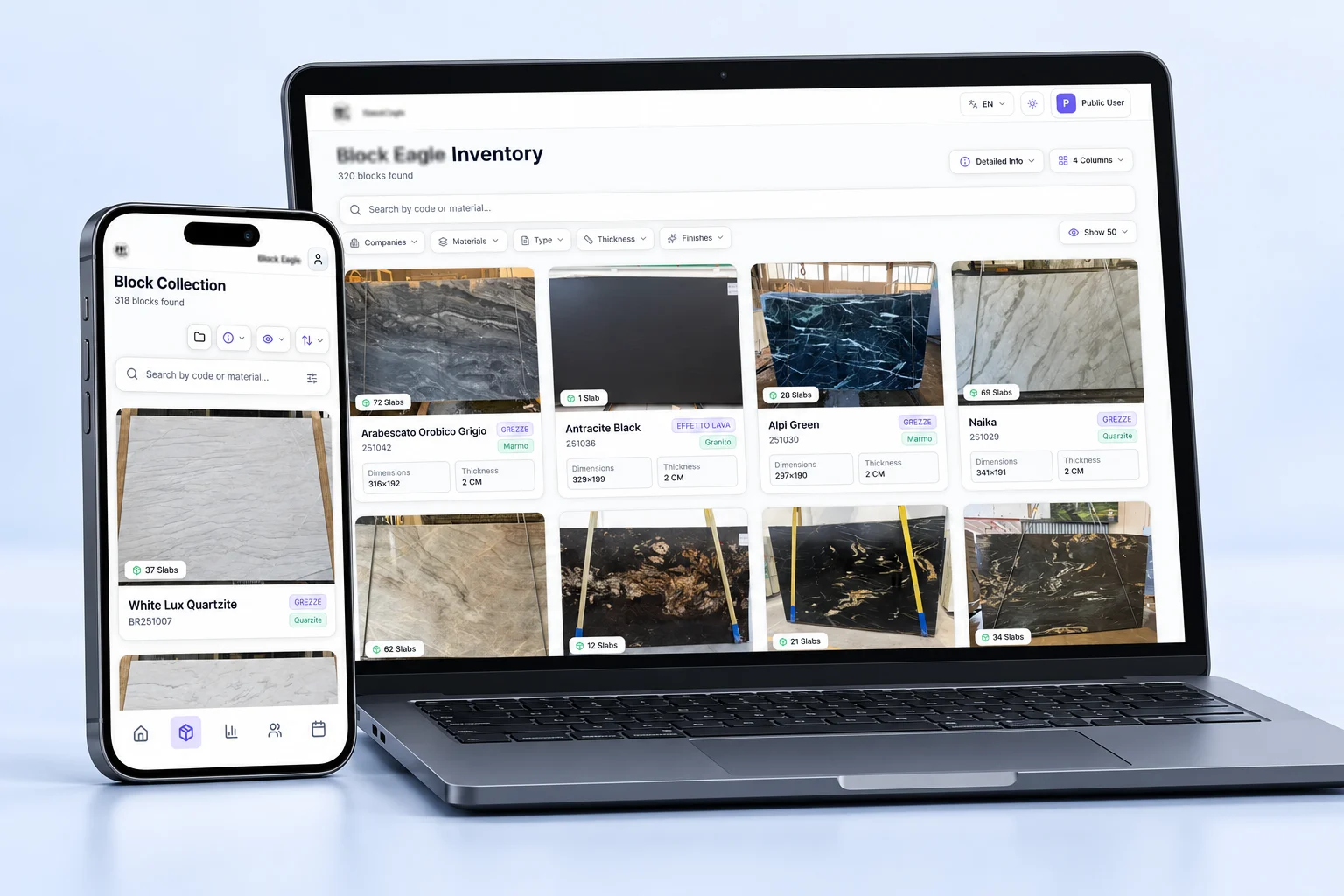
A slab's digital record, with photos, dimensions, mapscans, location and status, acts as its digital twin. Everything else, from selling remotely to planning layouts, depends on that record being accurate. See slab photography station.
AI becomes routine
Illustrative renders, photo cleanup and smarter search are moving from experiments to everyday tools. The key discipline is honesty: label renders as visualizations and keep photos true to the stone. See AI in the stone industry.
Automation in fabrication
Fabricators are investing in CNC, saw-jets and digital templating to offset labor shortages. Distributors who supply layout-ready slab images and accurate dimensions fit naturally into these workflows.
Data-driven purchasing
Importers and distributors increasingly use sales history, aging and hold conversion to decide what to reorder and how much. See stone inventory turnover.
Risks to manage
- Inaccurate data undermining every tool.
- Overreliance on AI outputs.
- Security of customer and pricing data. See data security basics.
A practical 2027 roadmap
- Get every slab into accurate digital records.
- Make the system the only source of availability.
- Share slabs through the channels buyers use.
- Add AI visualization for premium selections.
- Review data monthly to guide purchasing.
iBlocky in a 2027 stone business
iBlocky brings these pieces together: slab-level records with photos, video and mapscans, QR codes, reservations, shareable catalogs, native WhatsApp and iMessage on Elite, AI renders and external ERP integration on Elite.
Frequently asked questions
What technology will matter most for stone companies in 2027?
Accurate connected inventory, because AI, sharing and analytics all depend on reliable slab data.
Will AI replace slab yard staff?
No. AI assists with visualization and data tasks, while people handle stone, customers and judgment.
What is a slab digital twin?
A digital record of a physical slab with photos, dimensions, location and status that mirrors the real piece.