
Buying Marble Blocks: What Importers and Processors Check
How to evaluate and buy marble blocks: block dimensions, soundness, color consistency, cutting direction, yield, inspection and documentation.

The short answer
When buying marble blocks, evaluate dimensions and shape, soundness and visible fractures, color and pattern consistency on all faces, likely cutting direction and expected slab yield. Inspect in person or through detailed photos and video of every face, confirm measurements and weight, and document the block with ID numbers so slabs can be traced back to it.
Key takeaways
- Inspect all faces of the block, not just the best one.
- Fractures and inclusions reduce yield.
- Cutting direction changes the slab pattern.
- Track block IDs through to finished slabs.
Who buys blocks
Processors with gang saws or multi-wire saws, large importers with processing partners and some distributors who want control over cutting and finishing buy blocks. Most U.S. buyers purchase slabs instead.
What to check
| Factor | Why it matters |
|---|---|
| Dimensions and shape | Determine slab size and number |
| Soundness | Fractures reduce yield and slab quality |
| Color consistency | Affects grade and value |
| Pattern on all faces | Predicts slab appearance |
| Inclusions and spots | May appear in slabs |
| Weight | Transport and handling |
Cutting direction
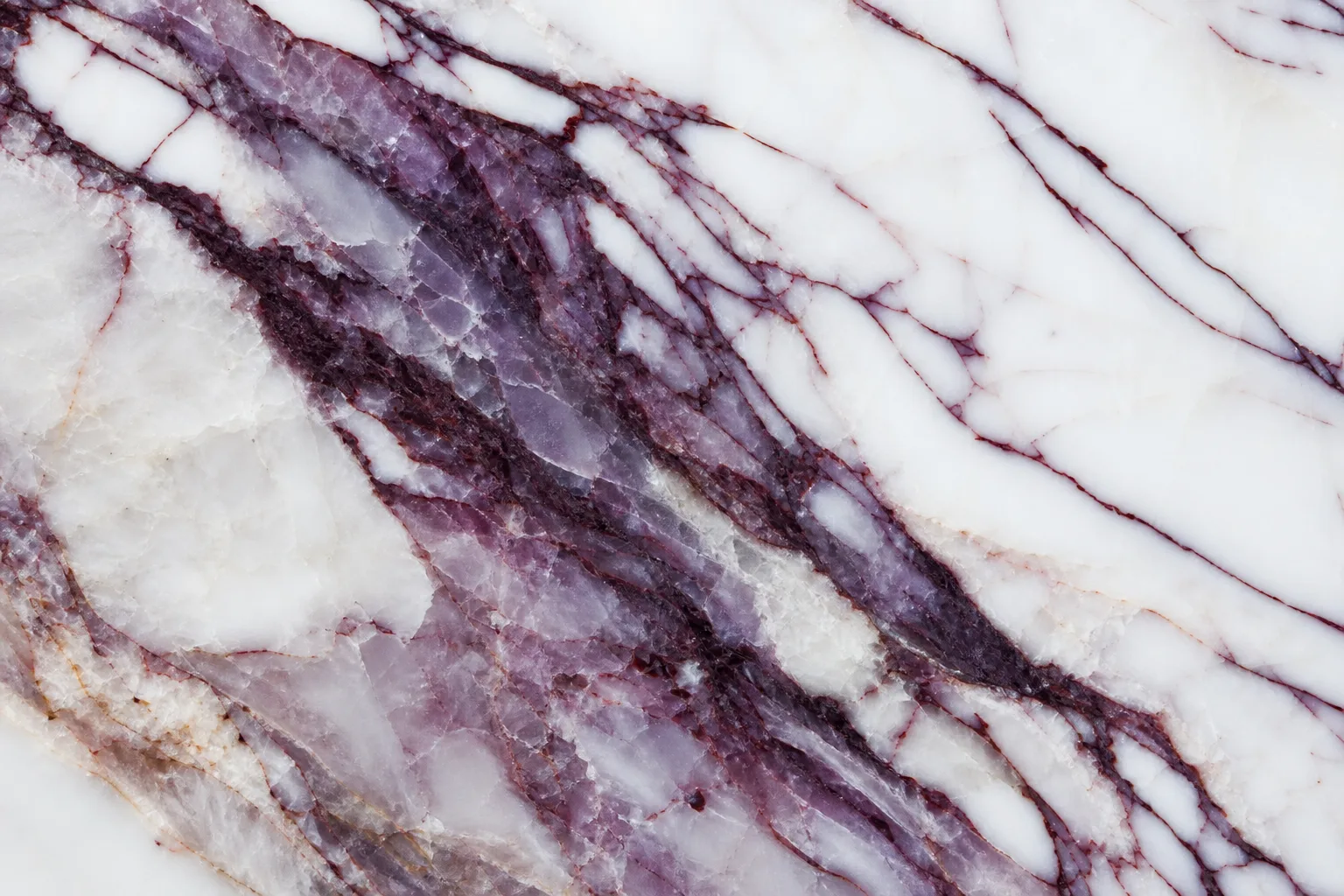
Marble can be cut in different directions relative to its bedding, sometimes called cross-cut and vein-cut. The same block can produce very different-looking slabs. Discuss the cutting plan with the processor. See how stone slabs are cut.
Estimating yield
Yield depends on block size, the saw kerf, slab thickness and defects. Experienced buyers estimate how many usable slabs a block will produce before agreeing a price.
Inspection
Inspect blocks wet, since water reveals color and fractures more clearly. If you cannot visit, request photos and video of all faces, wet, with a scale reference.
Documentation
Record block number, quarry, dimensions, weight and photos. Keep the block ID on every slab produced from it, so bundles can be matched and traced.
Risks
- Hidden fractures that appear during cutting.
- Color shifts inside the block.
- Transport damage.
Agree with the seller how hidden defects are handled.
Contracts for block purchases
Specify block dimensions, weight, quality criteria, photos of all faces, inspection rights, cutting plan if processing is included and how hidden defects discovered during sawing are handled. Clear contracts reduce disputes when a block reveals surprises inside.
Processing partners
If you buy blocks but do not own saws, choose a processing partner carefully. Ask about saw types, resin lines, finishing options, turnaround times and how they track slabs back to blocks.
Financial considerations
Blocks require capital for the purchase, transport, sawing and finishing before any slab is sold. Plan cash flow accordingly.
Traceability
Record block numbers and link every resulting slab to its block. Traceability helps with matching and claims.
Block buying checklist
- Photos of all six faces, wet.
- Measured dimensions and weight.
- Visible fractures marked.
- Agreed cutting direction.
- Expected slab count and thickness.
- Terms for hidden defects.
Frequently asked questions
Why inspect marble blocks wet?
Water deepens color and makes fractures and patterns more visible, similar to how a polished slab will look.
What is block yield?
The number or area of usable slabs produced from a block after accounting for saw kerf, defects and trimming.
Does cutting direction change a marble's look?
Yes. Cutting across or along the bedding can produce very different patterns from the same block.