
Buying Travertine: Filled vs Unfilled, Finishes and Uses
How to choose travertine slabs and tiles: filled vs unfilled, vein-cut vs cross-cut, finishes, color grades, outdoor use and maintenance.
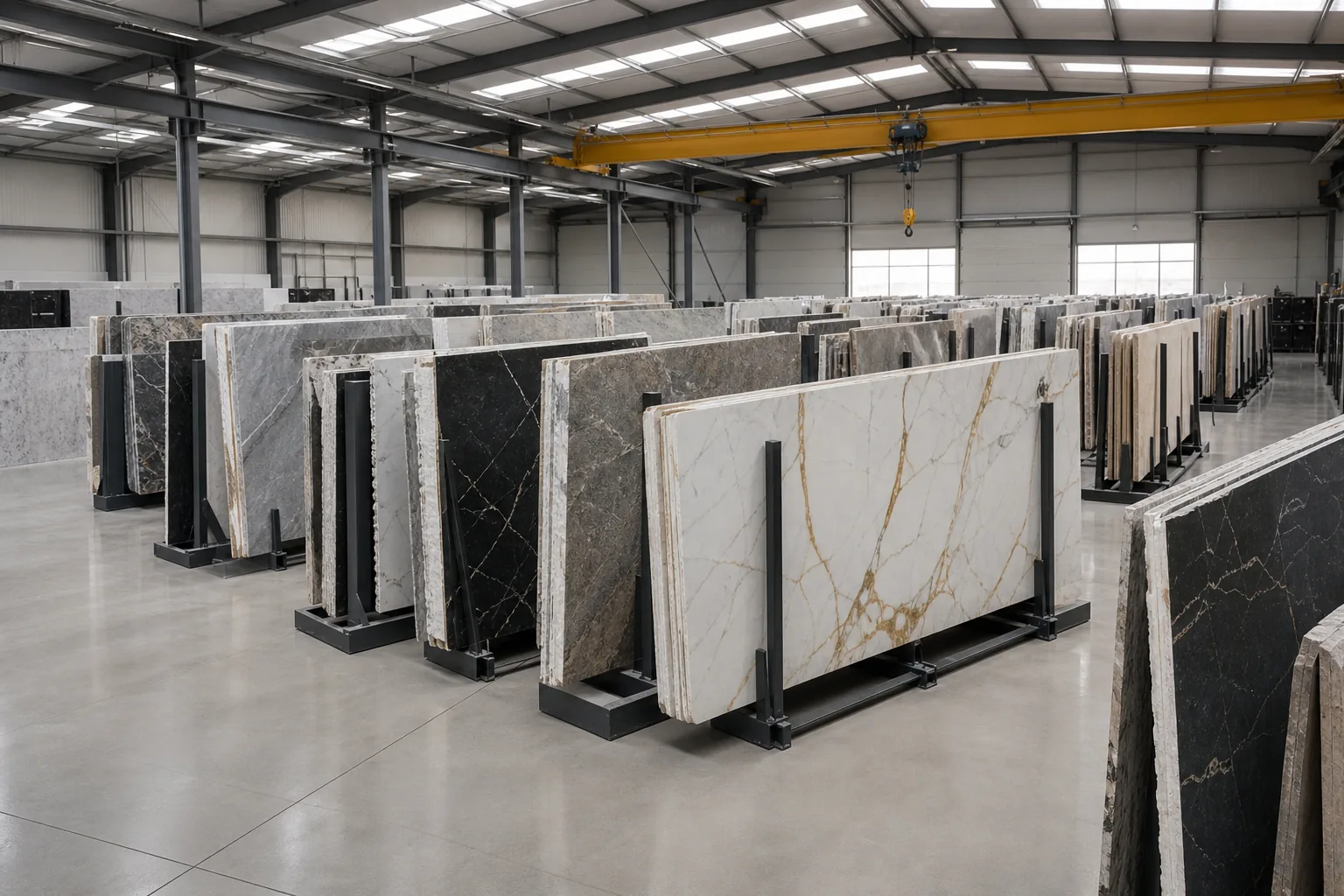
The short answer
Travertine is a porous calcite stone formed by mineral springs, with natural holes that are often filled with resin or cement. When buying, choose filled or unfilled based on use, vein-cut or cross-cut for pattern, and polished, honed or tumbled finishes. Travertine suits floors, walls, pool decks and some countertops, but etches with acids.
Key takeaways
- Travertine has natural holes, often filled.
- Vein-cut gives linear patterns; cross-cut gives cloudy patterns.
- Tumbled finishes suit rustic and outdoor uses.
- It is calcite-based and etches with acids.
What travertine is
Travertine forms where mineral-rich water deposits calcium carbonate, often around hot springs. Gas bubbles and plant material leave holes. Read what is travertine.
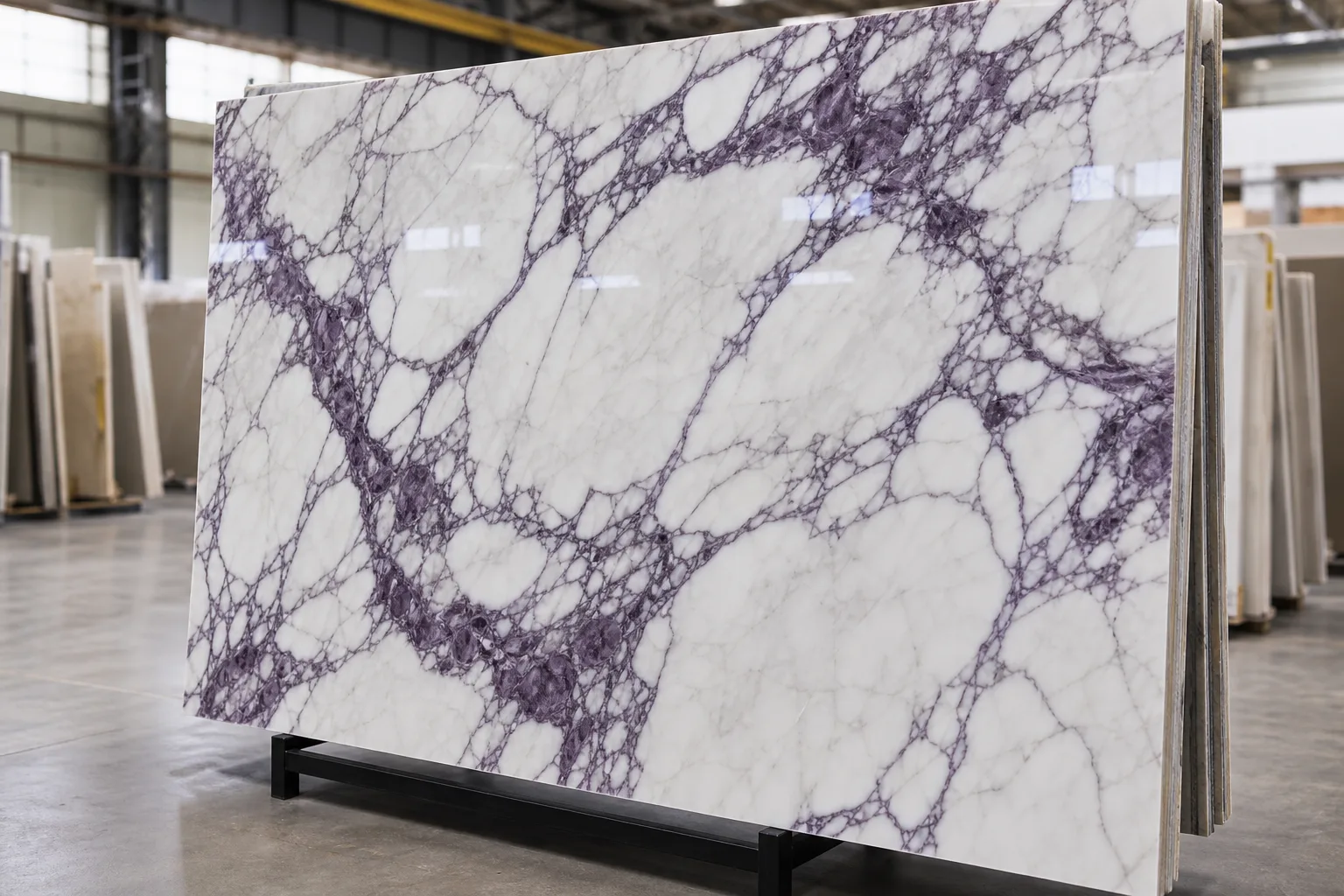
Filled vs unfilled
| Type | Description | Best for |
|---|---|---|
| Filled | Holes filled with resin or cement | Floors, countertops, walls |
| Unfilled | Natural holes left open | Rustic walls, some outdoor uses |
Filled travertine is easier to clean. Fill can wear over time and may need refilling.
Cutting direction
- Vein-cut: cut along the layers, showing linear stripes.
- Cross-cut: cut across layers, showing cloudy, flowery patterns.
Finishes
Polished, honed, brushed and tumbled. Tumbled pavers are popular around pools.
Color
Ivory, beige, walnut, silver and red travertines exist. Color consistency varies by grade and quarry.
Uses
- Floors and walls.
- Pool decks and patios: textured, light colors stay cooler.
- Countertops: possible, but etches and needs care.
Care
Use pH-neutral cleaners, seal according to porosity and refill holes if fill wears out.
Travertine grades
Suppliers grade travertine by color consistency, hole density and fill quality. Premium grades have more uniform color and well-filled holes; standard grades show more variation. Ask to see examples of each grade.
Slabs vs tiles vs pavers
| Format | Typical use |
|---|---|
| Slabs | Countertops, vanities, walls |
| Tiles | Floors, walls, showers |
| Pavers | Patios, pool decks, walkways |
| Mosaics | Accents, backsplashes |
Matching formats
If you combine slabs and tiles, view them together, because color may vary between production lots.
Outdoor travertine
For pool decks and patios, choose pavers with suitable thickness and density and tumbled or textured finishes. Light colors stay cooler in sun.
Sealing
Sealing helps resist stains and makes cleaning easier, especially on honed or unfilled travertine.
Repairing fill
Over time, fill in holes may wear or loosen. A stone professional can refill and refinish surfaces.
Design ideas
Travertine suits Mediterranean, modern and mid-century styles alike. Vein-cut travertine creates linear, contemporary looks; cross-cut feels softer and more classic.
Travertine for showers
Filled and sealed travertine works in showers when installed with proper waterproofing. Honed or tumbled finishes provide better grip on floors. Use stone-safe cleaners to protect fill and surface.
Questions to ask suppliers
- Is it filled, and with resin or cement?
- Vein-cut or cross-cut?
- Which grade?
- Is it suitable for outdoor use?
Frequently asked questions
Should I buy filled or unfilled travertine?
Filled travertine is easier to clean and better for most floors and countertops. Unfilled suits rustic looks and some outdoor uses.
Is travertine good for pool decks?
Yes. Light, textured travertine pavers are popular for pool decks because they stay relatively cool and provide grip.
Does travertine etch?
Yes. Like marble, it is calcite-based and reacts with acids.