
Exotic Stones Guide: Rare Quartzites, Onyx and Statement Slabs
What makes a stone exotic, popular exotic quartzites and granites, Patagonia-style stones, sourcing, fragility, cost factors and design ideas.
The short answer
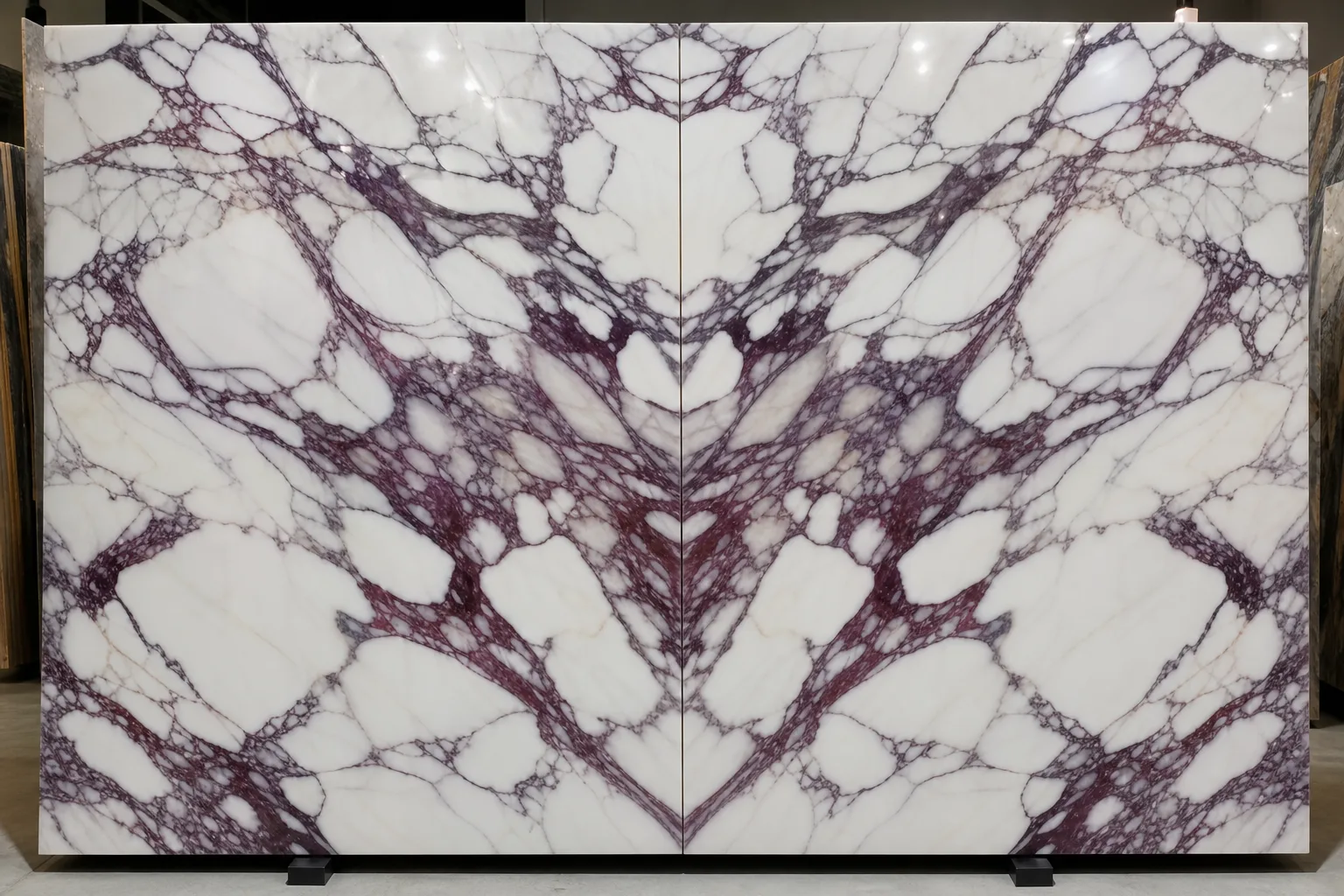
Exotic stones are rare or visually extraordinary natural stones, such as dramatic quartzites, crystal-rich stones like Patagonia, vivid blue or green materials, translucent onyx and unusual granites. They come in limited quantities, often from Brazil and other countries, are frequently resin-treated and mesh-backed and are chosen slab by slab as statement pieces.
Key takeaways
- Exotic means rare, dramatic or unusual.
- Supply is limited and often comes in small lots.
- Many exotic slabs need resin and mesh reinforcement.
- Use them where they will be seen and protected.
What makes a stone exotic
There is no formal definition. In practice, stones are called exotic when they combine rarity, dramatic appearance and high value. A block may produce only a few dozen slabs, and the next block from the same quarry may look entirely different.
Families of exotic stone
| Family | Character | Examples of trade names |
|---|---|---|
| Crystal-rich stones | Large quartz crystals, dark inclusions | Patagonia and similar |
| Colorful quartzites | Blue, green, red or multicolor bands | Azul Macaubas, various Fusion-type names |
| Translucent stones | Glow when backlit | Onyx, some quartzites |
| Semi-precious | Agate, amethyst, quartz compositions | See semi-precious slabs |
| Dramatic granites and gneisses | Bold movement and color | Many Brazilian and African stones |
Names vary by supplier; focus on the slab.
Where exotic stones come from
Brazil is the leading source of exotic quartzites and granites, thanks to its complex geology. Other sources include Namibia, Madagascar, India, Norway and Iran. Read importing stone from Brazil.
Fragility and treatment
Crystal-rich and highly fractured stones are often fragile. Most are resin-treated and many are mesh-backed. Fabricators experienced with exotics handle them carefully and may reinforce cutouts.
Cost factors
- Rarity and block yield.
- Processing and resin treatment.
- Breakage risk in shipping and fabrication.
- Demand from luxury projects.
Design ideas
- Backlit bar or reception desk.
- Statement island with simpler perimeter stone.
- Powder room vanity and full-height wall.
- Tabletops and furniture.
Buying advice
- Choose the exact slab; never buy exotics by name alone.
- Inspect resin, fissures and mesh.
- Plan layout to put the best areas on show.
- Reserve consecutive slabs for matching.
See also buying bookmatched slabs.
Lighting exotic slabs
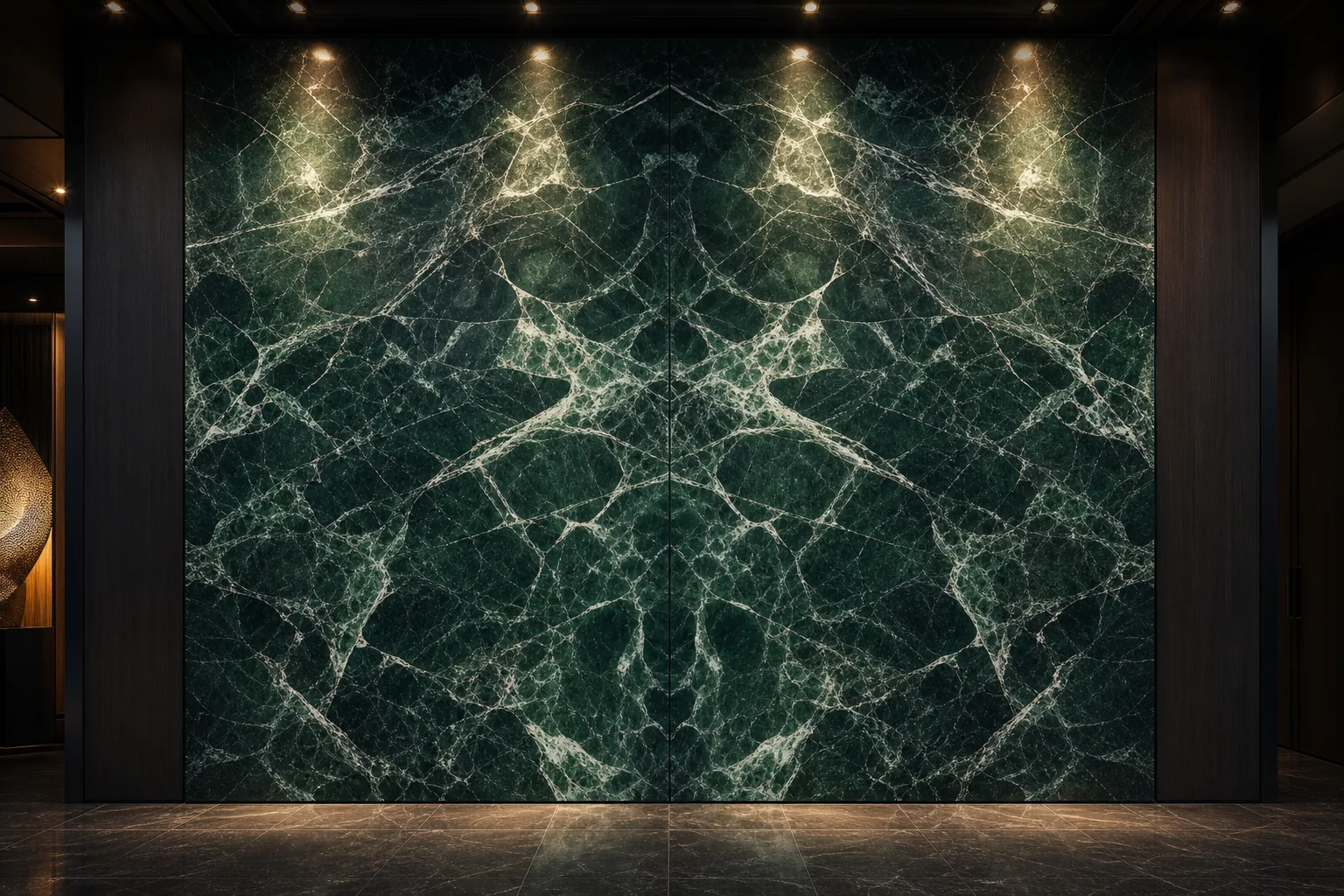
Many exotic stones reveal crystals and translucency under light. Spotlights or backlighting can turn a beautiful slab into a showpiece. Plan lighting together with the stone.
Storage and handling
Exotic slabs deserve protected indoor storage, flip racks or well-padded A-frames and careful handling by experienced staff, because a single break can mean losing a one-of-a-kind piece.
Selling exotics
Exotic slabs sell on video and storytelling. iBlocky lets distributors present each exotic slab with photos, video and mapscans, reserve it precisely and share it with designers by link. Sales tips are in selling exotic stone.
Frequently asked questions
What is an exotic stone?
A rare or visually extraordinary natural stone, often available in limited quantities and chosen slab by slab.
Why are exotic stones expensive?
Limited supply, low block yields, extra processing and breakage risk all add cost.
Can exotic stones be used in kitchens?
Many exotic quartzites can, with care. Fragile or soft exotics are better on islands, walls or bars.