
Michelangelo and Marble: How a Sculptor Chose His Stone
How Michelangelo selected marble in the Apuan Alps, the blocks behind the Pietà and David, his years in the quarries and what his choices teach stone buyers.
The short answer
Michelangelo was as much a stone buyer as a sculptor. He traveled to the quarries of the Apuan Alps to choose blocks himself, carved the Pietà and David from local white marble and spent years opening quarries near Seravezza. His insistence on inspecting stone in person still applies to anyone choosing a premium slab today.
Key takeaways
- Michelangelo personally selected blocks at the quarries.
- David was carved from a block other sculptors had started.
- He spent years managing quarry work and transport.
- His lesson: always judge the actual stone.
A sculptor in the mountains
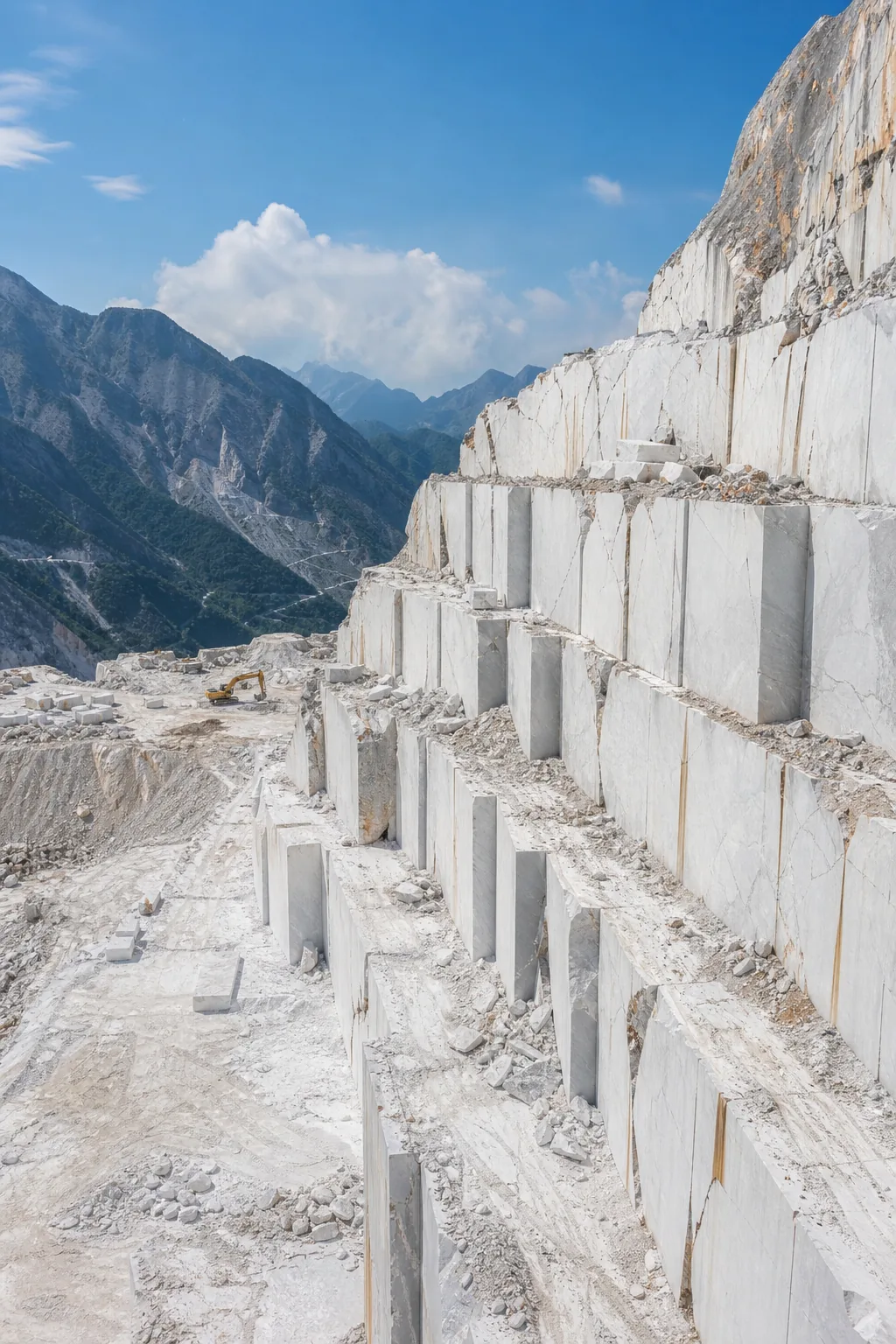
In the late 1490s, Michelangelo traveled to Carrara to select marble for the Pietà commissioned for St. Peter's in Rome. He stayed for months, judging blocks for color, grain and soundness. Hidden flaws could ruin years of carving, so he trusted his own eyes.
The Pietà
Completed around 1499, the Pietà shows the extraordinary fineness Apuan marble allows: translucent skin, delicate drapery and polished surfaces that glow. It established Michelangelo's reputation before he was 25.
David: a difficult block
David was carved between 1501 and 1504 from a tall block quarried decades earlier. Other sculptors, including Agostino di Duccio, had begun working it and abandoned it, and the block sat exposed for years. Michelangelo accepted the challenge of a narrow, partly worked block and turned its limitations into one of the world's most famous sculptures.
Years in the quarries
Later, Pope Leo X directed Michelangelo to source marble for a planned facade of San Lorenzo in Florence from quarries near Seravezza and Pietrasanta, in Florentine territory. Michelangelo supervised road building and quarry work. The facade was never built, and he complained bitterly in letters about time lost in the mountains.
What stone buyers can learn
| Michelangelo's practice | Modern equivalent |
|---|---|
| Inspected blocks personally | View the actual slab, not a sample |
| Checked for hidden flaws | Inspect fissures, resin and back |
| Considered how the block would be cut | Review fabrication layout |
| Built quarry relationships | Partner with reliable suppliers |
See how to inspect a marble slab and building quarry relationships.
Statuary marble legacy
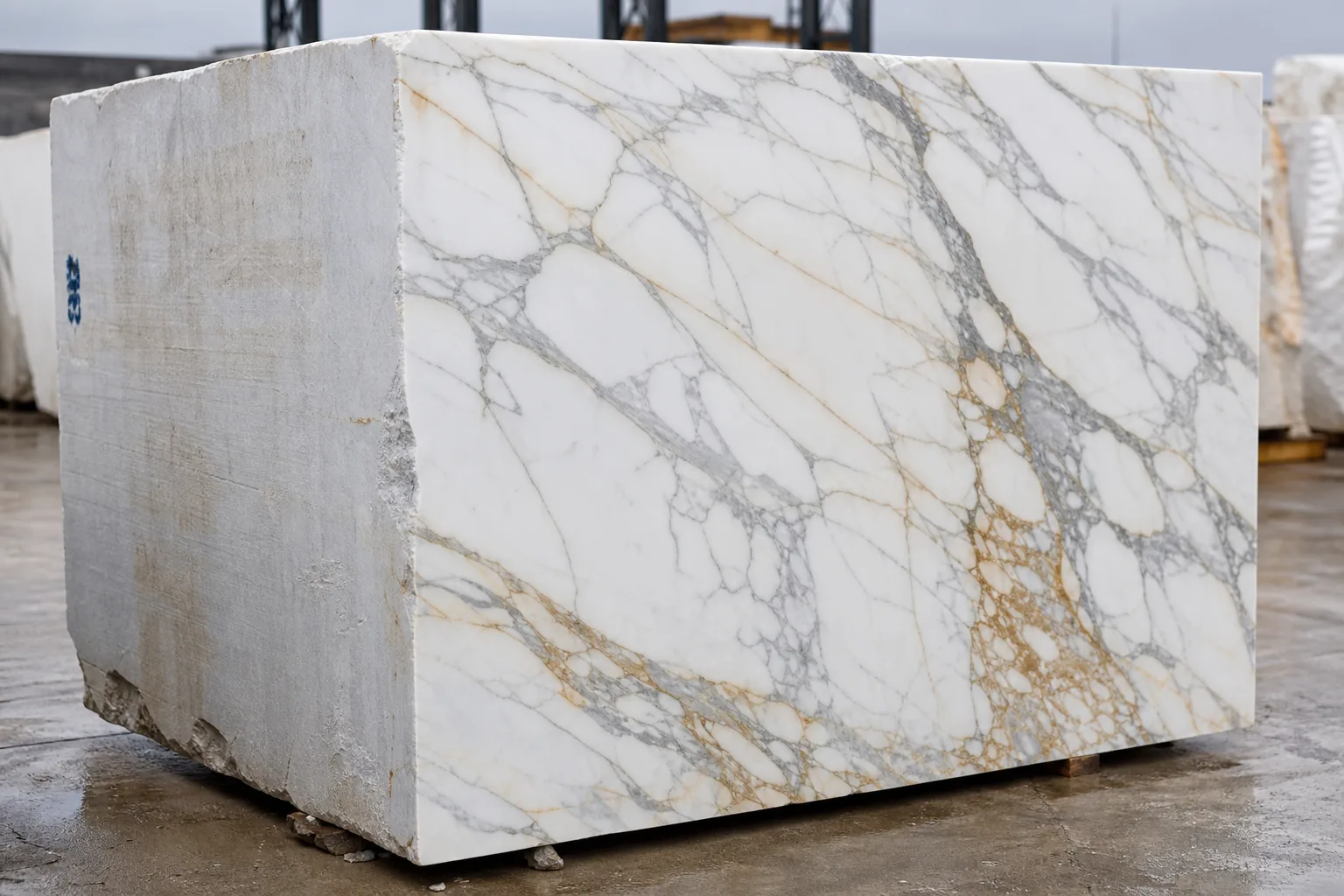
The bright, fine-grained marble sculptors sought gave its name to Statuario, still among the most prized Apuan varieties. Read Statuario marble guide.
The unfinished works
Michelangelo's unfinished "Prisoners" or "Slaves" figures, now in Florence, show figures emerging from rough blocks. They offer a rare view of how a sculptor worked into the stone and how the block's shape guided the composition.
A lasting lesson
Great results start with great material, chosen with patience and a trained eye.
Seeing the stone before choosing
Michelangelo could walk the quarry; today's buyers often cannot. Accurate slab photos, video and live viewings fill that gap. iBlocky lets distributors share each slab's media by link, so buyers judge the real stone wherever they are.
Frequently asked questions
What marble did Michelangelo use for David?
White marble from the Apuan Alps quarries near Carrara.
Did Michelangelo choose his own marble?
Yes. He traveled to the quarries and spent long periods selecting and supervising extraction.
Why was David's block unusual?
It had been partly worked and abandoned by earlier sculptors, leaving Michelangelo a narrow, challenging block.