
Mohs Hardness Scale for Natural Stone Countertops
How hard is marble, granite, quartzite, soapstone or onyx? The Mohs scale explained with everyday tests and what hardness means for countertops.
The short answer
The Mohs scale ranks minerals from 1 (talc) to 10 (diamond) by scratch resistance. Marble's calcite is about 3, dolomite about 3.5 to 4, quartz and quartzite about 7, and granite's feldspar and quartz about 6 to 7. Glass and steel knives sit around 5.5, which makes simple scratch tests useful for identifying stones.
Key takeaways
- Mohs measures scratch resistance, not toughness.
- Calcite is 3, quartz is 7.
- Glass and steel are about 5.5, useful for tests.
- Hardness explains marble's scratches and quartzite's resilience.
The scale
Friedrich Mohs, a German mineralogist, created the scale in 1812 using ten reference minerals. Each can scratch the minerals below it.
| Mohs | Reference mineral | Everyday comparison |
|---|---|---|
| 1 | Talc | Soapstone's main mineral |
| 2 | Gypsum | Fingernail is about 2.5 |
| 3 | Calcite | Main mineral in marble |
| 4 | Fluorite | Dolomite is about 3.5 to 4 |
| 5 | Apatite | Glass and steel about 5.5 |
| 6 | Orthoclase feldspar | Main granite mineral |
| 7 | Quartz | Quartzite, granite quartz |
| 8 | Topaz | |
| 9 | Corundum | Sapphire and ruby |
| 10 | Diamond | Diamond tools cut stone |
The scale is ordinal: the jump from 9 to 10 is far larger than from 1 to 2.
Hardness of common stones
- Soapstone: soft overall, though architectural grades are firmer than pure talc.
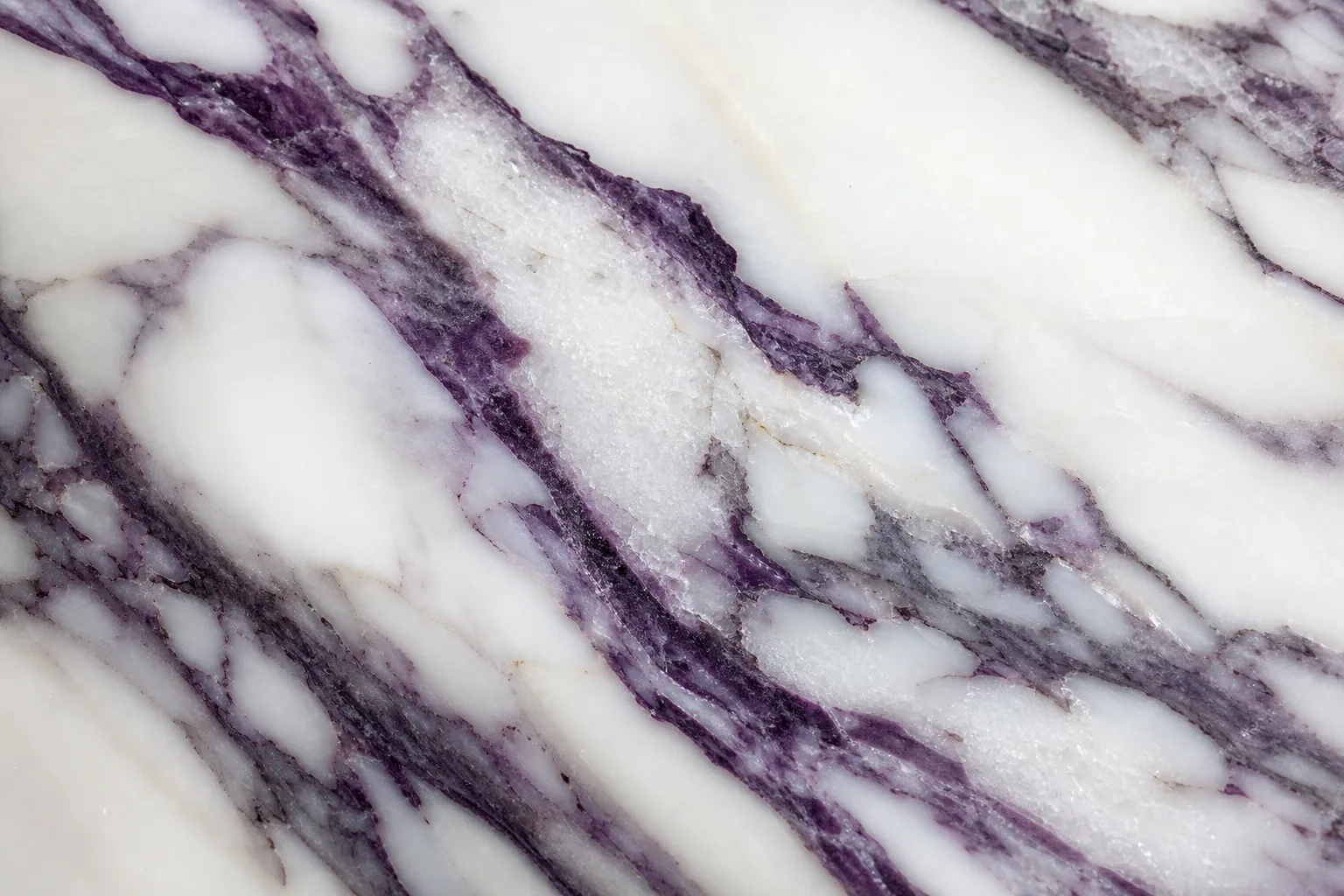
- Marble and limestone: about 3.
- Dolomitic marble: about 3.5 to 4.
- Onyx and travertine: about 3.
- Granite: about 6 to 7, because of feldspar and quartz.
- Quartzite: about 7.
Rocks are mixtures, so a slab's practical hardness depends on its minerals and how tightly they are bonded.
Hardness vs toughness
Hardness is resistance to scratching. Toughness is resistance to breaking or chipping. A very hard stone can still chip at an edge, and a softer stone like soapstone can be tough and hard to break.
Easy scratch tests
- Glass test: quartzite scratches glass; marble does not.
- Steel knife: marble scratches; quartzite resists.
- Copper coin: a coin, around 3, can mark very soft stones.
Use a sample and never test an installed counter. Full method: how to tell if quartzite is real.
What hardness means in a kitchen
Sand and grit, which contain quartz, scratch softer stones when dragged under pots. Ceramic bowls with unglazed rims can mark marble. Harder stones keep their polish longer in busy kitchens. On the other hand, softer stones are easier to re-hone and polish.
Hardness and fabrication
Harder stones are slower to cut and polish and wear tools faster, which is one reason quartzite fabrication costs more than marble.
Quick reference
Fingernail about 2.5, copper about 3.5, glass and steel about 5.5, quartz 7.
Making hardness visible to buyers
Buyers compare stones by durability. iBlocky lets distributors note material type and test results on each slab, making hardness and care differences clear when slabs are shared.
Frequently asked questions
What is the hardness of marble?
Calcite marble is about 3 on the Mohs scale; dolomitic marble is about 3.5 to 4.
Is quartzite harder than granite?
Quartzite is mostly quartz at about 7; granite mixes quartz with feldspar at about 6, so quartzite is often slightly harder.
Can a knife scratch granite?
A steel knife generally will not scratch granite's quartz and feldspar, though it may leave metal marks that wipe off.