
Preventing Slab Breakage in the Warehouse and in Transit
Practical ways to reduce stone slab breakage: packing, unloading, racking, lifting, handling fragile stones, transport and tracking breakage causes.
The short answer
Slab breakage is reduced by specifying good packing at origin, unloading with suitable equipment, storing slabs on rated racks with protected contact points, using correct lifting tools, handling fragile and resin-treated stones with extra support, securing loads in transport and tracking every breakage incident to find and fix root causes.
Key takeaways
- Most breakage happens during handling, not storage.
- Fragile stones need extra support and slower handling.
- Record every break with cause and location.
- Fewer moves mean fewer breaks.
Where breakage happens
| Stage | Typical causes |
|---|---|
| Packing at origin | Poor bracing, weak A-frames |
| Ocean and road transport | Shifting loads, impacts |
| Unloading | Wrong equipment, rushing |
| Storage | Unprotected contact with steel, tipping |
| Retrieval | Moving front slabs to reach back slabs |
| Pickup and delivery | Poor strapping, uneven loads |
At origin
Specify packing standards in purchase orders: sturdy A-frames, timber bracing, strapping and protection at contact points. Ask for photos of packed bundles before loading. See pre-shipment stone inspection.
Unloading and lifting
Use equipment rated for the load and suited to stone. Slab clamps must match thickness; vacuum lifters need clean, intact surfaces and correct pad placement. Lift slowly and keep slabs vertical where possible. Read slab lifting equipment.
Storage
- Rubber or wood protection on rack contact points.
- Slabs supported along their bottom edge.
- No slabs leaning on walls or improvised supports.
Fragile stones
Onyx, crystal-rich quartzites and heavily fissured stones need extra support, mesh backing and slower handling. Consider storing them in flip racks to reduce moves.
Reduce unnecessary moves
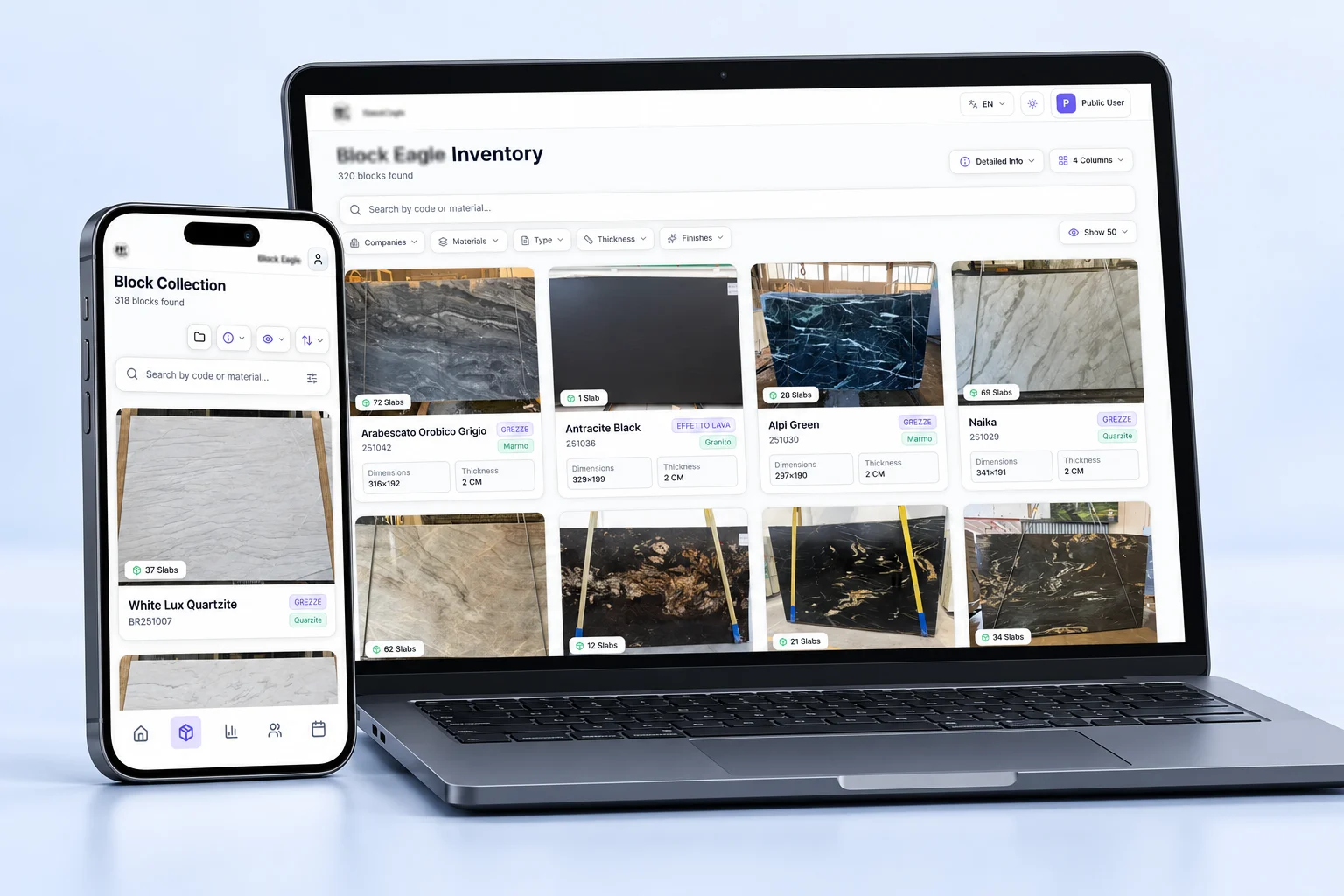
Every move risks breakage. When salespeople can show slabs from accurate photos and know their exact location, the yard moves slabs less.
Track every break
Record the slab ID, date, stage, cause and people involved. Patterns reveal problems: a specific clamp, a rack position or a supplier's packing.
Insurance and claims
Breakage in transit may be claimable; breakage in your warehouse usually is not. Good records help both. See receiving damaged slabs.
Turning broken slabs into value
A broken slab is not always a total loss. Measure the usable pieces, register them as remnants and offer them for vanities and small tops. See remnant inventory management.
Measuring breakage rate
Track broken slabs as a percentage of slabs handled over a period. Compare by zone, process and supplier to see where improvements have the most impact.
Training and accountability
Training reduces breakage only when combined with accountability. Review incidents openly, without blame, focusing on fixing processes.
Supplier feedback
Share breakage patterns with suppliers, with photos of packing failures. Many suppliers improve packing quickly once they see evidence.
Breakage records with iBlocky
iBlocky keeps slab status and history, including damage, so you can track breakage by cause and convert broken slabs into remnant records linked to the original.
Frequently asked questions
Why do slabs break in the warehouse?
Most breakage happens during handling: lifting, retrieval and moving slabs to reach others.
How can I protect fragile stones?
Use mesh-backed slabs, extra support, flip racks and slow, careful handling.
Should breakage be tracked?
Yes. Recording cause and stage reveals patterns you can fix.