
Remnant Inventory Management for Stone Yards
How to manage stone remnants in the warehouse: creating remnant records, measuring, labeling, storage racks, photos, pricing bands and disposal rules.
The short answer
Remnant inventory management treats every usable offcut as a real inventory item: it gets an ID linked to its parent slab, measured usable dimensions, photos, a storage location on dedicated racks and a status. Clear rules on minimum size, pricing bands and disposal keep remnants from piling up and turn them into steady revenue.
Key takeaways
- Register remnants the day they are created.
- Link each remnant to its parent slab.
- Store remnants on dedicated, labeled racks.
- Set minimum sizes and disposal rules.
Where remnants come from
- Partial slabs left after a customer buys only part.
- Slabs broken in handling, cut down to usable pieces.
- Offcuts returned by fabricators.
- Pieces left after cut-to-size orders.

Register immediately
Remnants that are not recorded the day they are created disappear into corners. Create a record with:
- ID derived from the parent slab, such as CAL-2311-14-R1.
- Material, finish and thickness inherited from the parent.
- Usable length and width, noting irregular shapes.
- Photos with a tape measure for scale.
- Location.
Minimum size rule
Decide the smallest piece worth keeping, based on common uses like vanities and sills. Smaller pieces go to recycling or are sold in bulk.
Storage
| Option | Best for |
|---|---|
| Dedicated remnant A-frames | Medium pieces, easy viewing |
| Remnant racks with slots | Organized by size |
| Bins | Small pieces for sills and shelves |
Keep remnants upright and secured; small pieces can still fall and injure.
Pricing
Use simple size bands per material group so yard staff can quote without a manager. See selling stone remnants.
Visibility
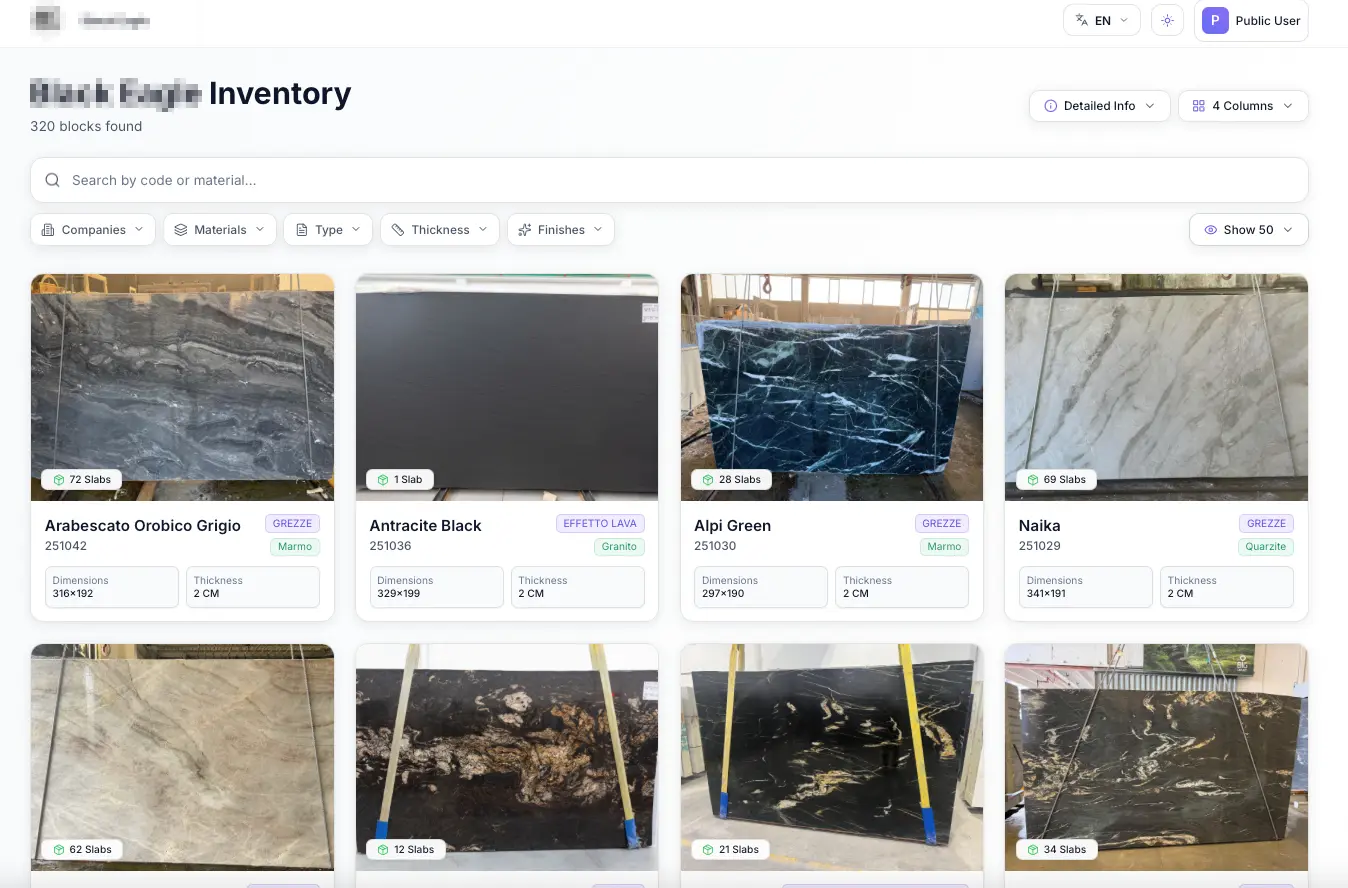
A remnant list that sales and buyers can browse turns remnants into sales instead of clutter. Update it as soon as a remnant is sold.
Regular cleanup
Review remnants quarterly. Pieces sitting too long may be discounted, offered in bulk to fabricators or recycled.
Who owns remnants
Assign one person to own the remnant area. Without an owner, remnants accumulate, labels fall off and nobody updates the list. A weekly 15-minute check keeps the area tidy and the records honest.
Selling remnants to fabricators
Fabricators often need small pieces for vanities and repairs. Offer them a remnant list with photos and dimensions. Quick access to remnants saves them from cutting full slabs.
Avoiding remnant clutter
If remnants consistently pile up, review your minimum size, pricing and promotion. Clutter is a sign that remnants are not moving.
Measuring remnant performance
Track remnants created, sold and recycled each quarter, plus revenue from remnant sales. These numbers show whether the remnant program is turning offcuts into profit or simply accumulating clutter.
Remnants in iBlocky
iBlocky lets you create remnant records with photos and dimensions linked to the original slab, assign locations and QR codes, and share a curated remnant selection by link with live status.
Frequently asked questions
What is the minimum size for keeping a remnant?
It depends on your market. Many yards keep pieces large enough for vanities, sills or small tops.
Should remnants have their own IDs?
Yes, ideally derived from the parent slab to keep traceability.
How often should remnants be reviewed?
Quarterly reviews help discount, sell in bulk or recycle pieces that are not moving.