
Stone Workforce and Safety Outlook for 2027
The people side of the stone industry in 2027: labor shortages, training, silica regulation, safer handling and how distributors can support their teams.

The short answer
In 2027, stone companies will continue to face shortages of skilled yard staff, fabricators and installers, alongside tighter attention to silica exposure and handling safety. Companies that invest in training, safer equipment, dust controls, clear processes and tools that reduce unnecessary handling will find it easier to attract and keep good people.
Key takeaways
- Skilled labor remains scarce across the stone trade.
- Silica regulation keeps tightening, especially for engineered stone.
- Safety and training are recruitment advantages.
- Better data reduces unnecessary, risky slab handling.
Why people are the constraint
Demand for stone work depends on skilled people: equipment operators, warehouse staff, fabricators and installers. Many companies report difficulty hiring and keeping experienced workers. At the same time, regulators and the public are paying closer attention to the health risks of stone work, especially silica.
Silica regulation
OSHA's respirable crystalline silica standards remain the baseline nationwide. California has gone further for engineered stone fabrication, and other jurisdictions may follow. Expect more inspections, more emphasis on wet methods and dust collection and more questions from customers about how material is fabricated. See OSHA silica rule for stone and engineered stone silica rules.
Handling safety
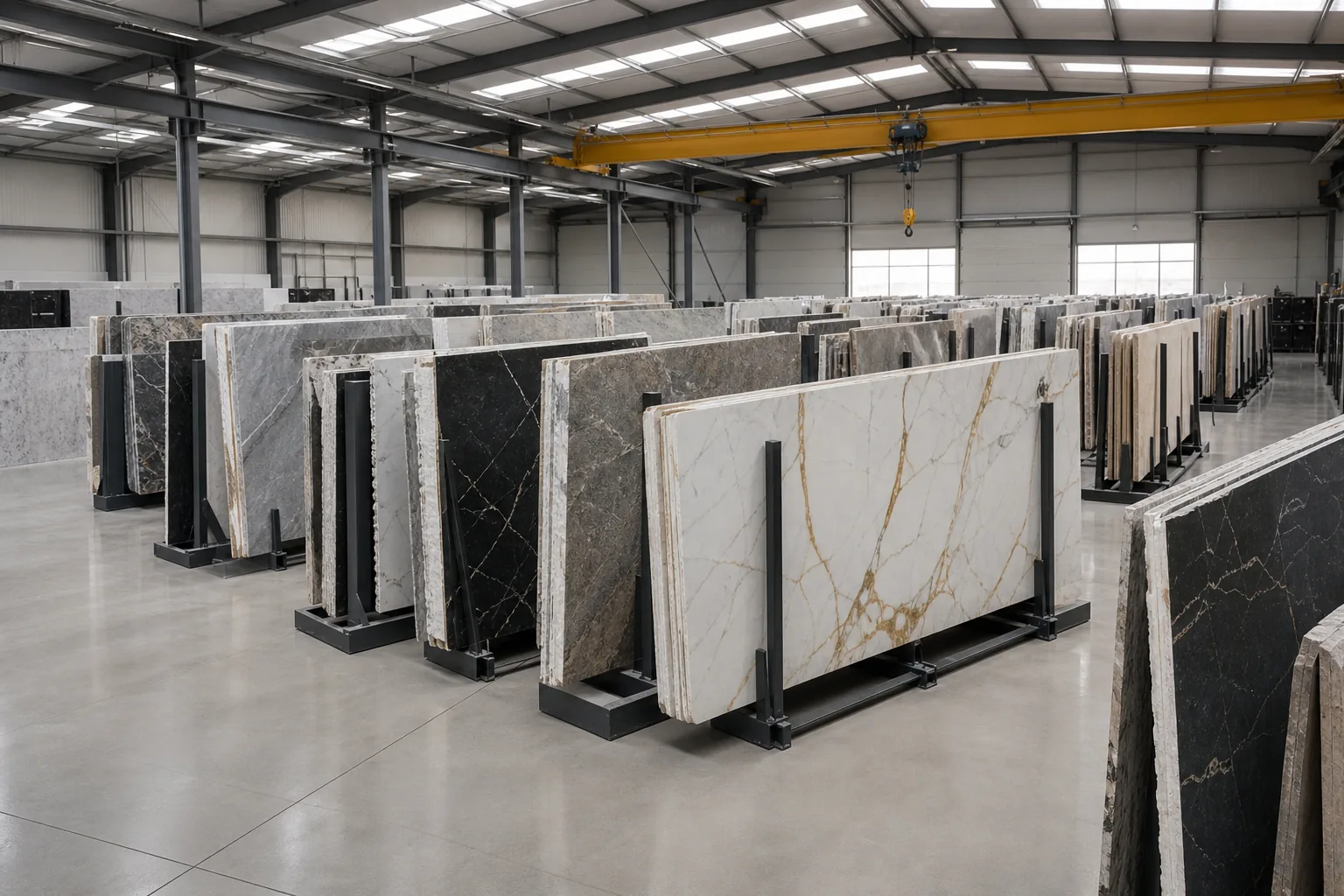
Slab handling injuries are a persistent risk. Rated racks, proper lifting equipment, training and clear procedures reduce them. See slab handling safety.
Automation as a partial answer
Fabrication shops continue to adopt CNC machines, saw-jets and digital templating to do more with fewer people. Warehouses benefit from better lifting equipment and organized layouts. Automation complements skilled workers; it does not replace them.
Training and career paths
| Area | Training focus |
|---|---|
| Yard staff | Equipment, racks, handling, inventory tools |
| Fabricators | Machines, silica controls, quality |
| Installers | Safe lifting, site safety |
| Sales | Materials knowledge, systems |
Clear career paths and cross-training improve retention and resilience. See training stone sales reps and stone warehouse roles.
Reducing unnecessary handling
Every time a slab is moved just to be shown, there is risk. Accurate photos, recorded locations and QR codes let sales show slabs without moving them and let the yard find them quickly when needed.
What distributors can do in 2027
- Audit safety practices and equipment.
- Document training and procedures.
- Share material composition data with fabricator customers.
- Invest in tools that reduce handling and errors.
- Communicate safety commitments to staff and customers.
Safety culture
Policies work only when leaders model them and workers feel safe reporting issues. Regular safety talks keep awareness high.
Bottom line
Safe yards attract and keep the people the industry needs.
Supporting teams with iBlocky
iBlocky reduces unnecessary slab moves with photos, locations and QR codes, and keeps safety documents attached to material records so fabricators receive the information they need.
Frequently asked questions
Is there a labor shortage in the stone industry?
Many stone companies report difficulty hiring skilled yard staff, fabricators and installers.
Will silica rules get stricter in 2027?
Regulators, particularly in California, have tightened rules for engineered stone, and attention to silica is likely to continue.
How can technology improve stone yard safety?
By reducing unnecessary slab moves and errors through accurate photos, locations and scanning.