
Arabescato Marble: Bold Gray Patterns from Tuscany
Arabescato marble explained: Corchia and Vagli varieties, its swirling gray veining, best applications, how it compares with Calacatta and care tips.
The short answer
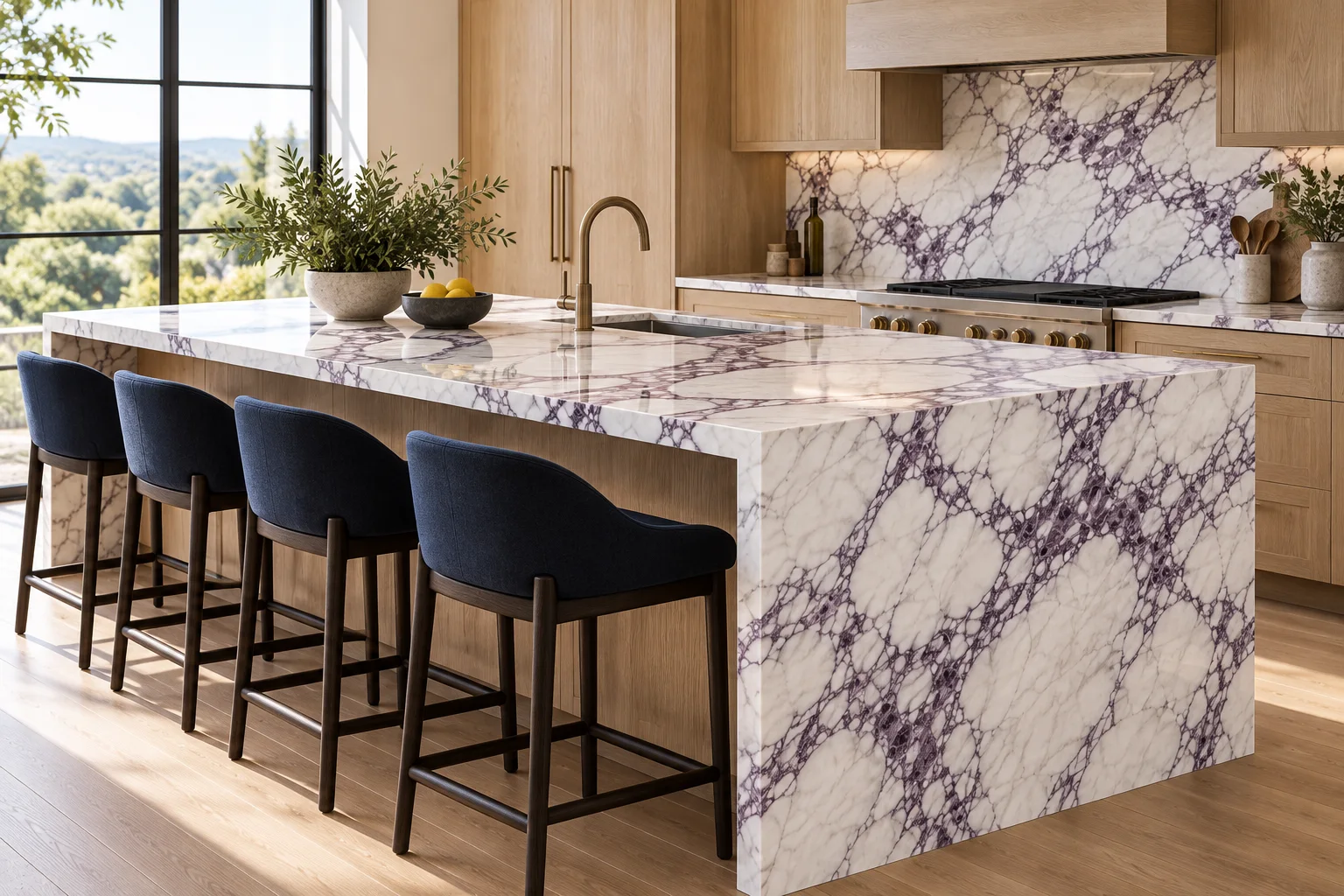
Arabescato is an Italian white marble from the Apuan Alps known for bold, swirling gray veins that form arabesque-like patterns. Varieties such as Arabescato Corchia and Arabescato Vagli differ in background tone and vein density. It suits statement islands, walls and bathrooms, and needs the same care as other calcite marbles.
Key takeaways
- Arabescato is named for its arabesque-like veining.
- Corchia and Vagli are well-known varieties.
- Its busy pattern can hide everyday marks.
- Layout matters to make the pattern flow.
Where the name comes from
Arabesque is an ornamental style of interlacing, flowing lines. Arabescato marbles have veins that branch and swirl across the slab, often in gray to charcoal tones on a white background, creating that ornamental feeling.
Main varieties
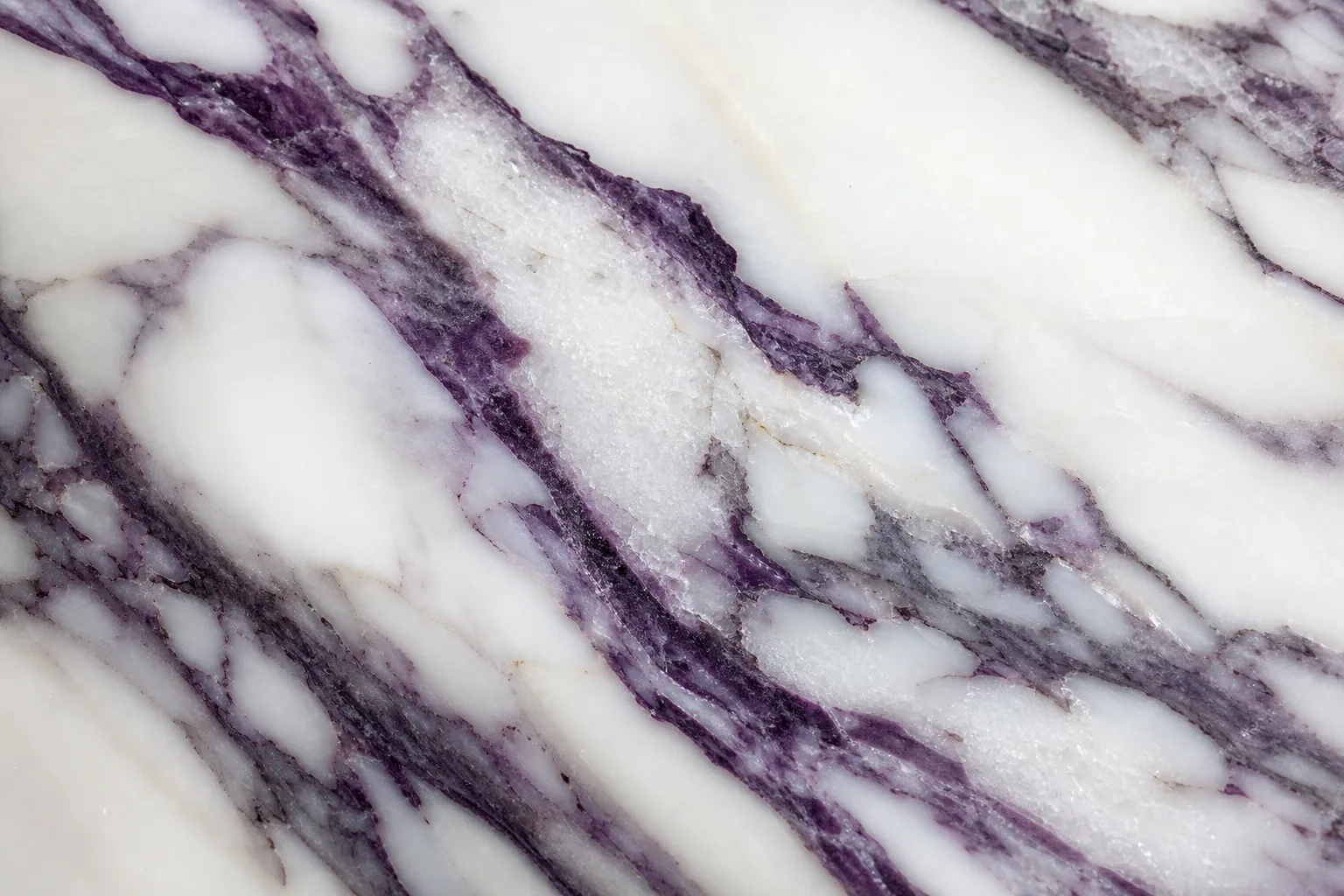
- Arabescato Corchia: from the Monte Corchia area, white with bold gray to dark veining, sometimes with lavender hints.
- Arabescato Vagli: from the Vagli area, often with larger patches and a slightly warmer background.
- Arabescato Cervaiole and others: names linked to specific quarries with their own character.
As always, names vary between suppliers.
Arabescato vs Calacatta
Calacatta usually has thicker veins on a brighter background, sometimes with gold. Arabescato tends toward denser, more networked gray veining. Both are dramatic; Arabescato often looks more graphic and architectural.
Where it shines
| Application | Why it works |
|---|---|
| Kitchen island | Dramatic centerpiece |
| Bathroom walls | Continuous pattern over large areas |
| Fireplace | Bold focal point |
| Floors | Busy pattern hides dust and wear |
Layout tips
Because the pattern moves in many directions, planning matters. Fabricators often align major veins across seams or bookmatch slabs for symmetry. Ask to review the layout on slab photos; see slab layout and templating.
Practical advantage
A busy vein network disguises small etch marks and scratches better than a plain white marble. Combined with a honed finish, Arabescato can be a practical choice for marble lovers who cook.
Care
Seal, wipe acids promptly and use pH-neutral cleaners. See how stone sealers work.
Arabescato in floors and walls
Historically, Arabescato was widely used for floors in Italian palaces and churches because its busy pattern hides wear. Today, large-format Arabescato tiles and slabs bring the same effect to modern lobbies, bathrooms and kitchens.
Sizing up a slab
Because the pattern can be dense, view Arabescato at full scale before deciding. A small sample may look calm while the full slab feels energetic. Photograph slabs from a distance and close up to judge both effects.
Pairing ideas
Arabescato works with dark cabinetry for contrast, white cabinetry for a bright gallery look and matte black or brushed brass fixtures. Keep other patterns in the room simple so the marble remains the focus.
Showing Arabescato properly
Pattern-heavy stones need full-slab photos and video. With iBlocky, distributors attach both to each slab and share consecutive slabs together so buyers can judge bookmatch potential.
Frequently asked questions
Where is Arabescato marble quarried?
In the Apuan Alps in Tuscany, Italy, with well-known varieties from the Corchia and Vagli areas.
Is Arabescato good for kitchens?
Yes, with marble care. Its busy veining helps hide etch marks, especially with a honed finish.
What is the difference between Arabescato and Carrara?
Arabescato has bolder, more networked gray veining; Carrara has softer, finer veins on a grayer background.