
Buying Limestone: Density, Finishes and Best Uses
How to choose limestone for floors, walls, facades, fireplaces and countertops: density classes, absorption, finishes, color and care.
The short answer
Limestone is a sedimentary calcite stone known for soft, uniform tones and a refined look. Densities vary widely, so check absorption and density data. Denser limestones suit floors, facades and some countertops; softer ones suit walls and carvings. Limestone etches with acids and benefits from sealing and gentle care.
Key takeaways
- Limestone density and absorption vary widely.
- ASTM C568 classifies limestone by density.
- Ideal for facades, fireplaces and calm interiors.
- Etches with acids; seal and care accordingly.
What limestone is
Limestone forms from accumulated marine organisms and calcium carbonate. Fossils are sometimes visible. Read what is limestone.
Density classes
ASTM C568 classifies limestone into low, medium and high density categories with different requirements. Higher density usually means lower absorption and better durability.
American limestone
Indiana limestone, quarried around Bedford and Bloomington, has been used for many famous U.S. buildings, including the Empire State Building.
Uses
| Use | Considerations |
|---|---|
| Facades | Choose suitable density; long tradition |
| Floors | Choose denser stones and honed finishes |
| Fireplaces | Excellent, often carved |
| Countertops | Possible; etches and stains without care |
Finishes
Honed, brushed, sandblasted and polished. Many limestones look best honed.
Care
Seal porous limestones, use pH-neutral cleaners and wipe spills promptly.
Popular limestone looks
| Look | Character |
|---|---|
| Creamy French-style limestones | Soft, elegant, often honed |
| Gray and blue-gray limestones | Contemporary, architectural |
| Fossil-rich limestones | Natural texture with visible shells |
| Indiana limestone | Buff to gray, uniform, carvable |
Limestone in kitchens
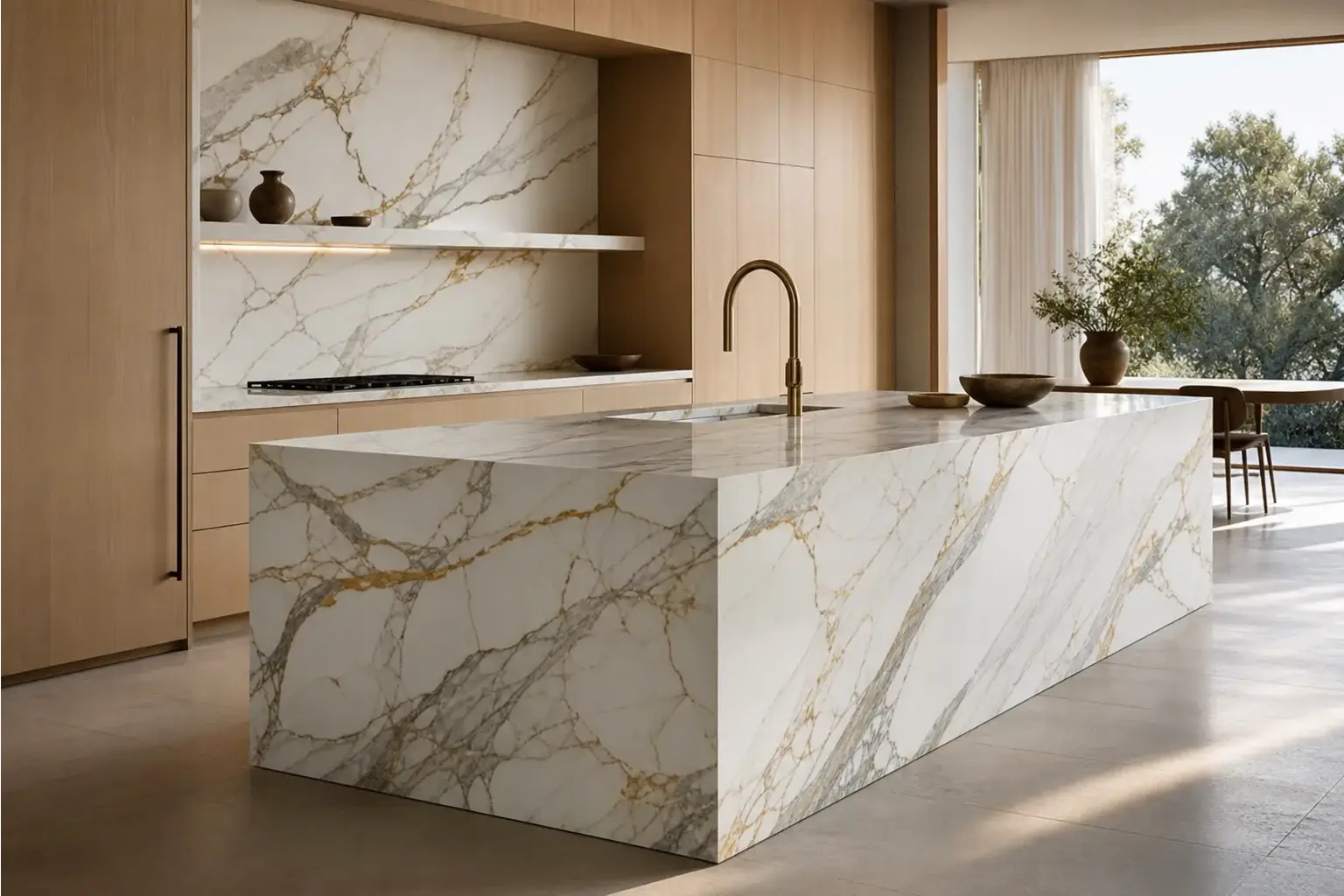
Limestone kitchens have a soft, European feel. They will develop patina from etching and use. Choose denser stones, honed finishes and good sealing, and wipe spills promptly.
Limestone in bathrooms
Limestone vanities and walls create calm, spa-like spaces. Use stone-safe cleaners and avoid acidic bathroom products.
Exterior limestone
Many facades and garden elements use limestone. Choose stones with suitable density and freeze-thaw performance for your climate.
Questions to ask suppliers
- What is the density classification?
- What is the absorption?
- Has it been used successfully in similar applications?
- Which finishes are available?
Working with carvers
Limestone carves beautifully, making it ideal for custom fireplaces, moldings and architectural details. Experienced stone carvers can produce intricate work.
Care
Reseal periodically, clean gently and address stains early with poultices appropriate for limestone.
Limestone vs marble for a calm look
Both can deliver soft, elegant surfaces. Limestone often has a more uniform, matte appearance with fossils; marble offers more veining and polish. Choose by look, but confirm density and absorption for limestone.
Lead times and sourcing
Some premium limestones are imported in limited quantities. Ask about availability for your full project before committing to a specific stone.
Matching existing limestone
If you are extending an existing limestone installation, bring a sample to the supplier. Limestone varies by bed and quarry, so matching older stone may require patience.
Frequently asked questions
Is limestone good for kitchen countertops?
It can be used with care, but it etches with acids and may stain if not sealed. Many prefer it for less demanding areas.
What is Indiana limestone?
A limestone quarried in south-central Indiana, used for many landmark U.S. buildings.
How do I know if a limestone is dense enough for floors?
Ask for density and absorption test data and compare with ASTM C568 classifications.