
Thassos Marble: The Brightest White from Greece
Thassos marble explained: Greek island origin, snow-white dolomitic marble, grades, uses in bathrooms and mosaics, care and alternatives.
The short answer
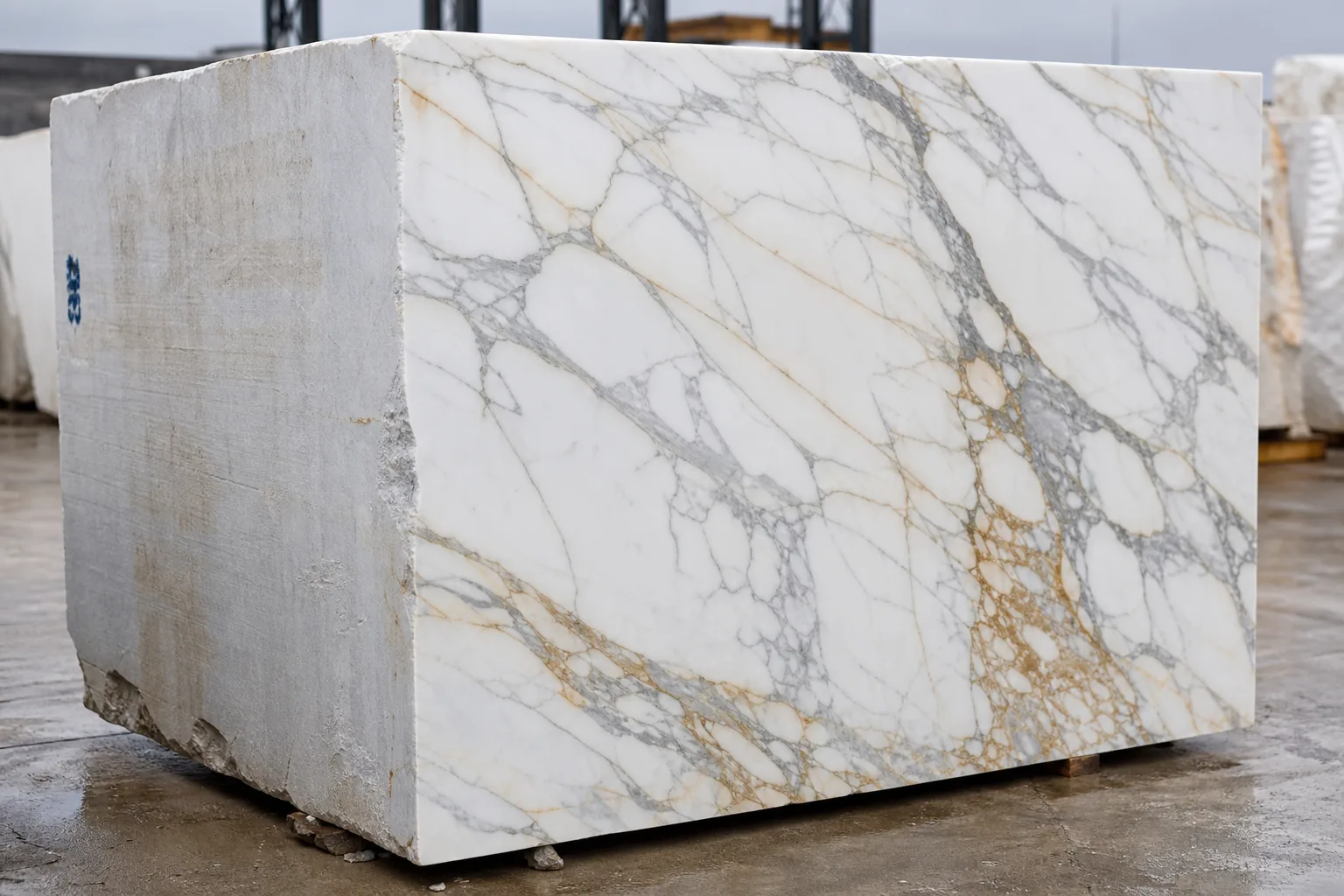
Thassos is a snow-white, crystalline dolomitic marble from the Greek island of Thassos in the northern Aegean. Prized for its brightness and minimal veining, it is used for bathroom walls, floors, mosaics and accents. It reflects light beautifully, is a little harder than calcite marble and still needs marble care.
Key takeaways
- Thassos is one of the whitest marbles available.
- It is a dolomitic, crystalline marble.
- Pure white grades are rare and premium.
- Popular for bathrooms, mosaics and clean modern designs.
An island of marble
Thassos has been quarried since antiquity. Greek and Roman builders valued its luminous stone, and ancient quarries are still visible along the island's coast. Today it remains one of the most sought-after white stones worldwide.
What makes Thassos different
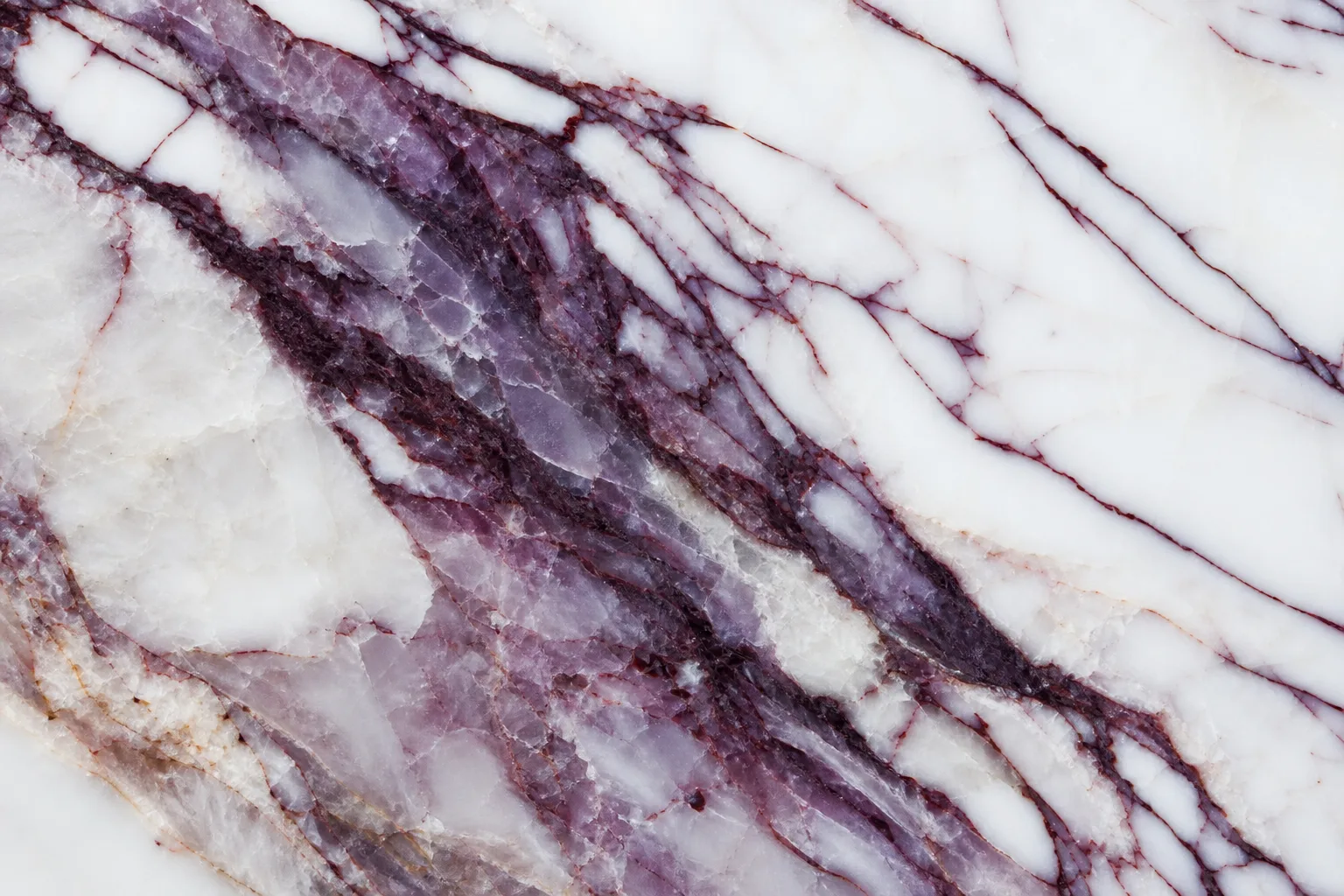
Unlike Carrara or Calacatta, which are calcitic marbles with gray veins, Thassos is a dolomitic marble with a coarse, sparkling crystal structure. Pure grades are almost snow white with little or no veining. Under light, the crystals glitter subtly, a quality designers love in bright bathrooms.
Grades
| Grade | Appearance |
|---|---|
| Snow White / A1 | Purest white, minimal marks |
| A2 and similar | Slight gray or tiny spots |
| Semi-white | More gray or veining |
| Thassos with gray veins | Lower grades with visible patterns |
Pure white Thassos is limited and priced accordingly; lower grades still look clean in many projects.
Typical applications
- Bathroom walls and floors.
- Mosaics, including basketweave and hexagon patterns.
- Shower niches and benches.
- Window sills and thresholds.
- Black-and-white floor patterns with Nero Marquina.
Practical notes
As a dolomitic marble, Thassos is a bit harder and slower to etch than calcite marble, but it still reacts to acids and can stain if not sealed. Its bright white also shows dirt and spills more readily. Iron-containing setting materials can cause discoloration, so installers use white, stone-suitable products.
Care
Seal, use pH-neutral cleaners and avoid bleach-based or acidic bathroom cleaners. Regular drying in showers reduces mineral spots.
Alternatives
If Thassos is out of budget, consider other white dolomites or white quartzites. See white marble alternatives.
Thassos in mosaics and accents
Because pure Thassos is expensive in large slabs, many designers use it in mosaics, borders and accents, combining it with other marbles for contrast. Basketweave patterns with Thassos and gray or black inserts are a classic bathroom look.
Installation tips
Use white setting materials designed for light, translucent stone, and ensure substrates are clean and dry. Thassos's translucency can reveal dark adhesives or uneven mortar beneath thin tiles.
Pricing and availability
Availability of top grades varies. Order complete quantities at once for consistent color across a project.
For stone sellers
White stones are the hardest to photograph accurately. Lock white balance, use diffuse light and show grade honestly. iBlocky stores those photos with grade notes on each slab or lot, so designers see the real white before they visit.
Frequently asked questions
Why is Thassos marble so white?
It is a very pure dolomitic marble with few mineral impurities, giving a bright, snow-white appearance.
Is Thassos marble good for showers?
Yes, it is widely used in showers and bathrooms. Use proper waterproofing, white setting materials and stone-safe cleaners.
Does Thassos marble etch?
Yes, but usually more slowly than calcite marble because it is dolomitic.